
Before you fly to China, three things decide whether your trip goes smoothly or becomes a two-day panic at the airport: data, power, and the right apps. You don't need much else. An eSIM costs about $10–27 for a one-to-two-week trip, Chinese sockets accept most two-pin plugs without an adapter, and half the apps you use at home simply won't work — so load the domestic replacements before you land. This is the no-fluff checklist of what to sort out at home, in order.
【中文】飞中国之前,有三样东西决定这趟是顺还是在机场慌两天:流量、电源、装对App。别的都不太需要。一周到两周的eSIM约$10–27,中国插座多数两脚插头不用转换头,而你在家用的一半App根本打不开——所以落地前就把国内替代品装好。下面是在家按顺序该办的、不带废话的清单。1. Data first: the eSIM, done at home
The single best prep step is buying an eSIM before you leave. A reputable provider like Airalo sells China data plans that run on China Mobile / Unicom networks: as of 2026, roughly $10.50 for 3 GB over 7 days, $14.50 for 5 GB over 7 days, and longer plans like 5 GB for 15 days around $15, or 10 GB for 15 days around $25.50. For a typical two-week trip you'll spend $15–35. It's data-only (no phone number), which is exactly what you want.
【中文】最好的一步是出发前买好eSIM。靠谱的如Airalo,卖跑在中国移动/联通网上的中国流量:截至2026年,约$10.50买7天3GB、$14.50买7天5GB;更长的如15天5GB约$15、15天10GB约$25.50。典型两周花$15–35。它只有流量没有手机号——这正是你要的。How it works in practice: you buy the plan online, get a QR code by email, and add the eSIM to your phone while you're still on your home Wi-Fi (this is the step people forget — do it before boarding, because once you land your home SIM loses data and you can't download it). Leave it installed but switch-on delayed. When the plane lands, turn on data roaming for the eSIM line and it connects within a minute; on some phones you then set the APN once. Physical SIM cards bought at the airport work too, but require a passport queue and cost more for less data — the eSIM is the calmer option. Your phone must be eSIM-compatible (most recent iPhones and Androids are).
【中文】实际怎么用:网上买套餐,邮件收到二维码,趁还在家Wi-Fi时把eSIM加到手机里(这步最容易忘——登机前弄,落地后你家卡没网就下不了了)。装好先不急着开。飞机落地后给eSIM那条线开数据漫游,一分钟内连上;有些手机还要设一次APN。机场买实体卡也行,但要排护照队、钱更多流量更少——eSIM更省心。手机得支持eSIM(近年的iPhone和安卓基本都支持)。Here's roughly what a reputable eSIM for China costs in 2026, so you can budget it before checkout:
【中文】下面是2026年靠谱中国eSIM的大概价格,结账前好先有个数:| Plan 【中文】套餐】 | 2026 typical 【中文】典型价格 | Best for 【中文】适合】 |
|---|---|---|
| 7 days · 3 GB 【7天·3GB】 | ~$10.50 | Short city break 【短程城市游】 |
| 7 days · 5 GB 【7天·5GB】 | ~$14.50 | Light daily use 【轻度日常】 |
| 15 days · 5 GB 【15天·5GB】 | ~$15.00 | Typical two-week trip 【典型两周】 |
| 15 days · 10 GB 【15天·10GB】 | ~$25.50 | Maps + video heavy 【导航刷视频】 |
| 30 days · 10 GB 【30天·10GB】 | ~$26.50 | Long stay 【长住】 |
One reality check: an eSIM gives you data on Chinese networks, but it does not unlock Google or WhatsApp — you're still on the Chinese internet, which is the whole point of also installing WeChat and Alipay. An unlimited-data roaming eSIM exists (around $1.9/day), but for a normal sightseeing trip a few gigabytes is plenty: maps, QR payments and messaging use surprisingly little. Bring a power bank anyway, because navigation all day drains the phone faster than you'd expect, and airport charging points are rarely free when you need them.
【中文】一句实话:eSIM让你在国内网上有流量,但它不会解锁谷歌或WhatsApp——你仍在中国互联网里,这正是还要装微信支付宝的原因。有无限流量漫游eSIM(约$1.9/天),但普通观光几GB足够:地图、扫码、聊天其实很省电省流量。还是带个充电宝,因为整天开导航很耗电。2. What actually works online in 2026 (be honest about this)
Set expectations now: the Great Firewall is real and it isn't something a tourist casually defeats. Blocked on a Chinese data connection: Google (Search, Gmail, Maps, Drive, YouTube), Instagram, Facebook, WhatsApp, X/Twitter, and most news sites. Working normally: WeChat, Alipay, Baidu, Apple Maps (mostly), and any Chinese domestic service. Don't build your trip around WhatsApping people or Googling an address on arrival — it won't load. Download offline maps and an offline translation pack before you land.
【中文】现在就把预期摆正:防火墙是真的,游客没法随便绕开。中国流量下打不开的:谷歌(搜索、邮箱、地图、云盘、YouTube)、Instagram、脸书、WhatsApp、X,以及多数新闻站。正常能用的:微信、支付宝、百度、苹果地图(基本)和一切国内服务。别指望落地后用WhatsApp联系、用谷歌搜地址——都加载不出来。落地前就把离线地图和离线翻译包下好。On a VPN: some travelers do install one before arrival and toggle it on to reach home services, but quality is inconsistent in 2026 and many apps simply won't connect on Chinese networks. Treat it as a nice-to-have, not a plan. The robust approach is to adapt: use WeChat to talk to your hotel and guides, Alipay to pay for everything by QR code (it accepts foreign cards now), and a Chinese map like Amap (Gaode) or Apple Maps for navigation. For translation, download the offline language pack in Google Translate before you land — the app itself is blocked, but the offline pack works without a connection.
【中文】关于VPN:有人会到之前装好、需要时打开连家里的服务,但2026年质量不稳,很多App在国内网根本连不上。把它当锦上添花,别当方案。稳妥做法是"入乡随俗":用微信联系酒店和导游,用支付宝扫码付一切(现在能绑外国卡),导航用高德地图或苹果地图。翻译就在落地前下好谷歌翻译的离线包——App本身被墙,但离线包没网也能用。
3. Power: what adapter you actually need
China runs on 220V. The sockets are Type A and Type I — the familiar two-flat-pin shape, plus a three-pin version. The practical upshot: most US-style two-pin chargers (phone, laptop, power bank) plug straight in with no adapter at all. What needs an adapter: anything with a chunky three-pin plug — UK plugs (Type G), Australian three-pin, or older grounded devices. If you're coming from Europe, your two-round-pin (Type C/E/F) plug also won't fit the flat slots, so bring one universal adapter. Voltage is 220V, but every phone/laptop charger you own is already a "100–240V" universal adapter, so you don't need a voltage converter — just a plug adapter, if needed at all.
【中文】中国是220V。插座是A类和I类——熟悉的两扁脚那种,加一个三脚版本。实际结论:多数美式两脚充电器(手机、笔记本、充电宝)直接插,根本不用转换头。需要转换头的是那种大三脚——英标三脚、澳标三脚,或老式接地设备。欧洲来的话,你的两圆脚(C/E/F型)插不进扁孔,带个万能转换头。电压220V,但你所有手机笔电充电器本来就是"100–240V"宽幅,所以不需要变压器——最多要个插头转换头,还不一定用得上。4. Documents and the first hour on the ground
Carry your passport physically — it's not just for border control; hotels, high-speed rail, and scenic-ticket gates all scan it. Keep digital photos of it on your phone as backup. Print (or keep offline on your phone) your first hotel's address in Chinese characters and your onward/exit flight ticket — immigration may ask to see the latter, and showing a Chinese address to a taxi driver beats pointing at English. In your first hour: get the eSIM online, grab a little cash (¥500–1,000) from an ATM or the airport bank booth for tiny vendors, and confirm Alipay has your foreign card linked. Then open your map app before you step outside.
【中文】护照随身带实体——不只是边检用,酒店、高铁、景区检票都扫它。手机里存几张护照照片备用。把第一晚酒店的中文地址和你的离境机票打印(或离线存手机)——入境可能会要看出境机票,给出租司机看中文地址比比划英文强。落地第一小时:把eSIM打开,从ATM或机场银行柜台取点现金(¥500–1000)给小摊,确认支付宝绑好外国卡。出门前先把地图App打开。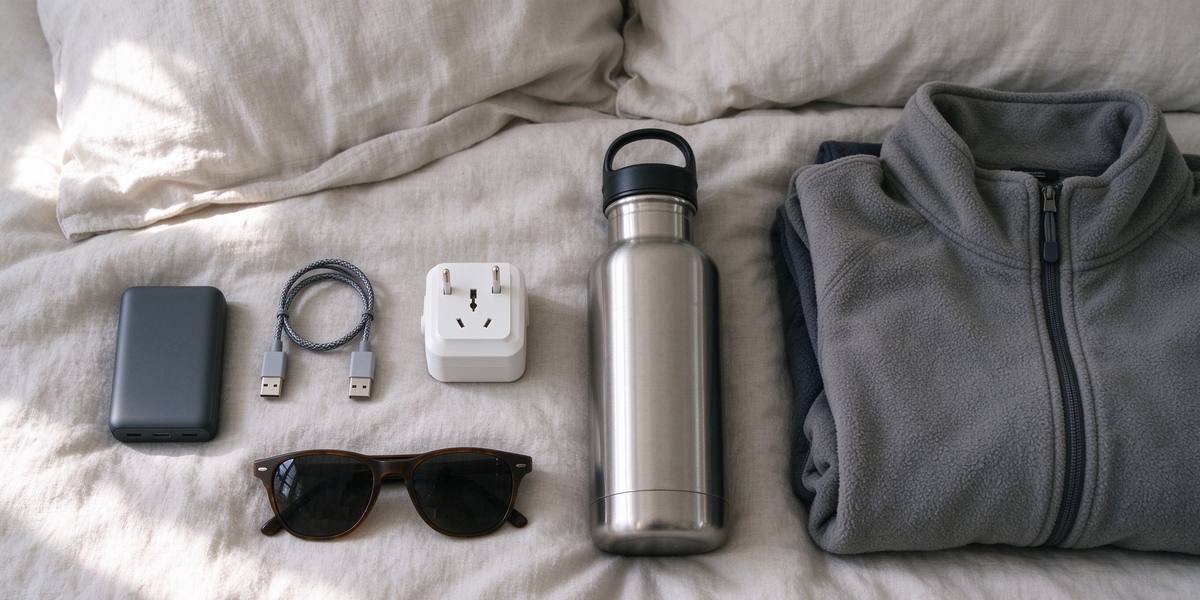

5. The apps to install before you fly
Install these at home while you still have Google/Apple access, because some are easier to find from your home account: Alipay (pay by QR, foreign card now works), WeChat (chat with hotels, scan QR), Didi (the local Uber), Amap / Gaode or Apple Maps (navigation), and a translation app with the offline pack downloaded. If you're taking trains, the official railway app (12306) works with a passport once registered. Skip the apps you think you need from home — they'll just sit there, blocked.
【中文】趁在家还有谷歌/苹果商店权限就装好这几个,因为有些从 home 账号才好找:支付宝(扫码付,外国卡现在能用)、微信(联系酒店、扫码)、滴滴(本地版Uber)、高德地图或苹果地图(导航)、加一个下好离线包的翻译App。坐火车的话,12306官方App注册后能用护照。那些"以为需要"的国外App别装了——只会躺在那里打不开。Ad slot — Media.net / Google AdSense
【中文】广告位:流量起来后此处投放海外广告(Media.net/AdSense),与正文明显区分
6. Seasonal packing: winter vs summer
Winter (north, or Harbin): serious layers — thermal base, fleece, windproof down jacket rated to −20°C for the far north, thermal gloves, lined winter boots, hand-warmers. Indoor heating is aggressive, so wear layers you can shed. Summer (south, or a Yangtze/ Yunnan trip): light breathable clothes, a light rain jacket, and — non-obvious — comfortable walking shoes and a sun hat, because you'll walk far more than you expect year-round. Any time of year: a reusable water bottle, any prescription medicine in its original box, and a universal plug adapter "just in case." You do not need: a voltage converter, a huge wad of cash, or your entire home pharmacy — pharmacies are everywhere in Chinese cities.
【中文】冬天(北方或哈尔滨):正经分层——保暖贴身、抓绒、远北要扛−20℃的防风羽绒服、保暖手套、加绒冬靴、暖宝宝。室内暖气很猛,穿能脱的分层。夏天(南方或长江/云南):轻薄透气、轻便雨衣,以及——容易忽略的——舒服的走路鞋和遮阳帽,因为你一年到头都会比预想走得多。任何季节:一个可重复水瓶、原盒的处方药、一个"以防万一"的万能转换头。不需要的:变压器、一大沓现金、你家整个药箱——中国城里药店到处都是。7. The traps to skip
Buying a SIM at the airport on arrival. It works, but it's overpriced, passport-queue-heavy, and the eSIM you bought at home was already on your phone before you landed. Forgetting to install the eSIM before boarding. If you wait until you're on the plane or at the airport, you've lost the home-Wi-Fi moment and the install fails. Assuming your phone charger needs a voltage transformer. It doesn't. Relying on WhatsApp or Google Maps at street level. They won't load on Chinese data — install WeChat and Gaode before you fly. And assuming Alipay "should just work": link your foreign card and test a small QR payment the first day, rather than at the ticket gate with a line behind you.
【中文】坑一:落地在机场买卡——能用,但贵、排护照队,而你在家买的eSIM落地前就在手机里了。坑二:忘了登机前装eSIM——等到飞机上或机场才弄,就没了家里Wi-Fi那个时机,安装会失败。坑三:以为手机充电器要变压器——不用。坑四:到了街边才指望WhatsApp或谷歌地图——国内流量打不开,飞之前就装微信和高德。坑五:以为支付宝"应该直接能用"——第一天就绑好外国卡、试一笔小额扫码,别等到检票口后面排着队才弄。Bottom line
China rewards ten minutes of home prep. Buy and install the eSIM before boarding, install Alipay, WeChat and a Chinese map, print your hotel's Chinese address, and pack layers rather than gadgets. Bring a passport and a universal adapter "just in case," but leave the voltage converter and the cash wad at home. Do that and you'll step off the plane already connected, paying by phone, and navigating — while half the other tourists are still hunting for airport Wi-Fi.
【中文】中国最奖励在家那十分钟准备。登机前买好装好eSIM,装好支付宝、微信和中文地图,打印酒店中文地址,打包分层衣服而不是一堆小电器。带护照和一个"以防万一"的万能转换头,但变压器和一大沓现金放家里。这样做,你下飞机就已联网、扫码付、能导航——而一半游客还在找机场Wi-Fi。