 Book this →
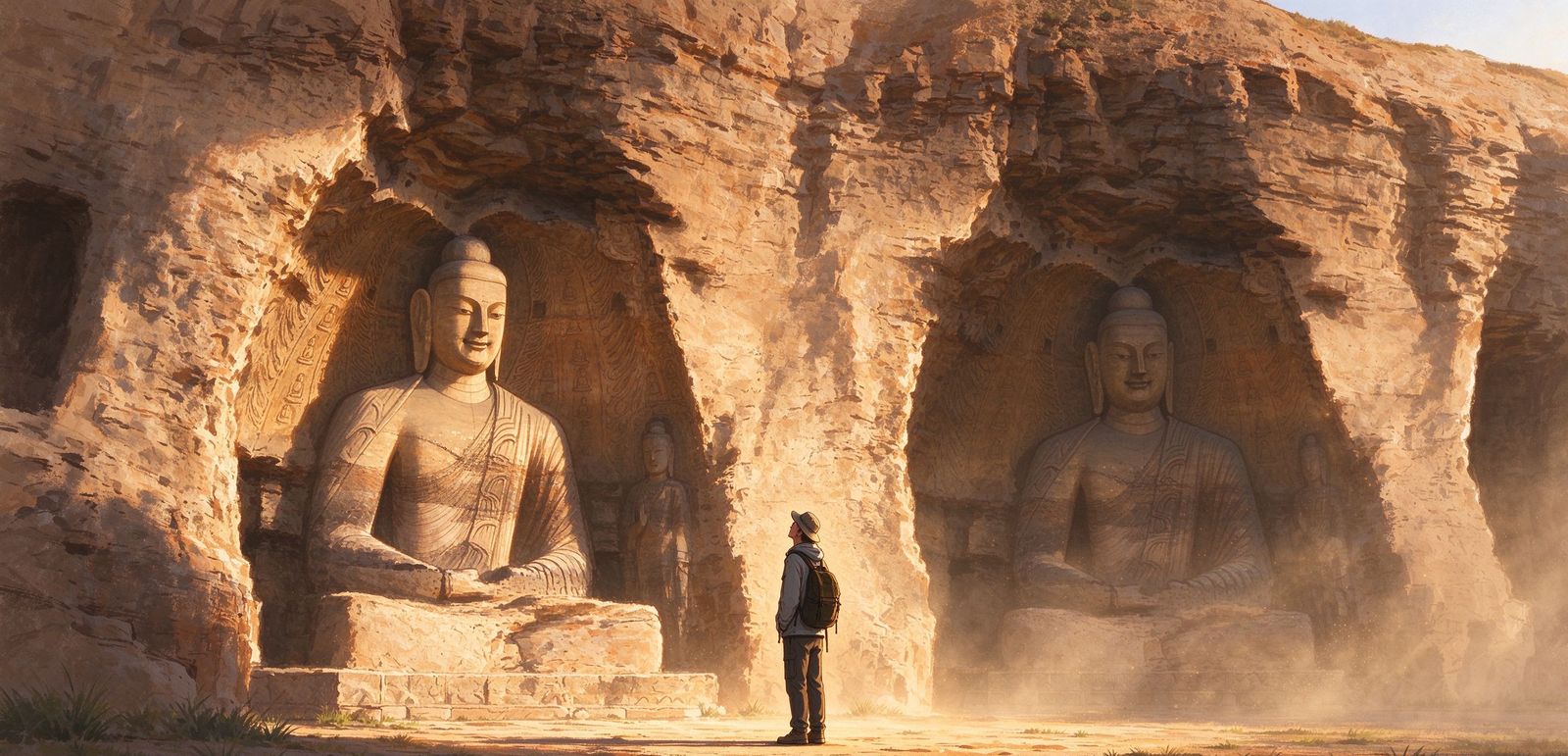
The gate at Yungang closed at 16:30, and I discovered that at 15:58 — standing in front of a Buddha the size of a three-storey house, watching a guard in a blue padded jacket wave the last visitors back towards the exit. In summer this place stays open until 17:20 and the ticket costs ¥120. In winter it shuts an hour earlier and drops to ¥100. Nobody tells you that at the train station. The ticket window tells you, at 16:20, when it is too late.
云冈石窟 16:30 闭馆这件事,我是在 15:58 才知道的——当时正站在一尊三层楼高的佛像前,看穿蓝棉袄的保安把最后一批游客往出口赶。夏天这里开到 17:20、全票 120 元;冬天提前一小时关门、降到 100 元。车站没人告诉你,售票窗口会在 16:20 告诉你,那时候已经来不及了。Datong is the kind of city that rewards people who read one paragraph of small print. It has a 1,500-year-old cave full of Buddhas, a monastery bolted to a cliff face, a Ming dynasty wall you can walk on at sunset, and a bowl of knife-cut noodles that costs less than a coffee in Amsterdam. Two days is enough — if you get the order right and accept that everything here closes early, because the sun sets before five and the wind comes off the plateau like a door slamming.
大同这座城市,奖赏那些肯读一段小字说明的人。它有一座开凿了一千五百年、满窟是佛的洞窟,一座用木柱钉在峭壁上的寺院,一段可以黄昏走上去的明代城墙,还有一碗比阿姆斯特丹一杯咖啡还便宜的刀削面。两天够了——前提是顺序排对,并且接受这里什么都关得早:五点前太阳就落,高原的风像摔门一样刮过来。Day 1, 08:30: the grottoes, before the tour buses
Yungang sits about 16 km west of the city. I took a taxi from the old town at 07:40 and was at the gate twenty minutes before opening; the first group tours arrive around 09:30, and the difference between those two hours is the difference between hearing your own footsteps in a cave and being squeezed past a Buddha by forty people with selfie sticks. Winter hours are 08:30 to 16:30, from 1 November to 31 March.
云冈在城西约 16 公里。我 07:40 从古城打车出发,开门前二十分钟就到了;第一批旅行团大约 09:30 到,这两个小时的差别,就是“在洞窟里听见自己的脚步声”和“被四十根自拍杆挤着从佛像前过”的差别。淡季开放时间:11 月 1 日至次年 3 月 31 日,08:30–16:30。The ticket arithmetic is simple. Winter full price ¥100, half price ¥50 for students and the usual concession categories; peak season, 1 April to 31 October, is ¥120. Buy at the gate or through the official WeChat account — there is no advantage to a middleman, and the "skip the line" offers in the car park are selling you nothing, because there is no line at 08:30 in November.
票价算术很简单:淡季全价 100 元,学生等优惠人群半价 50 元;旺季(4 月 1 日–10 月 31 日)120 元。门口买或官方公众号买都一样,找中间人没有任何好处;十一月早上八点半根本没有队,停车场那些“免排队”卖的是空气。What you are walking into: 45 major caves and more than 51,000 carved figures, cut between roughly 460 and 525 AD, when the Northern Wei dynasty moved its capital here and decided that imperial power should look like stone. Cave 20 is the icon — a seated Buddha about 14 metres high whose front wall has collapsed, so he sits in the open air under a sky that turns the sandstone the colour of weak tea. Cave 5 and Cave 6 are the pair to linger in: one holds a Buddha so large the hall was built around him, the other is a two-storey tower of carved Buddhist narrative, walls entirely covered, floor to ceiling, with figures you keep finding new ones in.
你走进去的是:45 个主要洞窟、五万一千余尊造像,开凿于约公元 460–525 年,北魏迁都于此,决定让皇权看起来像石头。第 20 窟是招牌——一尊约 14 米高的坐佛,前壁早已坍塌,他就坐在露天之下,砂岩被天光晒成淡茶色。第 5、6 窟是值得久留的一对:一窟的佛像大到整座殿堂是围着他盖的;另一窟是两层楼高的佛教故事雕刻,四壁从地到顶全是人物,你总会不断发现新的。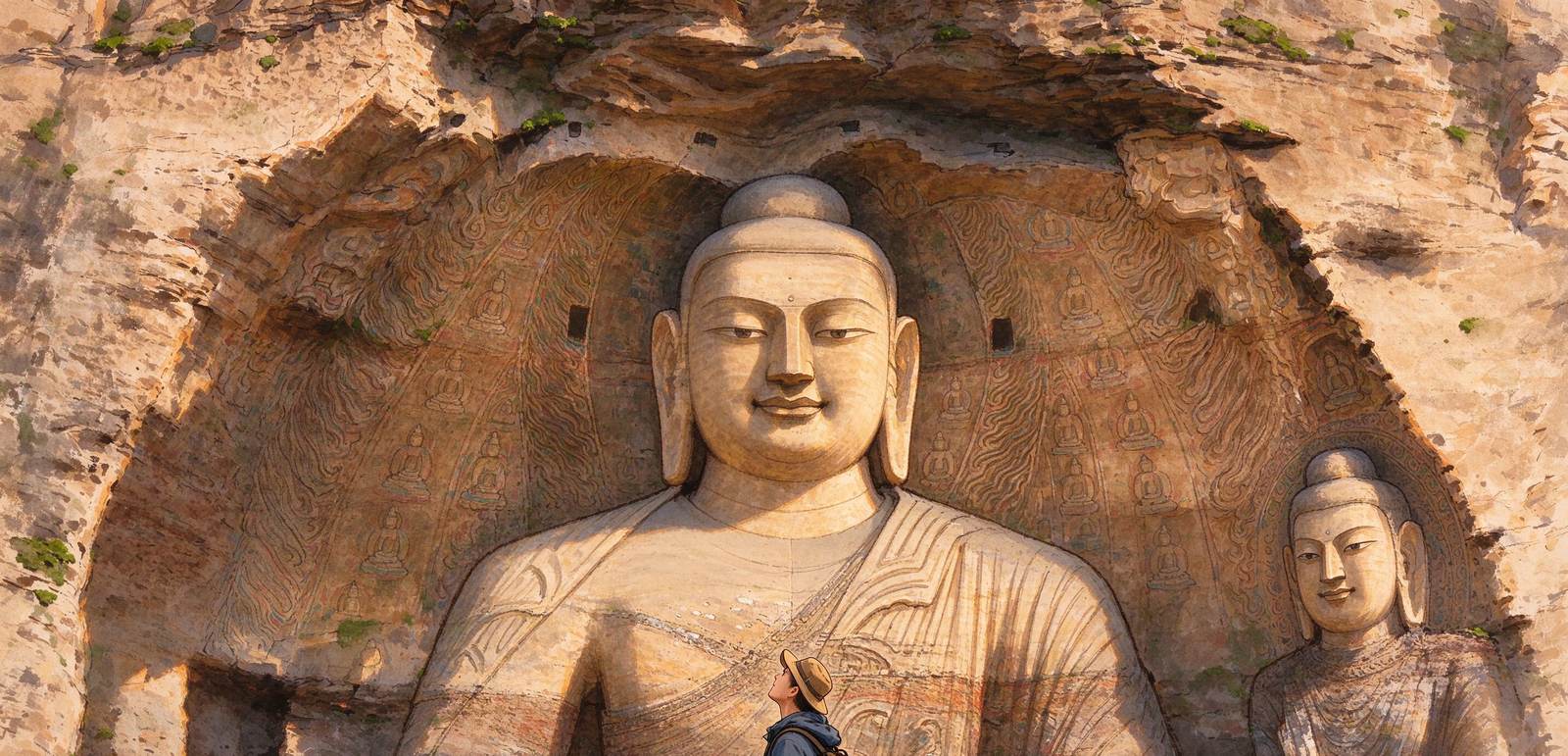 Book this →
Two practical warnings. First, the caves are cold: the rock holds the night's temperature until noon, and in November that means standing in a stone room at about 2°C while your phone battery dies. Wear the extra layer you were thinking of leaving in the hotel. Second, photography is allowed but tripods and flash are not, and the guards enforce it — I watched a man with a monopod get asked to put it away twice in ten minutes.
两个实用提醒。第一,洞窟里很冷:石头要到中午才回暖,十一月就是站在约 2℃ 的石屋里看手机掉电。你以为能留在酒店的那件衣服,穿上。第二,可以拍照,但不许三脚架和闪光灯,保安真的管——我十分钟内看见一位拿独脚架的先生被劝了两次。I gave the grottoes three hours and could have used four. If you only have half a day in Datong, this is the half day. Everything else in the city is a bonus.
我给了石窟三个小时,其实四个小时也不嫌多。大同只有半天,就给这半天。城里其他都是加分项。Day 1, 13:00: knife-cut noodles, ¥10–18
Back in the old town I did what every local told me to do: found a shop with no English sign, one plastic table out front, and a man in a white cap shaving dough off a block with a curved blade straight into a boiling pot. Datong knife-cut noodles — daoxiaomian — are the city's everyday food, and a bowl with mutton broth and a spoon of vinegar runs ¥10 to ¥18 depending on how much meat you ask for. Mine was ¥13, and it was the best thing I ate in Shanxi.
回到古城,我按所有人的建议做了:找一家没有英文招牌、门口一张塑料桌、白帽师傅用弯刀把面片直接削进滚水锅的小店。大同刀削面是这座城市的日常,一碗羊肉卤加一勺醋,按加肉多少 10–18 元。我那碗 13 元,是山西吃到最好的一口。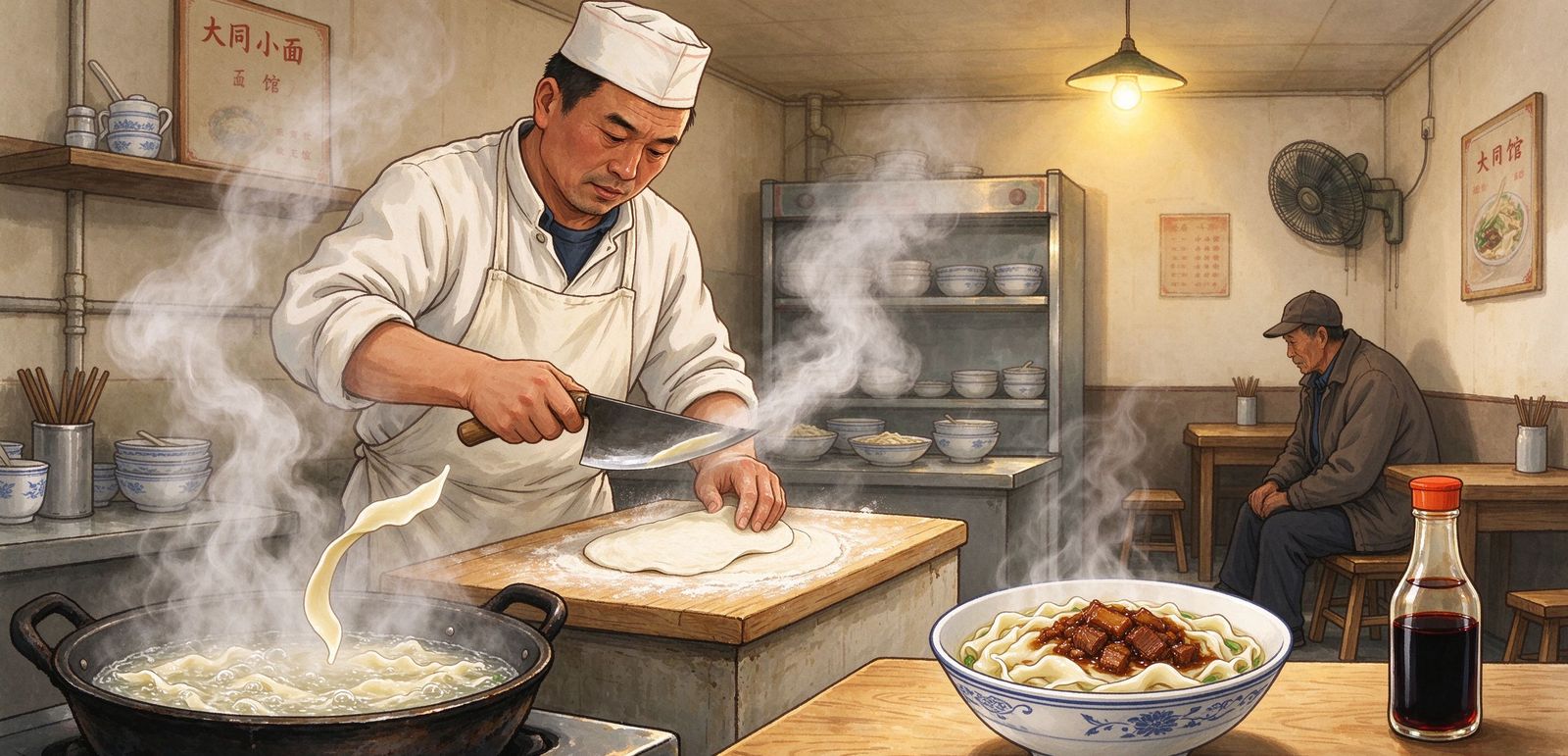 Book this →
Ordering is easy: point at the pot, say "yī wǎn" (one bowl), and hold up one finger if the menu defeats you. Vinegar is on the table in a plastic bottle, chilli oil is in a jar, and nobody will think it strange that you put both in. The other local staple worth trying is youmian — oat noodles rolled into little honeycomb tubes and steamed, served cold with vinegar and garlic water in summer, hot with mutton soup in winter. Around ¥12.
点单不难:指锅、说“一碗”,菜单看不懂就伸一根手指。醋在桌上的塑料瓶里,辣油在罐里,两样都加没人觉得奇怪。另一种本地主食是莜面——燕麦面搓成小卷蒸熟,夏天过醋蒜水凉吃,冬天配羊肉汤热吃,约 12 元。Day 1, 15:00: two Liao dynasty halls for ¥40
Huayan Temple sits inside the old town, five minutes' walk from the drum tower, and it is the reason architecture students come to Datong. The main hall of the Bojiajiaozang complex dates to 1038, the Liao dynasty, and its bracket sets are so wide and so layered that the eaves look like they are holding up the sky. Winter ticket ¥40, half price ¥20; peak season ¥50. Photography inside the halls is restricted, and the guards are serious about it — this is painted timber, not stone.
华严寺在古城内,离鼓楼步行五分钟,是建筑系学生来大同的理由。薄伽教藏殿主殿建于辽代 1038 年,斗拱宽大层叠,屋檐像在托着天。淡季门票 40 元、半价 20 元;旺季 50 元。殿内拍照受限,保安很认真——这是彩绘木头,不是石头。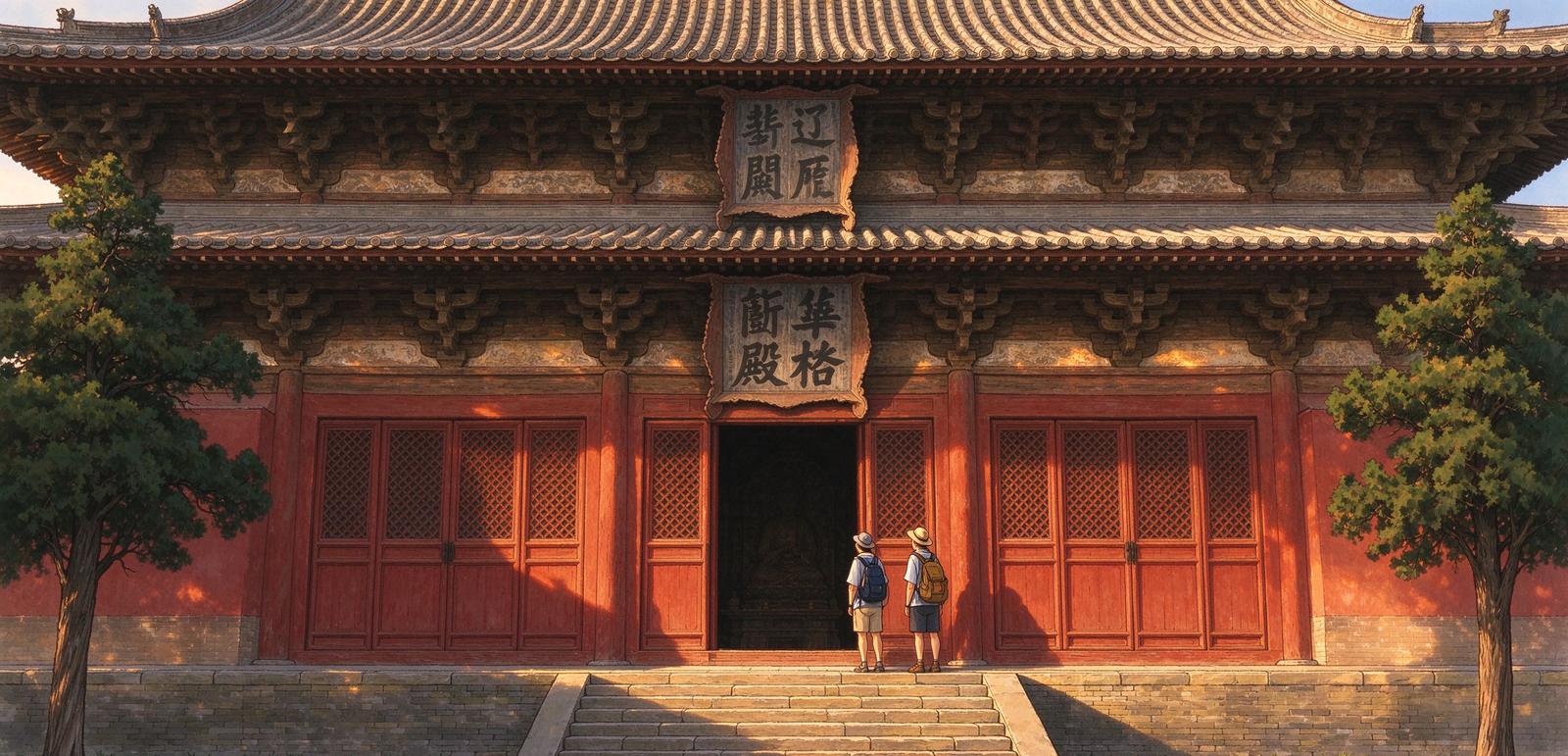 Book this →
Fifteen minutes' walk south is Shanhua Temple, which runs the same winter pricing as Huayan at ¥40 and holds three Liao-era halls in a single courtyard, plus a pagoda that leans very slightly and has done so for nine centuries. Most visitors skip it. That is exactly why you should not: I had the main courtyard almost to myself at four in the afternoon, with the low sun coming through the door and lighting up the clay figures inside.
往南走十五分钟是善化寺,淡季与华严寺同批执行 40 元,一个院子里三座辽代殿宇,还有一座微微倾斜、已经斜了九百年的塔。多数游客会跳过它,这正是你该去的原因:下午四点,主院几乎只有我一个人,低角度的太阳从门里照进去,把里面的泥塑点亮。Day 1, sunset: the wall, free and empty
Datong's city wall was rebuilt on its Ming foundations and it is enormous — 7.2 km around the old town, wide enough to drive a cart along the top. Walk up at the Yongtai Gate about forty minutes before sunset. The light goes orange on the brick, the watchtowers come on one by one, and the moat turns into a mirror. In November I shared the whole eastern stretch with six other people and a man flying a kite.
大同城墙在明代基础上复建,体量惊人——绕古城 7.2 公里,墙顶宽得能赶车。日落前四十分钟从永泰门上墙:砖被照成橙色,敌楼一盏盏亮起来,护城河变成镜子。十一月整段东城墙,我只遇到六个人和一位放风筝的大爷。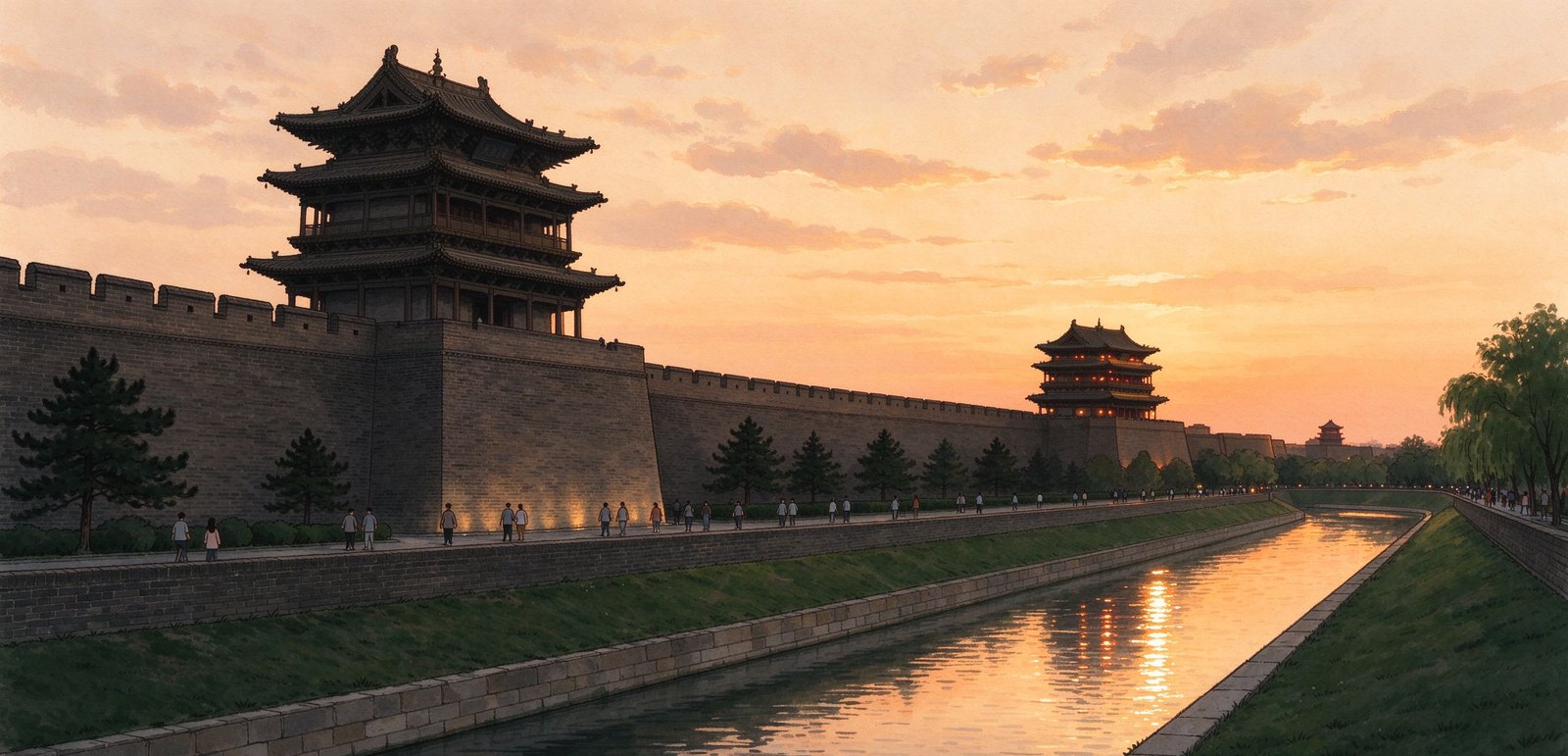 Book this →
Where to sleep: the old town inside the wall, within walking distance of Huayan and the drum tower. Mid-range rooms run ¥220–400 in November, hostels ¥90–150, and the big chain hotels cluster near the south railway station, which is convenient for departure and useless for atmosphere. I stayed two nights inside the wall and paid ¥268 for a room with a heated floor and a window onto a tiled roof.
住哪儿:城墙内的古城,走到华严寺和鼓楼都近。十一月中档房 220–400 元,青旅 90–150 元;大型连锁多在南站附近,走的时候方便,住的时候没气氛。我在城墙内住了两晚,268 元,地暖,窗外是一片瓦顶。Day 2, 07:30: the temple with 2,475 tickets a day
The Hanging Temple — Xuankong Si — is 65 km southeast of Datong, near Hunyuan, glued to a cliff above a gorge. Since 1 April 2026 the scenic area caps climbing at 2,475 people per day, and the only booking channel is the WeChat mini-program called 北岳云游 (Beiyue Yundong). Not a website. Not a hotel desk. A mini-program, in Chinese, tied to your passport number. This is the single hardest administrative task of the trip, and people do get turned away at the gate with a screenshot of somebody else's booking.
悬空寺在城东南约 65 公里、浑源附近,钉在峡谷上方的峭壁上。自 2026 年 4 月 1 日起,景区每日登临限 2,475 人,唯一预约渠道是微信小程序“北岳云游”。不是网站,不是酒店前台,是一个中文小程序,要绑护照号。这是全程最麻烦的一道手续,确实有人在门口拿着别人的预约截图被拦下来。The pricing is split in two, which catches people out. Entry to the scenic area is ¥15 — that buys you the view from below and the walk to the base. Climbing into the wooden corridors themselves is a separate ¥100. If you have vertigo, ¥15 is honestly the better purchase: the staircases are steep, the railings are low, and the whole structure is held up by beams that have been doing this since 491 AD. Mount Hengshan nearby is another ¥45 if you want the Taoist temples and the cable car.
票价是分开的,很多人栽在这里:景区入园票 15 元——只含山下远观和走到基座;真正登上木廊另收 100 元。恐高的话,15 元其实是更划算的选择:楼梯陡、栏杆低,整座建筑靠的是公元 491 年起就在干活的木梁。旁边的恒山另收 45 元,含道观与索道。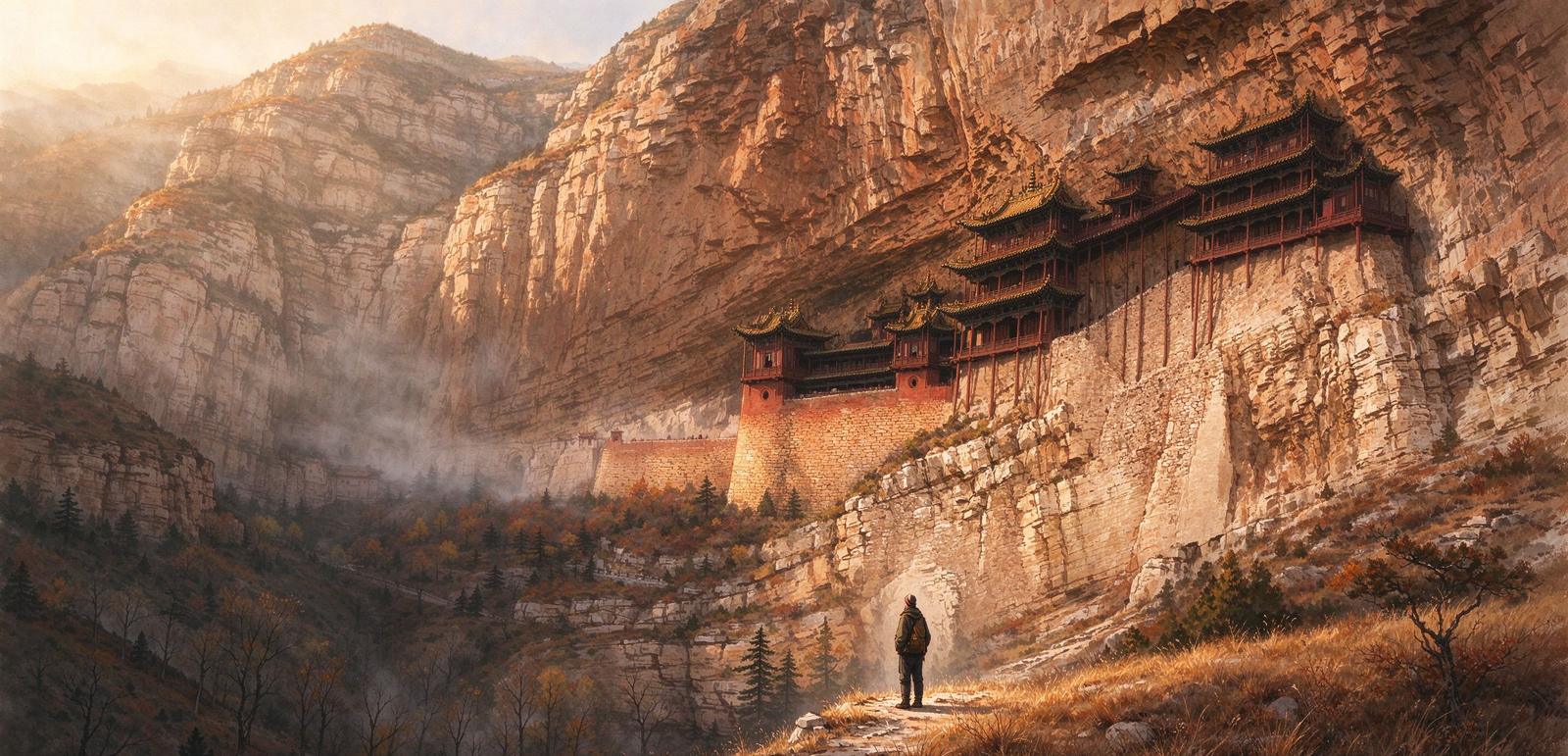 Book this →
Getting there without a car is the other puzzle. The road from Datong to Hunyuan takes roughly an hour and a half; there are buses from the city's long-distance station and there are taxis that will quote you a day rate. I joined two travellers from my hotel and we split a car, which worked out cheaper than the organised tour and let us arrive at 08:15, before the 09:00 rush. Book the climbing slot for the earliest window you can get and go straight up — by 10:30 the wooden walkways are one queue moving at the speed of the slowest phone photographer.
不自驾的话,第二道难题是交通:大同到浑源公路约一个半小时,长途站有班车,出租车可以包天。我和酒店里两位旅人拼了车,比跟团便宜,还能 08:15 到、赶在 09:00 的人流前。登临名额尽量约最早的时段,上去就别磨蹭——十点半以后,木廊就是一条按最慢拍照者速度移动的队伍。On the way back, stop at Hengshan if the weather is clear, or skip it if the wind is up. I skipped it, and instead spent the last hour of daylight on the wall again, this time at the south gate, watching the last tour buses leave. Two days in Datong is not a sprint. It is four stone Buddhas, one wooden cliff, two noodle bowls, and a lot of very cold air.
回程天晴就顺路去恒山,风大就放弃。我放弃了,把最后一个小时又给了城墙,这次在南门,看最后一批旅行团大巴离开。大同两天不是冲刺:四尊石佛、一座木崖、两碗面,和很多很多冷空气。Getting back to Beijing: ¥132 to ¥170
Datong South station is the high-speed one; the old Datong station handles conventional trains. The fast run to Beijing is almost absurdly easy. G2532 leaves Datong South at 08:18 and reaches Beijing North at 10:03 — 1 hour 45 minutes, second class ¥170. G2540 departs at 18:36 and arrives at Qinghe at 20:13, 1 hour 37 minutes, ¥143. Slower D-series trains take about two hours for ¥146, and if you are flexible the cheapest seats I found in the booking system were ¥140 on G2406 and ¥132 on D1124. Fares move with demand, so treat these as the November 2026 baseline, not a promise.
大同南站是高铁站,老大同站走普速。回北京快得有点不真实:G2532 大同南 08:18 开、北京北 10:03 到,1 小时 45 分,二等座 170 元;G2540 18:36 开、清河 20:13 到,1 小时 37 分,143 元。慢一些的 D 字头约 2 小时、146 元;时间灵活的话,我在售票系统里见到最低的是 G2406 的 140 元和 D1124 的 132 元。票价随供需浮动,这些是 2026 年 11 月的基准,不是承诺。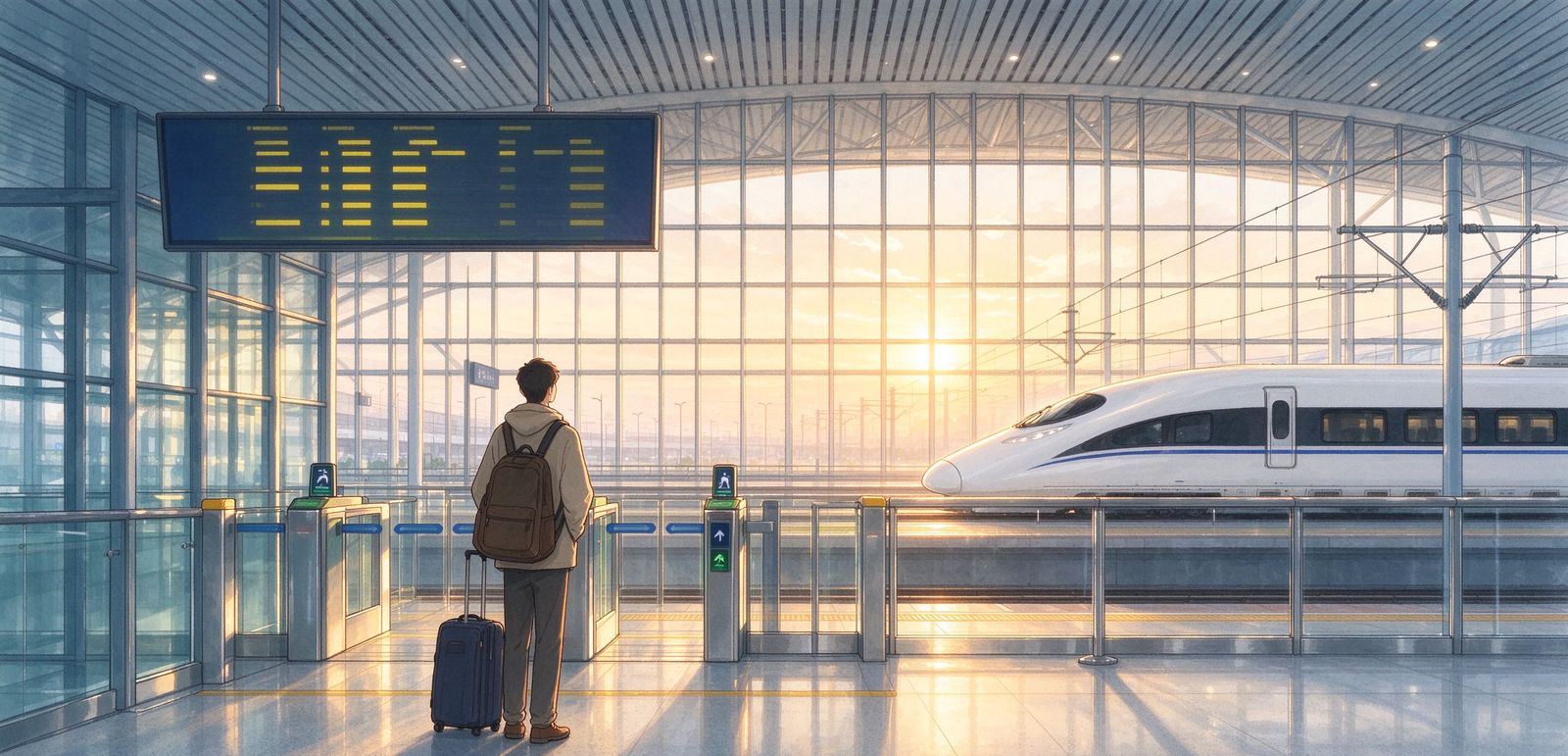 Book this →
One last detail that saves a taxi: the station is 6 km from the old town, and the metro does not reach it, so leave 35 minutes for the drive in the morning peak. Bring your passport to the gate — Chinese rail is fully real-name, and the automatic gates read the document, not a QR code on your phone.
最后一个能省一趟打车的细节:南站离古城 6 公里,地铁不通,早高峰请留 35 分钟车程。进站刷护照——中国铁路全实名,闸机读证件,不读手机二维码。What two days actually cost
| Item | Price (CNY, November 2026) |
|---|---|
| Yungang Grottoes, winter full price | 100 (half price 50) |
| Huayan Temple, winter | 40 (half 20) |
| Shanhua Temple, winter | 40 |
| Hanging Temple entry / climb | 15 / 100 |
| Hengshan (optional) | 45 |
| Knife-cut noodles, two bowls | 26 |
| Taxi and shared car, two days | about 260 |
| Two nights, old town mid-range | 536 |
| Train to Beijing, second class | 132–170 |
Ground costs, excluding hotel and train, came to ¥420 for two days — and ¥105 of that was the optional climb at the Hanging Temple. Datong is one of the cheapest places in China to see something genuinely world-class, which is exactly why it is still quiet in November while the same money in Beijing buys you a queue.
不含住宿和高铁,两天地面花费 420 元,其中 105 元是悬空寺可选的登临。大同是中国看世界级东西最便宜的地方之一,这也正是它十一月还安静的原因——同样的钱在北京只能买到一条队。Four mistakes I would not repeat
First: arriving at Yungang after 15:00 in winter. Second: assuming you can buy a Hanging Temple climbing slot at the gate — the cap is real and the mini-program is the only door. Third: booking a hotel near the south station to "save time" — you will spend the saving on taxis into the old town twice a day. Fourth: eating lunch at 13:30 in the tourist restaurant beside the grottoes, where a bowl of noodles costs ¥38 and tastes like the building.
第一,冬天下午三点后才到云冈。第二,以为悬空寺登临票能现场买——限额是真的,小程序是唯一的门。第三,为了“省时间”住南站附近——省下的时间会以一天两趟打车进古城的代价还回去。第四,一点半在石窟旁的游客餐厅吃面,38 元一碗,味道像那栋楼。If you want the opposite approach — a car, a guide who reads the inscriptions to you, tickets booked before you land, and no 06:40 alarms — that is a different product, and it costs roughly what four days of independent travel costs. For Datong specifically, a two-day private arrangement usually bundles Yungang, the Hanging Temple, Huayan and the wall, and removes the two genuinely annoying logistics: the 65 km drive and the mini-program.
如果你想要相反的方式——有车、有能把碑文读给你听的向导、落地前票就订好、不用 06:40 起床——那是另一种产品,价格大致相当于四天自由行。具体到大同,两天私人安排通常打包云冈、悬空寺、华严寺和城墙,并解决两件真正烦人的事:65 公里车程和小程序。Datong will not stay like this. The high-speed line has already cut Beijing to under two hours, the grottoes are on every "China before mass tourism" list, and the 2,475-person cap at the Hanging Temple exists precisely because the place was being loved to death. Go in the winter window, take the early slot, and spend your saved ¥20 on a second bowl of noodles.
大同不会一直这样。高铁已经把北京压到两小时以内,云冈出现在每一份“大众旅游之前的中国”清单上,悬空寺的 2,475 人限额,恰恰是因为它曾被爱到快被踩坏。赶冬季窗口去,约最早的时段,把省下的 20 元花在第二碗面上。