"Eight yuan," the cashier said, not looking up from the register. I slid eight yuan across the counter, and forty seconds later a woman in a white apron was slapping dough on a board, folding it, stretching it, pulling it into strands so fine they caught the morning light like silver thread. Sixty seconds after that, a bowl the size of a small basin landed in front of me: clear beef broth, white radish slices, a slick of red chilli oil, chopped coriander and garlic sprouts, and a fan of hand-pulled noodles underneath. That was it. That was Lanzhou's most famous food, the bowl that feeds a city of more than three million people, priced at eight yuan — roughly a dollar-ten — a price that has barely moved in five years. I came for the noodles. I stayed for the discovery that this one dish built the entire city around it: nearly 3,700 noodle shops, a 2026 price war that made headlines, and now a law written specifically to protect it.
【中文】"八块。"收银员头也没抬。我把八块钱推过柜台,四十秒后,一个系白围裙的女人开始摔打案板上的面团——对折、拉伸、抻成细得能在晨光里发光的银丝。六十秒后,一只小脸盆大的碗落在我面前:清亮的牛肉汤、白萝卜片、一勺红油、香菜蒜苗,底下一层手拉的面条。就这些。这就是兰州最有名的食物,喂养这座三百多万人口城市的那碗面,定价八元——约一美元十美分——这个价格五年几乎没动过。我为面而来,留下来却发现:这一碗面把整座城都建了起来——近3700家面馆、一场上了头条的2026价格战,还有一部专门为保护它而立的法。 Book this →
1. The ¥8 bowl: why Lanzhou noodles are so cheap, and why that's the point
Let me give you the single most surprising fact about Lanzhou food: the standard beef noodle bowl has cost ¥8 for roughly five years — and it's not a budget special, it's the citywide baseline. Chinese state media ran the numbers in June 2026: one famous shop's bowl costs ¥3.49 in ingredients and sells for ¥3.50 — a margin of one fen (one hundredth of a yuan). The economics only work because volume is insane. Every neighbourhood has its shop, every shop pulls noodles by hand, and the whole city eats this bowl daily, not as a treat but as breakfast. That's also what makes it a trap-free dish: there is no "tourist version" of Lanzhou noodles, because the locals eat the exact same thing. A bowl is built on the canonical five: clear broth (一清), white radish (二白), red chilli oil (三红), green garlic sprouts and coriander (四绿), and yellow noodles (五黄) — a formula so fixed you can taste-test shops the way you'd taste-test coffee.
【中文】先说兰州美食最惊人的事实:标准牛肉面碗约五年都是¥8——不是特价,是全城基线。中国官媒2026年6月算过账:某名店一碗成本3.49元、卖3.50元——毛利一分钱。生意全靠走量:每个街区都有面馆、每间馆子都手工拉面、全城把这碗面当早饭而非打牙祭。这也让它成了没有陷阱的食物:没有"游客版"兰州拉面,因为本地人吃的就是同一碗。一碗面的五要素:一清(清汤)、二白(白萝卜)、三红(红油)、四绿(蒜苗香菜)、五黄(黄面条)——规矩死板到你可以像品咖啡一样品面馆。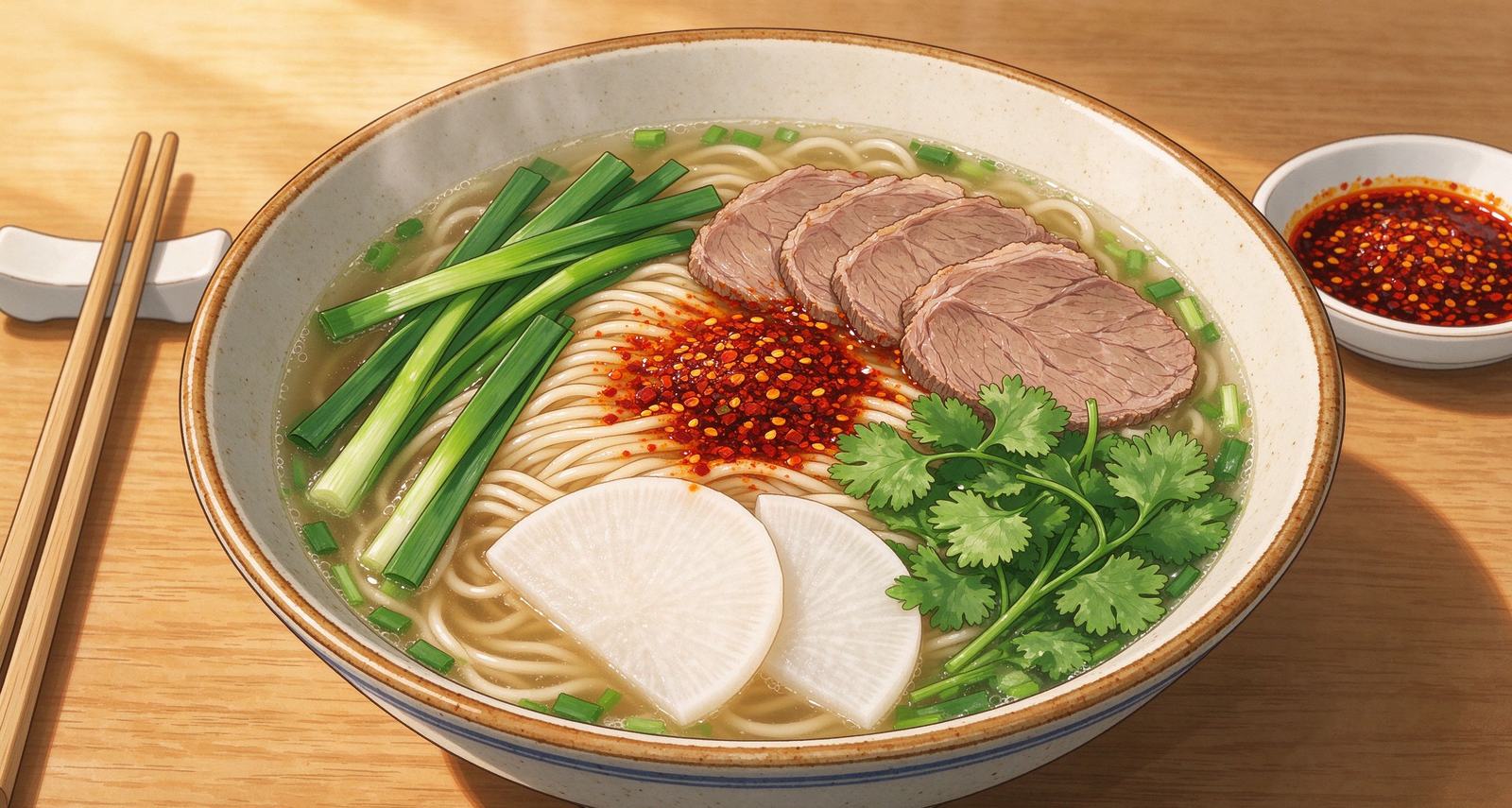 Book this →
2. The ritual: five widths, pulled in front of you
Ordering is the first test. You don't pick a dish — you pick a noodle width, and the puller starts the moment you say it. The five standards, from thinnest to thickest: maoxi (毛细, hair-thin), xi (细, thin), sanxi (三细, three-thin), erxi (二细, two-thin), jiuye (韭叶, chive-leaf flat), plus the wider bo kuang (薄宽) and the belt-like da kuang (大宽). The default, and the smart order for a first timer, is erxi: thin enough to slurp, thick enough to hold broth. Watch the puller for a minute — every shop's window is open to the street, and the show is part of the meal. A good puller works a single lump of dough into a fan of strands in under a minute, and the rhythm — slap, fold, stretch, flick — is hypnotic. Eat it fast: the noodles are at their peak in the first ten minutes, before the broth softens them. Breakfast is the golden hour; by 10 a.m. the good shops are down to their second batch and the broth tastes older.
【中文】点单是第一道考题。你点的不是菜,是面的宽度——你说出口的瞬间拉面师傅就开工。五款标准型从细到粗:毛细、细、三细、二细、韭叶,外加薄宽和裤带宽的大宽。默认选项、也是新手最聪明的点法,是二细:够细能吸溜,够粗挂得住汤。看师傅拉一分钟——每家店的窗口都朝街开,这场表演就是饭的一部分。好手不到一分钟就能把一团面抻成扇形面丝,节奏——摔、折、拉、甩——看得人入迷。趁热吃:头十分钟是面的巅峰,之后汤会把面泡软。早餐是黄金时段;上午10点前好店就卖到第二锅,汤味就老了。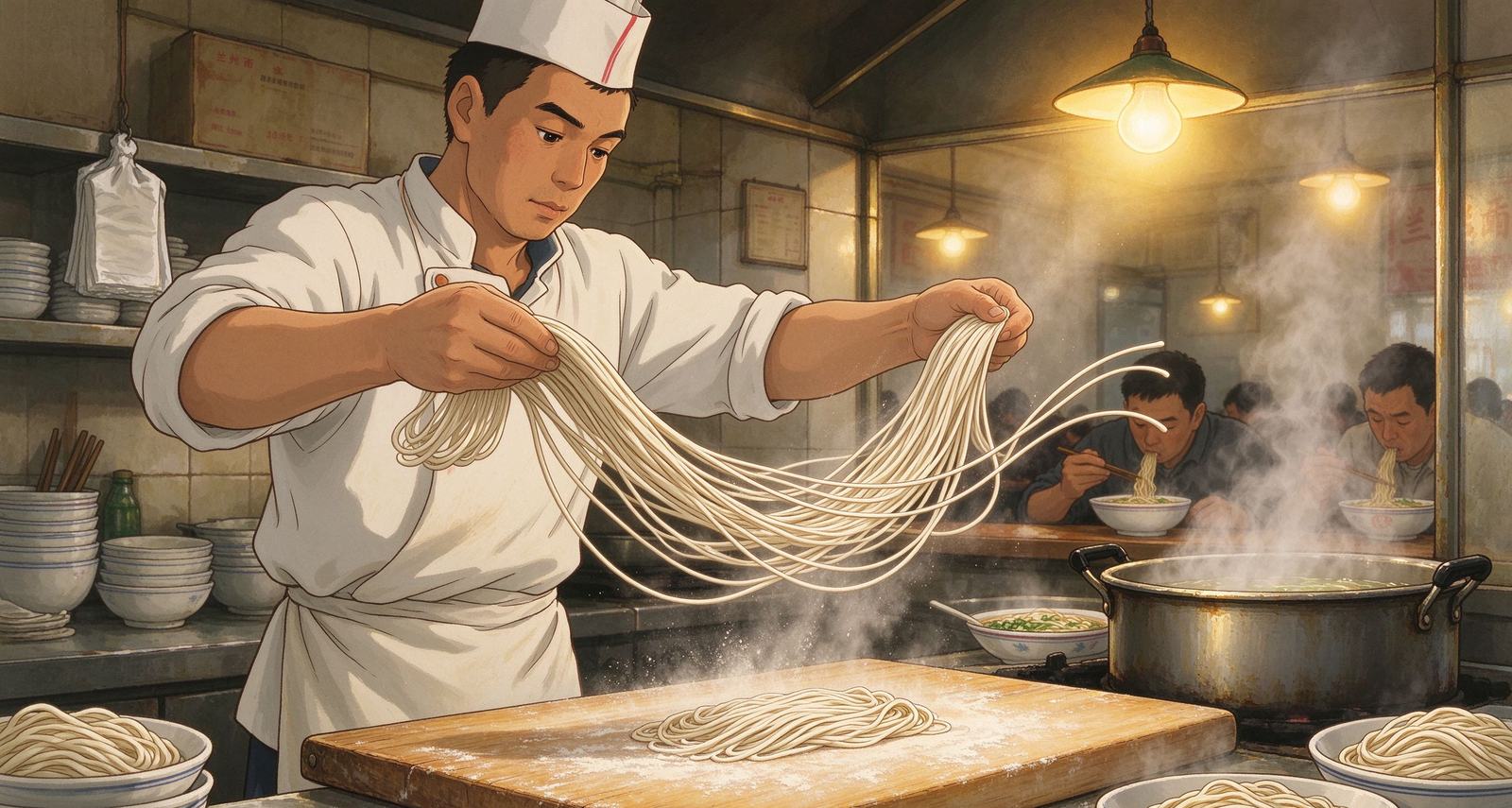 Book this →
3. Where to eat: the famous names and the ¥3.50 price war
Lanzhou has a noodle hierarchy, and you can taste it. The most famous name is Ma Zilu (马子禄) — founded in 1954, a state-certified "China Time-honoured Brand," with the original shop at 86 Dazhong Lane in the old city; its broth is heavier and sweeter than the pack, and its queue is a permanent feature. The old-school purists swear by Mogouyan (磨沟沿), which kept the classic ¥8 bowl and the old recipe. Then there's the 2026 story that changed the conversation: a price war. New shops in neighbourhoods across the city started undercutting — ¥6, then ¥5, then the now-famous ¥3.50 bowl at Zhang Youde's shop, whose cost breakdown made national headlines (¥3.49 of ingredients, one fen of profit). My honest take after eating both ends: the ¥3.50 bowl is real and fine — it's the same five-element formula — but the ¥8 classics still have better beef and deeper broth. And here's the insider move: ask for jiadao (加刀, extra knife-cut beef) for ¥5–8, and if the shop offers pai niu rou (牛排牛肉面) — a bowl with a full braised beef rib on top, about ¥30 — order it once. It's the one bowl where Lanzhou noodles stop being a cheap lunch and become a meal you'll tell people about.
【中文】兰州的面馆有层级,一吃便知。最有名的是马子禄——1954年创立、国家认证"中华老字号",老店在旧城大众巷86号;汤头比别家更重更甜,排队是常态。传统派认磨沟沿——保留经典¥8和旧配方。然后是改变格局的2026年故事:价格战。全城各街区新店开始压价——6块、5块,最后是如今出名的张友德¥3.50一碗(成本清单上了全国头条:食材3.49元、毛利一分钱)。两头都吃过后的诚实评价:3块5的碗是真的、也不差——同一套五要素配方——但8块的经典款牛肉更好、汤更厚。内部操作:加加刀牛肉¥5–8;如果店里有牛排牛肉面——整块红烧牛排盖面,约¥30——点一次。那是兰州拉面不再是一顿廉价午饭、而是值得跟人念叨的一顿饭的唯一一碗。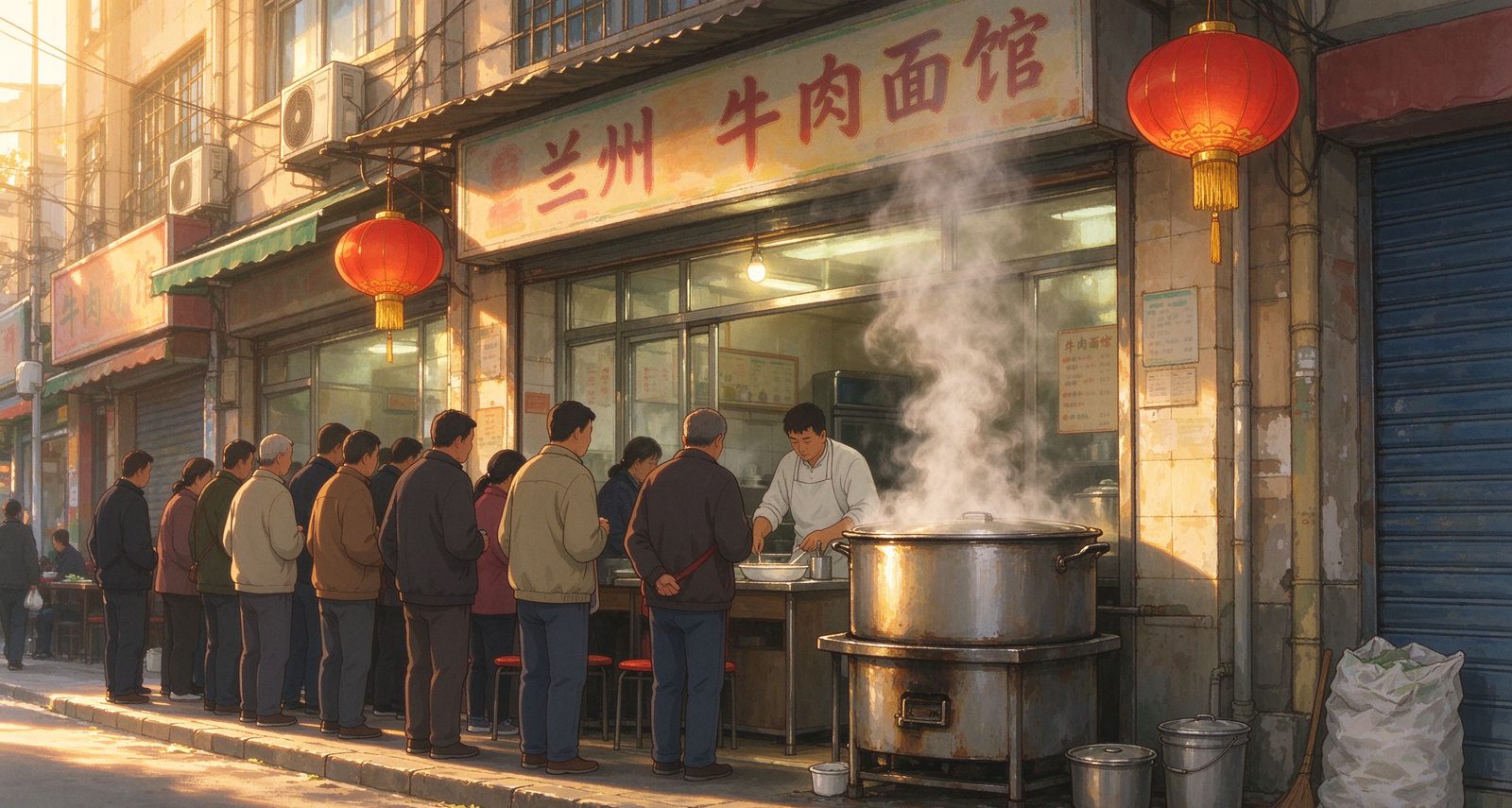 Book this →
4. Between bowls: a 1909 iron bridge and a cable car up the hill
Lanzhou isn't a noodle-only city — it just tastes that way. The city's other icon is Zhongshan Bridge (中山桥), the first fixed bridge over the Yellow River, built in 1909 by German engineers, its steel trusses still carrying pedestrians over water the colour of milky tea. Walk across it at sunset — the light on the river is the best free show in town — and you're at the base of Baitashan Park (白塔山公园), a hill crowned by a white pagoda and Ming-dynasty pavilions. Take the cable car to the top (it saves the 40-minute climb) and you get the whole city in one frame: the river looping through the valley, the bridge below, the noodle city spread flat between the hills. The park and the bridge are free; the cable car is the only real cost. If you're here in the evening, the riverside promenade turns into a night market of skewers and beer — Lanzhou's answer to the cities of the east, laid along the water.
【中文】兰州不是只有面的城市——只是味道上像而已。另一个地标是中山桥——黄河上第一座固定桥梁,1909年德国工程师建造,钢桁架至今仍载着行人跨过奶茶色的河水。日落时走过去——河面上的光是全城最好的免费演出——桥头就是白塔山公园,山顶一座白塔和明代亭台。坐索道上山(省去40分钟爬坡),整座城尽收眼底:黄河在山谷里绕出弧线、铁桥在脚下、面之城平坦地铺开在两山之间。公园和桥免费;索道是唯一的花销。晚上来,河滨步道变成烤串啤酒夜市——兰州给东方城市群的回信,就沿水摆开。 Book this →
 Book this →
5. Getting there: the rail hub of northwest China
Lanzhou is the railway crossroads of the northwest, which makes it a natural stop on any Xi'an–Dunhuang or Xi'an–Xinjiang route. From Xi'an North, the fastest trains reach Lanzhou West in about 2h40m, second class around ¥160; from Beijing West it's roughly 6–8 hours depending on the train (overnight sleepers are popular and cheaper). The station — Lanzhou West (兰州西站) — is itself worth a minute: a modern hub built for the Lanzhou–Xinjiang high-speed line, the corridor that made this noodle city a gateway. From the station, the old town and the noodle action on Zhongshan Road are a 20-minute metro ride or a ¥20–30 taxi. If you're building a China route around food — hotpot in Chengdu, noodles in Lanzhou, dumplings in Xi'an — this is the missing middle, and the rail connections make it painless. Book tickets a few days ahead on busy holiday windows; the route is popular with domestic travellers in October.
【中文】兰州是西北铁路枢纽,天然适合放进任何西安–敦煌或西安–新疆的路线。从西安北出发,最快的高铁约2小时40分到兰州西,二等座约¥160;从北京西约6–8小时(过夜卧铺更常见也更便宜)。兰州西站本身就值得看一分钟:为兰新高铁而建的现代化枢纽——这条走廊把这座面城变成了门户。出站后,老城和中山路一带的面馆带地铁20分钟、或打车¥20–30。如果你想用美食串起中国路线——成都火锅、兰州拉面、西安饺子——兰州就是缺失的中段,铁路连接让它毫无痛苦。节假日窗口提前几天订票;10月这条线在国内游客中很热门。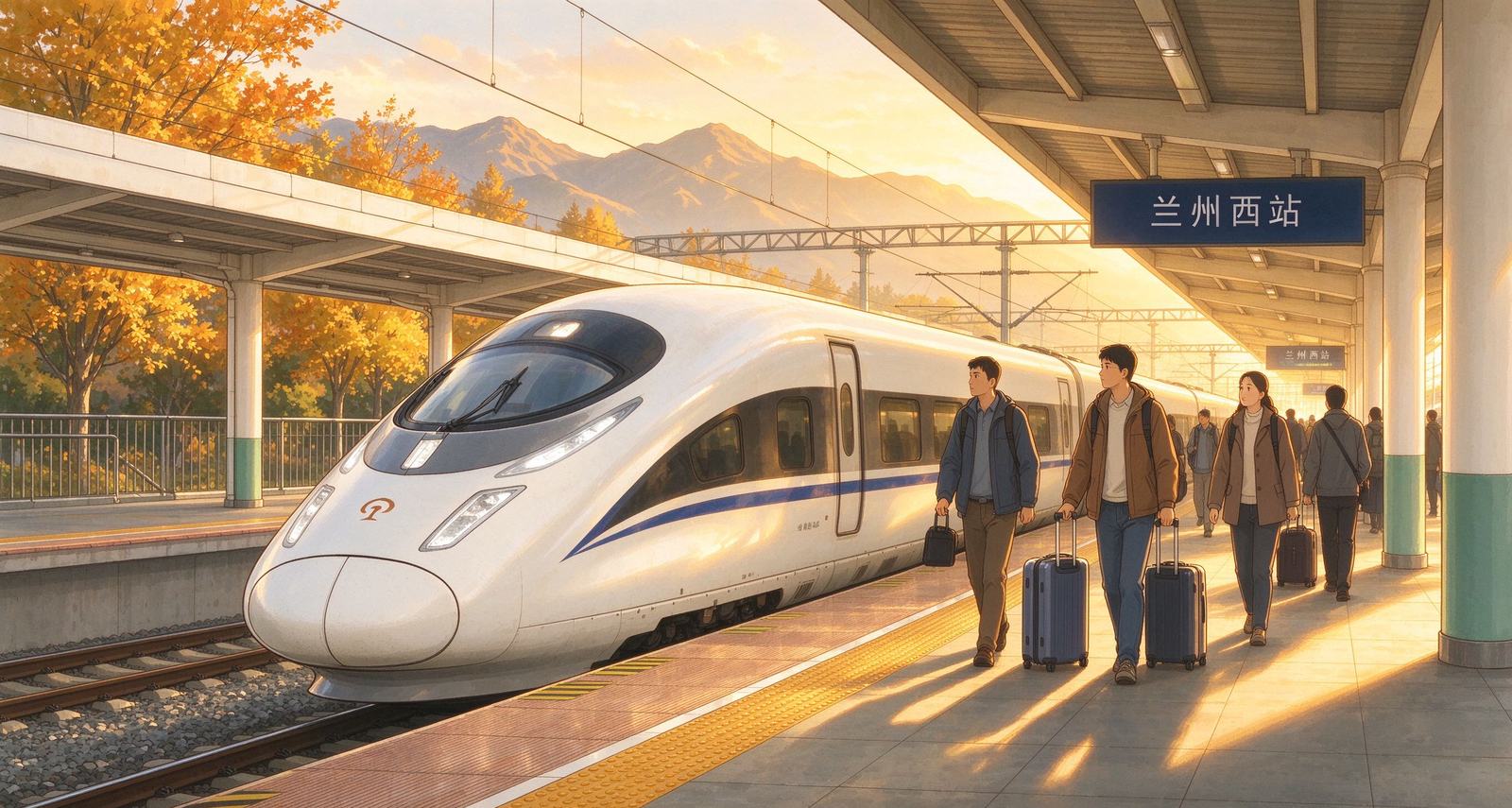 Book this →
6. 2026: the year noodles got a law
Here's how seriously this city takes its bowl: on 1 November 2026, the Lanzhou Beef Noodle Industry Promotion Regulation takes effect — a municipal law that sets standards for the trade, from training noodle pullers to defining what counts as authentic Lanzhou noodles. The city has also certified its first 30 "culture-and-tourism premium shops," the flagship outlets worth seeking out — several of them among the famous names above. For a traveller, the practical upshot is simple: the product is now regulated, the standards are public, and the ¥8 baseline is unlikely to drift far. If your China trip has room for one food detour, make it this one — not for the novelty, but because this is the rare dish where the famous thing and the everyday thing are the same thing, priced like a local meal, not a souvenir.
【中文】看看这座城市有多认真:2026年11月1日,《兰州牛肉拉面产业促进条例》施行——一部为行业立标准的地方法规,从拉面师培训到界定什么是正宗兰州拉面。市里还认证了首批30家"商文旅精品店"——值得专程找的旗舰店,其中几家就在上面提到的名店之列。对旅行者来说,实际好处很简单:产品被监管了、标准公开了、8元基线不太可能大漂移。如果你的中国行程还容得下一顿美食绕道,就选这里——不是因为新奇,而是因为这道菜罕见地让"名菜"与"日常"是同一碗,定价像本地餐,不像纪念品。Bottom line
Lanzhou is the Chinese city that built its identity around a bowl of noodles — and then priced that bowl so fairly that nobody could exploit it. Eight yuan buys you a hand-pulled, five-element bowl that a three-million-person city eats every morning; the 2026 price war proved the margin is a single fen, and the new law guarantees the standard will hold. Add the sunset over the 1909 iron bridge, the cable car view from Baitashan, and the rail hub that puts it all an afternoon from Xi'an, and you have a two-day stop that costs less than one night in a Shanghai hotel. Order erxi, add the extra beef once, walk the bridge at dusk, and eat breakfast where the queue is longest — that's the whole secret to Lanzhou.
【中文】兰州是一座用一碗面建立身份的中国城市——然后把那碗面定价定到谁都无从利用的公平。八元买一碗手工现拉、五要素齐全的面,三百万人每天当早饭吃;2026年的价格战证明毛利只有一分钱,新法又保证标准不会走样。再加上1909年铁桥上空的日落、白塔山上的索道视野、以及从西安一个下午就能到达的铁路枢纽——这是一段两天的停留,花费比上海一间酒店的一晚还少。点二细、加一次肉、黄昏走铁桥、在队排得最长的地方吃早餐——这就是兰州的全部秘诀。