 Book this →
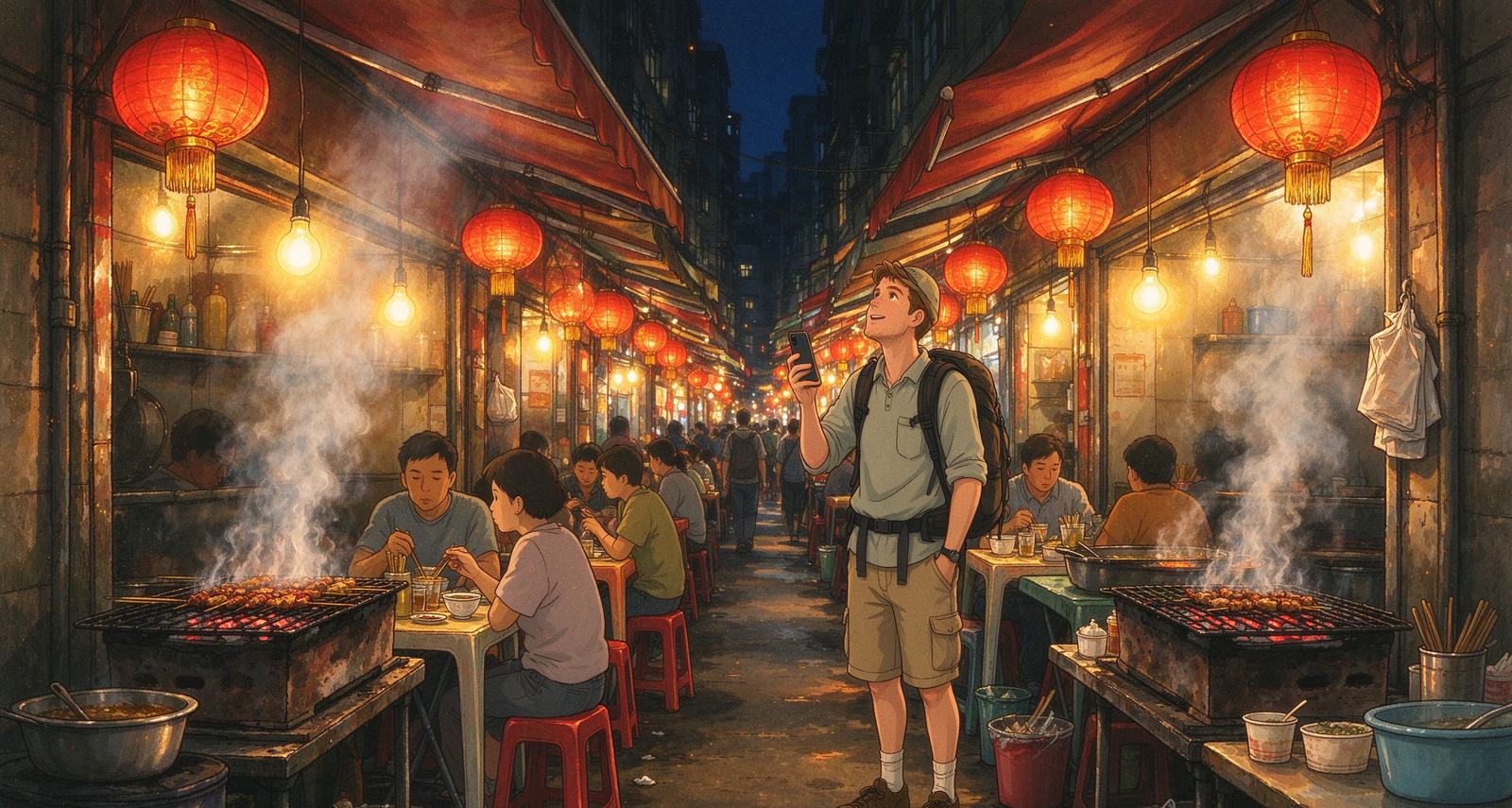
In Chengdu I sat down in a noodle shop with forty-six dishes written on the wall, and not one of them in a language I could read. The woman with a cloth over her shoulder looked at me, looked at the wall, looked back at me, and then did the thing that has saved me in every Chinese restaurant since: she tapped the QR sticker glued to the table.
在成都,我坐进一家墙上写了四十六道菜的小面馆,一个字都看不懂。肩上搭着抹布的大姐看看我、看看墙、又看看我,然后做了那个此后每次救我于水火的动作:指了指粘在桌上的二维码贴纸。That sticker is the single most useful piece of infrastructure in China for a traveller who speaks no Chinese. Somewhere between 70 and 80 percent of the restaurants you will walk into now expect you to order from your phone, not from a person, and the phone menu has photographs, prices and a shopping cart. The language problem does not disappear, but it shrinks from "explain yourself to a stranger" down to "recognise two characters and press a button". I ate three meals a day for three weeks on that, plus about a dozen words I will give you in a table below.
那张贴纸,是不懂中文的旅行者在中国最有用的一项基础设施。你走进的餐馆里,大概七八成已经默认“手机点单”而不是“跟人点单”,手机菜单有图、有价、有购物车。语言问题没消失,但从“向陌生人解释自己”缩成了“认两个字、按一个键”。我就靠这个加十几个词,三周里一天吃三顿。First: the menu is on the table, not on the wall
Open WeChat, tap the plus sign, choose 扫一扫 (sǎo yī sǎo, "scan"), point it at the sticker. Alipay has the same scanner and, if you installed it for payments, it is the easier of the two because the whole app is already in English. The camera resolves a mini-program — a tiny app inside the app, no download — and a menu appears with pictures down the left, prices down the right, and a small plus sign next to each dish.
打开微信,点右上角“+”,选“扫一扫”,对准贴纸。支付宝也有同样的扫码入口,如果你已经为付款装了它,反而更省事,因为整个 App 是英文的。相机会打开一个小程序——不用下载的“应用里的应用”——菜单出来:左边图片,右边价格,每道菜旁边一个小加号。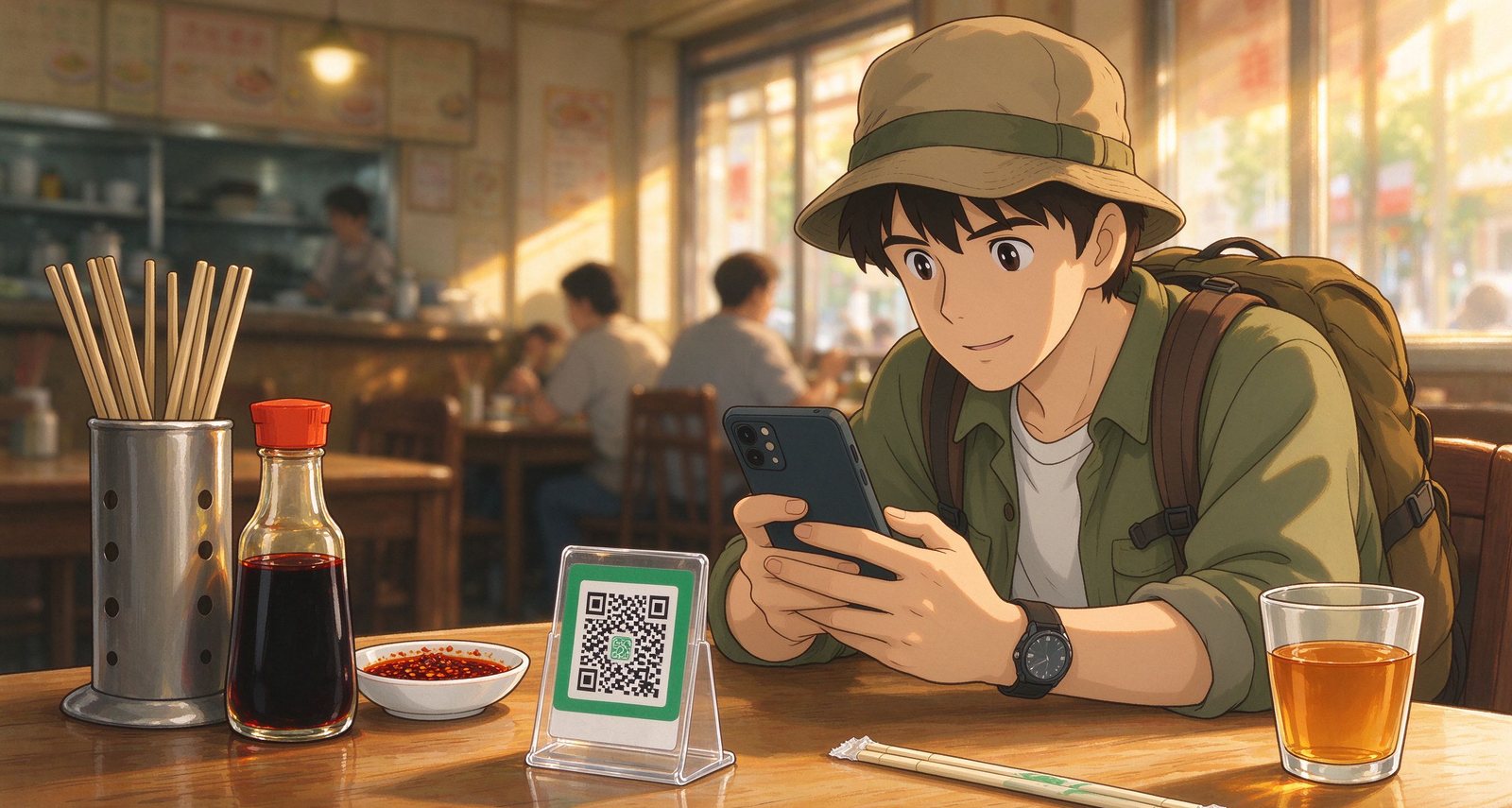 Book this →
Tap a dish and a panel slides up asking for size or spice level — 规格 (specification) and 辣度 (spice level). Choose, then 加入购物车 (add to cart). When you are done, 下单 (place order) or 提交订单 (submit order). Two things regularly interrupt this flow. First, the app may ask for a phone number to "become a member"; there is almost always a small 跳过 (skip) in grey at the bottom. Second, it may ask you to confirm your table number — 桌号 — which is printed on the sticker or on a card on the table, usually something like A12. If the order will not go through, put your hand up and say "菜单" (cài dān, menu); someone will bring a paper one, or a tablet, and point at pictures until you nod.
点一道菜会弹出一个面板问规格和辣度,选完“加入购物车”,都选好后“下单”或“提交订单”。流程里常有两个卡点:一是 App 要你填手机号“成为会员”,底部通常有一行灰色小字“跳过”;二是要你确认桌号,桌号印在贴纸或桌上的牌子上,一般是 A12 这种。要是下不了单,抬手说一句“菜单”,会有人递纸质菜单或平板,指图点到你点头为止。The twelve words that cover most of what you will eat
You do not need grammar. You need nouns, one negator, and the willingness to show the characters on your phone screen instead of pronouncing them. Every word below is something I ordered by saying it, badly, while pointing at the Chinese characters. Nobody ever misunderstood.
不需要语法。你需要的是名词、一个否定词,以及“把汉字举到对方眼前”而不是“念出来”的觉悟。下面每个词我都用过——念得很烂,同时用手指着汉字,从来没被误解过。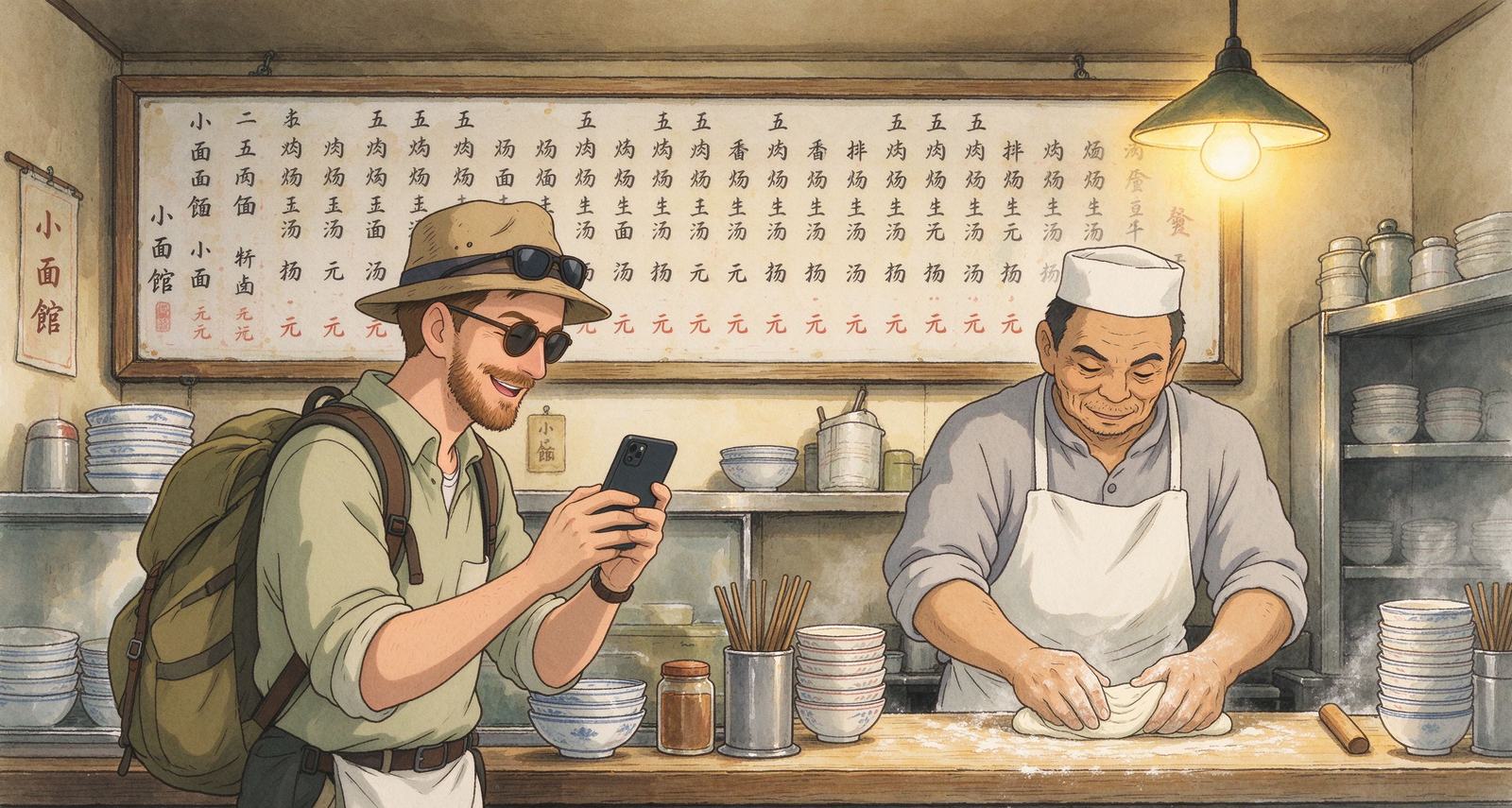 Book this →
| Word | Say it | What it gets you |
|---|---|---|
| 米饭 | mǐ fàn | A bowl of steamed rice. Order it separately; it does not come with the dish. |
| 面 | miàn | Noodles, any kind. 牛肉面 is beef noodles, 拉面 is hand-pulled. |
| 汤 | tāng | Soup. 汤面 is noodles in broth; 汤 alone is a bowl of soup. |
| 牛肉 | niú ròu | Beef. The most reliable meat for visitors, and the cheapest good protein. |
| 猪肉 | zhū ròu | Pork. Assume it is in everything unless you say otherwise. |
| 鸡肉 | jī ròu | Chicken. 宫保鸡丁 is the dish every first-timer ends up ordering. |
| 素 | sù | Vegetarian. 素菜 is a vegetable dish; 素饺子 are vegetarian dumplings. |
| 辣 | là | Spicy. Useful for asking, "is this spicy?" — 辣不辣? |
| 不辣 | bù là | Not spicy. See the warning below before you trust it. |
| 少辣 | shǎo là | A little spicy. This is the phrase that actually works in Sichuan. |
| 不要香菜 | bù yào xiāng cài | No cilantro. Enormously useful, and half of China puts cilantro in everything. |
| 打包 | dǎ bāo | Takeaway, please. They will hand you a box, sometimes charge ¥1–2 for it. |
| 买单 | mǎi dān | The bill. In many places you walk to the counter instead of asking. |
How to say no so it actually lands
The negation pattern is 不要 (bù yào) plus the thing: 不要辣, 不要香菜, 不要葱 (no spring onion), 不要冰 (no ice). It is blunt, and blunt is correct — politeness in a busy kitchen is a waste of everyone's time. If you have an allergy, do not rely on pronunciation. Screenshot or write this and show it: 我对花生过敏,吃了会休克 (I am allergic to peanuts, eating them makes me go into shock). Swap 花生 for 海鲜 (seafood), 牛奶 (milk) or 鸡蛋 (egg) as needed. 过敏 is the word for allergy and it appears on hospital forms, not on menus, so staff will take the sentence seriously.
否定句式就是“不要”加东西:不要辣、不要香菜、不要葱、不要冰。听着很生硬,但生硬才是对的——忙起来的后厨没空欣赏客气。如果有过敏,别靠嘴说:把“我对花生过敏,吃了会休克”写在手机上给对方看,把“花生”换成“海鲜/牛奶/鸡蛋”即可。“过敏”这个词出现在医院表格而不是菜单上,所以店员会当回事。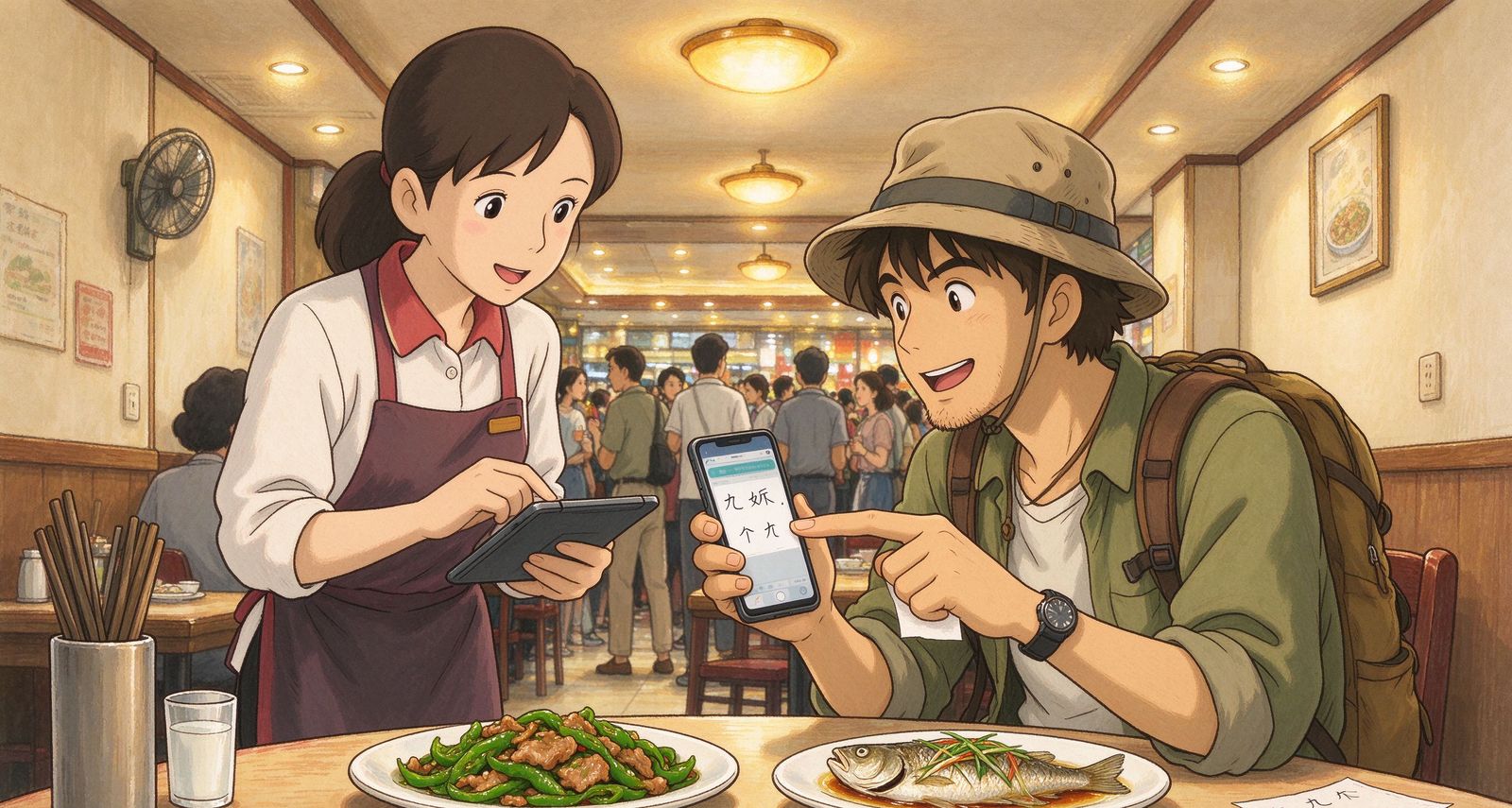 Book this →
One cultural footnote worth knowing: in Sichuan and Chongqing, "not spicy" is often heard as "less spicy". The chili oil is already in the pot, the marinade is already on the meat. 微辣 (wēi là, "slightly spicy") is the honest request, and it still means a red surface. If you genuinely cannot handle heat, order 清汤 (clear broth) hotpot, or stick to 蒸饺, 白粥, 汤面 and 炒饭 for the first two days and let your stomach negotiate.
一个必须知道的文化注脚:在四川和重庆,“不辣”常被听成“少辣”。红油已经在锅里,腌料已经在肉里。“微辣”才是诚实的请求,而微辣仍然是一层红。真吃不了辣,就点清汤锅,或者头两天老老实实吃蒸饺、白粥、汤面、炒饭,让胃自己去谈。Breakfast at 6:30, for about ¥8
The best-value meal in China is the one you eat standing up. At 6:30 in the morning, outside almost any metro station, there is a cart with a flat iron griddle and a queue of people in work clothes. 煎饼果子 — a mung-bean-and-wheat batter spread thin with a bamboo scraper, an egg cracked on top, pickles, cilantro, chili sauce, and a sheet of fried cracker folded inside — costs ¥8 to ¥12 and takes ninety seconds. Add a bag of warm soy milk (豆浆, ¥2–3) and you are done until lunch.
中国性价比最高的一餐,是站着吃的那一餐。早上六点半,几乎任何一个地铁口外面都有一辆平底铁板小车,排队的都是穿工装的人。煎饼果子——绿豆面糊用竹刮摊薄,磕一个蛋,抹酱、撒香菜和榨菜、放薄脆,折起来——8 到 12 元,九十秒出锅。再加一袋热豆浆(2—3 元),能撑到中午。 Book this →
You pay by scanning the vendor's personal QR code — the one taped to the cart, usually next to a laminated card with a photo. Type the amount, confirm, and wait for the small speaker on the cart to announce "微信到账" (WeChat payment received) out loud. That announcement is your receipt. Nobody prints anything. If the speaker stays silent, show the vendor your payment-success screen; nine times out of ten the network was slow, not the payment missing.
付钱是扫摊主自己的收款码——贴在车上、旁边通常还有一张塑封的小牌子。输入金额、确认,然后等车上的小喇叭响一句“微信到账”。那声播报就是收据,没人给你打小票。喇叭要是不响,把付款成功的页面给对方看:十次有九次是网络慢,不是没付上。What a meal actually costs in November 2026
These are the numbers I paid in Chengdu, Xi'an and Chongqing over three weeks, cross-checked against what locals told me was normal. They are street-level, not tourist-level. Any restaurant with a photo menu and an English translation on the pavement is charging two to three times these figures for the same food, and you are paying for the translation, not the noodles.
下面是我三周里在成都、西安、重庆实付的价钱,也和本地人说的“正常价”对过。这是街边价,不是景区价。任何一家把带图英文菜单摆在门口的店,同样的东西收两到三倍——你付的不是面钱,是翻译费。| What | Typical price |
|---|---|
| 煎饼果子 / 包子 / 豆浆 (breakfast) | ¥8–12 · ¥2–3 per soy milk |
| 蒸饺 or 小笼包, one basket | ¥12–20 |
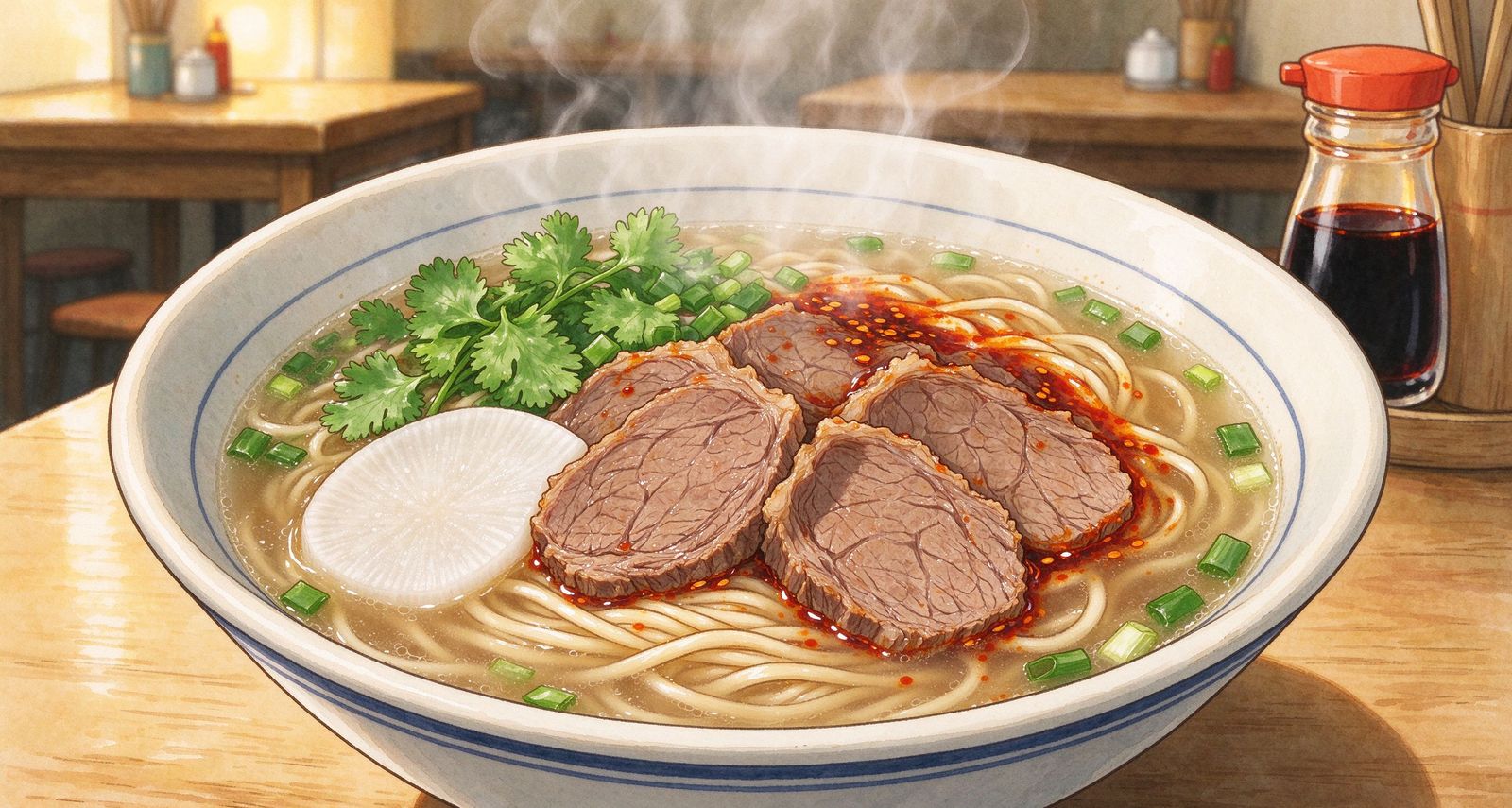
| 牛肉面, small shop | ¥15–22 |
| 盖饭 (rice with one dish on top) | ¥18–28 |
| Hotpot, per person, with beer | ¥70–120 |
| Convenience-store dinner (bun, tea egg, oden) | ¥12–20 |
| Coffee, local chain | ¥15–25 |
 Book this →
Note what is missing from that table: service charge, tax, tip. China has none of them at this level. The price on the menu is the price on the bill, and the bill is usually a number shouted from the counter. Budget ¥100 a day for food if you eat where people who live there eat, and ¥250 if you eat in hotel restaurants and mall food halls.
注意表里少了什么:服务费、税、小费。这个价位上中国三样都没有。菜单上的价就是账单上的价,而账单通常只是收银台喊出来的一个数字。按本地人吃饭的地方吃,一天 100 元够;在酒店餐厅和商场美食城吃,250 元起。Hotpot, explained once
Hotpot is the one meal where the QR menu genuinely helps, because you order raw ingredients, not dishes, and every ingredient has a picture. Ask for 鸳鸯锅 (yuān yāng guō) — a divided pot, half red, half clear — and you get both without an argument. For two people, order three plates of meat, two of vegetables, one of tofu or mushroom, and one starch (noodles or rice cake) at the end. Thin-sliced beef cooks in eight to ten seconds. Tripe (毛肚) is done in about fifteen, which is why locals swirl it in and out of the boil seven or eight times rather than dropping it in.
火锅是扫码菜单真能救命的场合——你点的是生料而不是成菜,每样都有图。开口要“鸳鸯锅”,一半红汤一半清汤,不用争论。两个人点三盘肉、两盘菜、一份豆腐或菌菇,最后加一份主食(面或年糕)。薄切牛肉八到十秒;毛肚大约十五秒,所以本地人是“七上八下”地涮,而不是丢进去煮。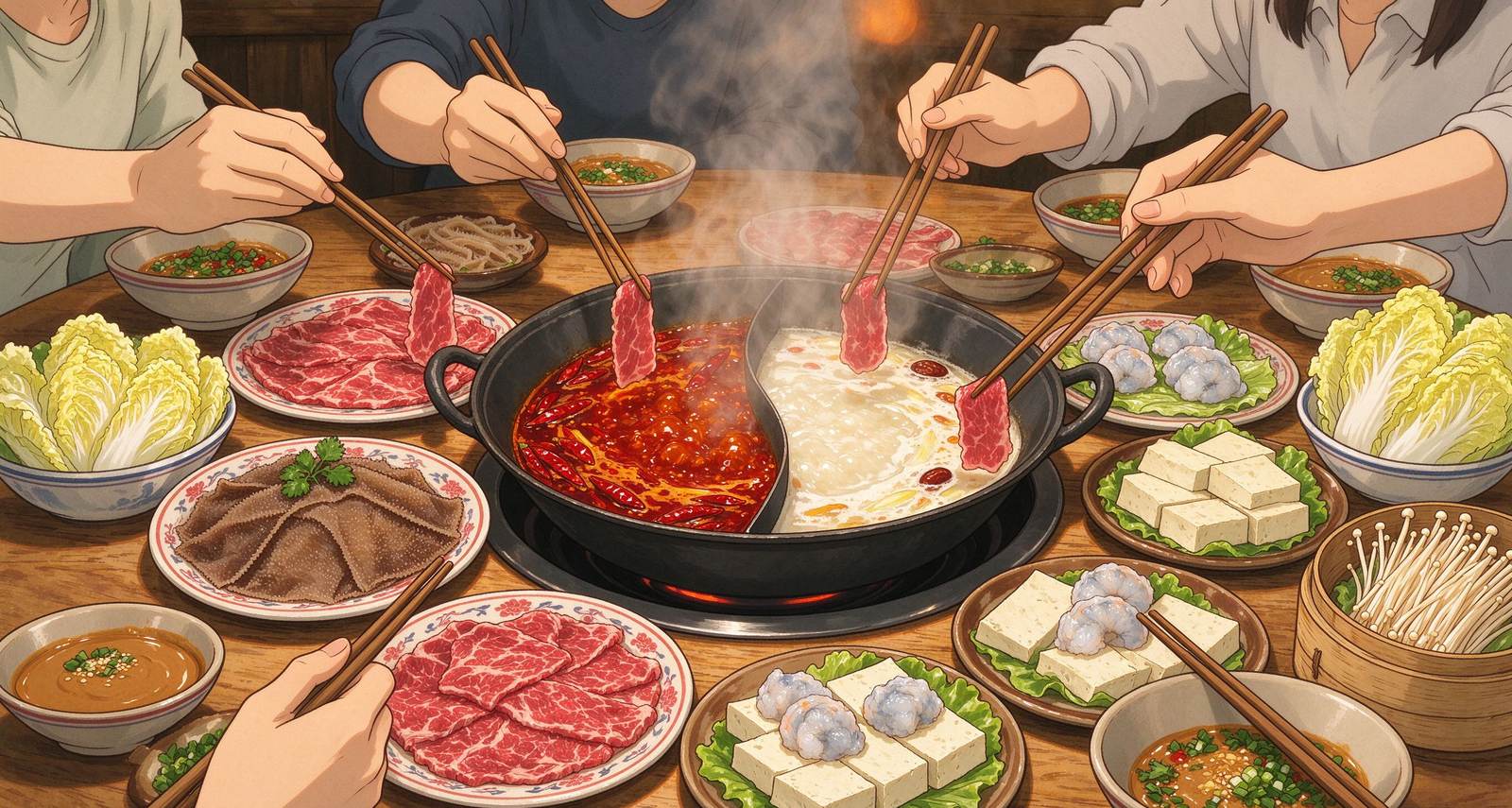 Book this →
The sauce is self-service — find the 小料台 (condiment counter) and build your own. Northern-style is sesame paste (麻酱) with garlic and cilantro; Sichuan-style is香油 (sesame oil) with garlic, vinegar and chili. Do not drink the broth at the end. It has been boiling for two hours and it is mostly salt and oil, and every local will tell you the same thing while ordering another beer.
蘸料是自助的——找“小料台”自己调。北方是麻酱加蒜末香菜,四川是香油加蒜、醋、辣椒。最后别喝汤:那锅已经滚了两个小时,主要是盐和油,每个本地人一边这么劝你,一边再点一瓶啤酒。The convenience store is a restaurant too
At 11pm, when the streets are still loud but you are too tired to read a menu, walk into any 7-Eleven, FamilyMart, Lawson or local 便利店. There is a hot cabinet with tea eggs (茶叶蛋, ¥2–3), steamed buns, and 关东煮 — skewers of radish, fish cake and tofu simmering in broth, charged by the piece. Add a cold noodle box and a bottle of oolong tea, and you have dinner for under ¥25, eaten on a plastic stool outside, watching scooters go past.
晚上十一点,街上还吵,人已经累到不想看菜单,就走进任何一家 7-11、全家、罗森或本地便利店。热柜里有茶叶蛋(2—3 元)、包子、关东煮——萝卜、鱼豆腐、豆制品在汤里煮着,按件算钱。再拿一盒凉面和一瓶乌龙茶,25 元以内解决一顿,坐在门口的塑料凳上,看电动车来来去去。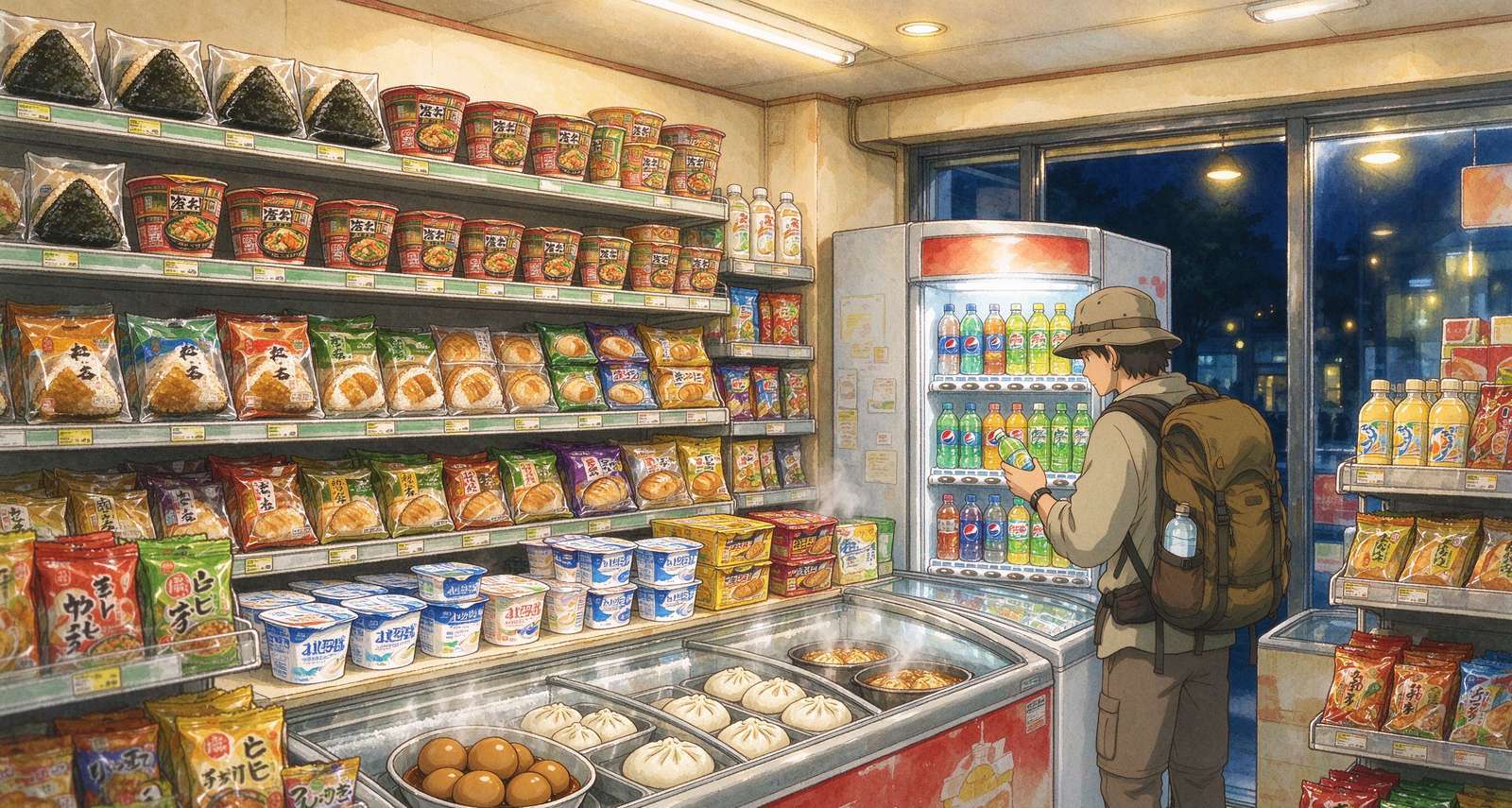 Book this →
Five small traps
One: 田鸡 (tián jī) is frog, not "field chicken", and it is on a lot of menus in the south. Two: 微辣 is the only spice request that survives contact with a Sichuan kitchen. Three: nobody tips, and leaving cash on the table will get you chased down the street with it. Four: tap water is not drinking water; hotels give you two bottles a day, and every street has a shop selling ¥2 water. Five: in busy places you take a number at the door (取号) and wait for it to be shouted — hovering by the till does not move you up.
一,“田鸡”是青蛙不是“田里的鸡”,南方菜单上很常见。二,“微辣”是唯一能在四川后厨存活下来的辣度请求。三,没人给小费,把钱留在桌上会被追出门口塞回来。四,自来水不是饮用水,酒店每天给两瓶,街上到处有 2 元一瓶的水。五,忙的店要在门口“取号”,等叫号,站在收银台旁边并不会让你往前排。The 30-second routine I used every day
Scan the sticker. If the menu has pictures, pick two dishes and one starch — that is a complete Chinese meal, and ordering three dishes for one person is how you end up with a table full of food and a ¥180 bill. Say 不辣 or 微辣 while pointing at the dish. Confirm the price on screen, because the cart total is the truth and the spoken number is not. Pay by scanning the counter code when you leave, not when you order. Then walk out into the noise, which is the actual point of eating here.
扫贴纸。菜单有图就点两道菜加一份主食——这就是一顿完整的中国饭,一个人点三道菜的结局是一桌剩菜和 180 元账单。指着一道菜说“不辣”或“微辣”。看清屏幕上的总价,购物车合计才是真的,嘴里报的数不是。走的时候扫柜台码付款,不是点单时付。然后走进那片喧闹里——那才是来这里吃饭的意义。 Book this →
On my last night I ordered without thinking: 蒸饺, 不要香菜, 一壶茶. The woman behind the counter nodded before I finished the sentence. Three weeks earlier I had been standing in front of a wall of characters with my phone out like a torch. The food did not change. What changed was that I stopped being a guest at my own table.
最后一晚我几乎没过脑子就点完了:蒸饺、不要香菜、一壶茶。话没说完,柜台后的大姐已经点头。三周前我还举着手机像举着火把站在一墙汉字前面。吃的东西没变,变的是我不再像是坐在自己桌子上的客人。