Qinghai Lake and Chaka salt flats in one day — the tour I'd actually book
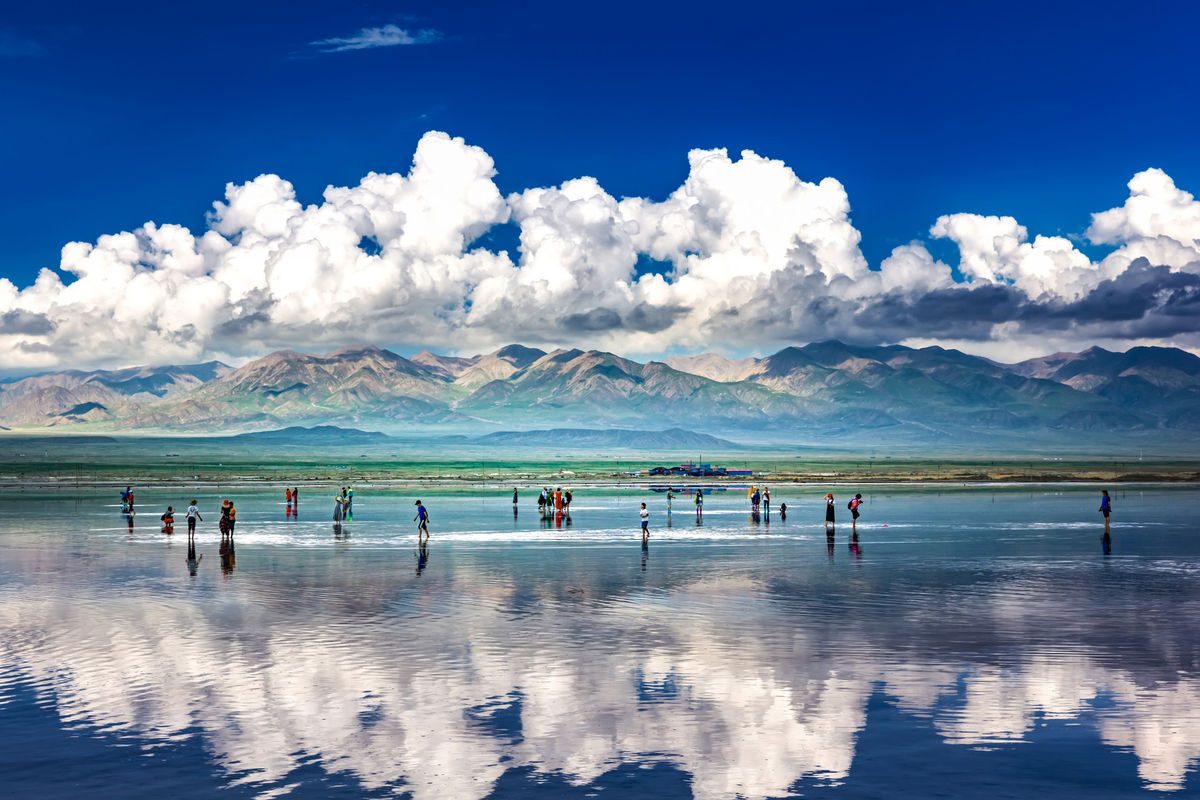
At 05:40 the hotel lobby in Xining smells of instant coffee and nobody is fully awake. A woman in a puffer jacket asks the guide whether she needs a swimsuit for Chaka. He says no, twice, and she keeps the swimsuit in her bag anyway. Three hours later she is standing ankle-deep in ten centimetres of brine, holding her phone at waist height, and the lake is doing something no beach on earth does: it is copying the sky back at her, cloud for cloud.
That is the whole reason this day works. Qinghai Lake and Chaka are not two attractions you tick off; they are two completely different optical tricks played by the same plateau, and they sit 300 km apart on roads where the public bus network essentially gives up. So the plan below is built around one real, bookable product — a Xining departure that runs Qinghai Lake, Chaka and the Riyue Pass in a single day — and every timing and inclusion here is read off that listing, not off a brochure.
Open the product page: dates, inclusions, live price →Xining day tour · Qinghai Lake + Chaka + Riyue Pass · English guide optionWhy this day needs a vehicle, not a plan
Xining sits at about 2,270 m. Erlangjian, the main gate on Qinghai Lake, sits near 3,200 m and roughly 150 km out. Chaka is another 150 km past that, on the other side of the lake's western shoulder. Do the arithmetic and you get a loop of well over 600 km with three high passes in it, one of which — Riyue Mountain — climbs to around 3,520 m.
You can do it yourself. People do: a hired car with a driver, or a self-drive with a Chinese licence. But the public-transport version is a chain of county buses that eats the daylight you came for, and the lake's shoreline is long enough that the wrong bus stop puts you two hours from the water. The tour's value isn't the commentary. It's that somebody else is awake at 05:40 and knows which gate takes the group booking.
What the listing actually promises
Stripping the marketing down to facts you can hold on to:
- 4.8 out of 5, from 17 reviews. Small sample, high score — read the reviews for complaints about the return time rather than for praise.
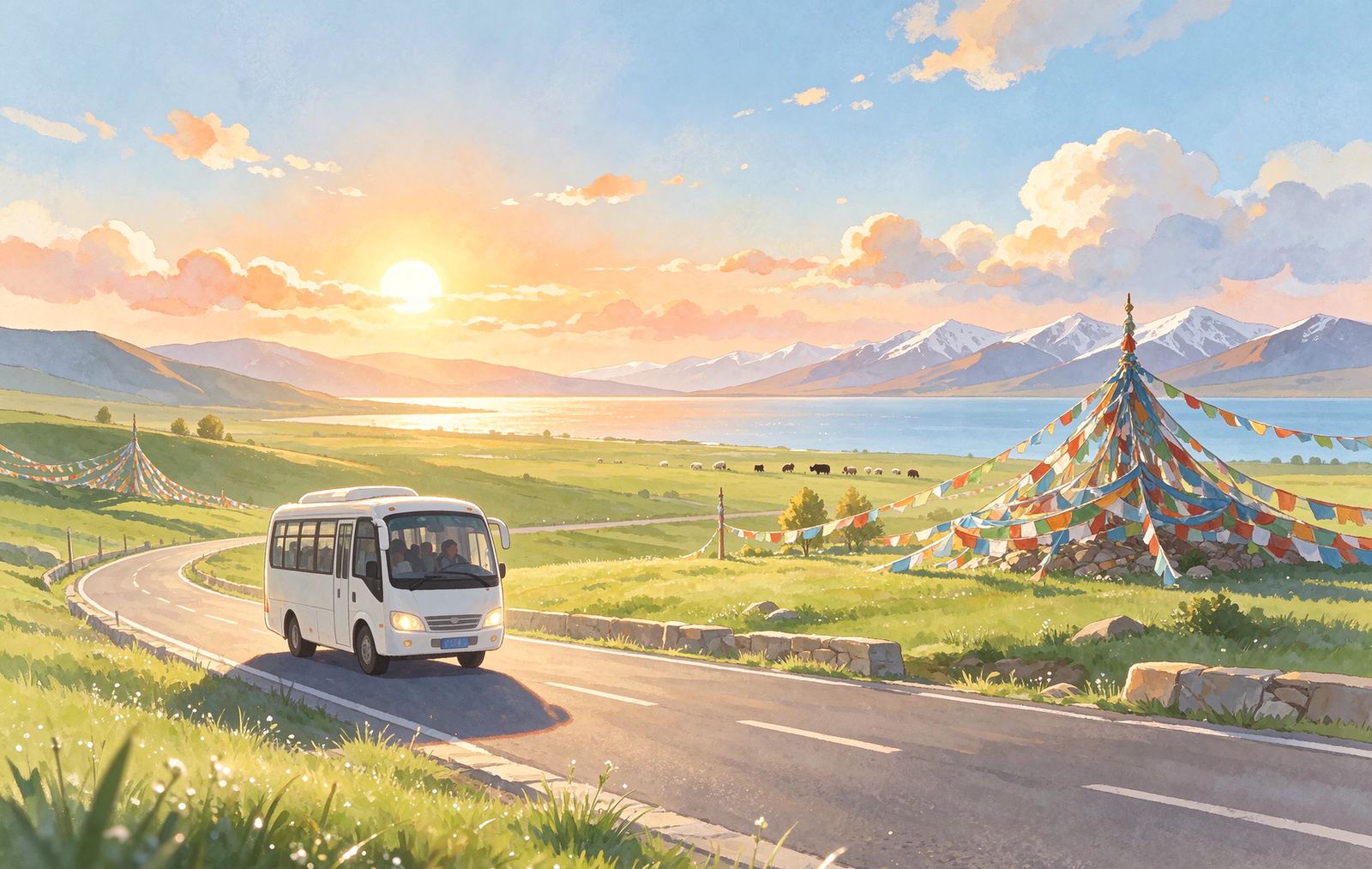
- A join-in group of 2 to 55 people, with an English-language guide option. Fifty-five is a coach, not a minibus. Ask yourself whether you mind that before you book, because the day is long and the group is the group.
- One day, three stops, one early start. The listed meeting time runs from 06:00 and the operator notes it can shift with road conditions, weather and where your hotel is.
- Book by 16:59 the day before. This is not a walk-up product; the gate bookings are made in advance.
- Cancellation is tiered, not free: 20% fee from seven days out, 40% at four days, 60% at three, and 100% from 23:59 the day before. Weather on the plateau is exactly the kind of thing that makes people want a free cancellation — this product doesn't offer one, so buy travel insurance or accept the risk.
What it does not include: the internal shuttle buses and the boot rental at Chaka, any cable car, and meals. Those are paid on site, in cash or by phone, and they are small money compared with the day itself.
Stop one: the Riyue Pass, where the day changes temperature
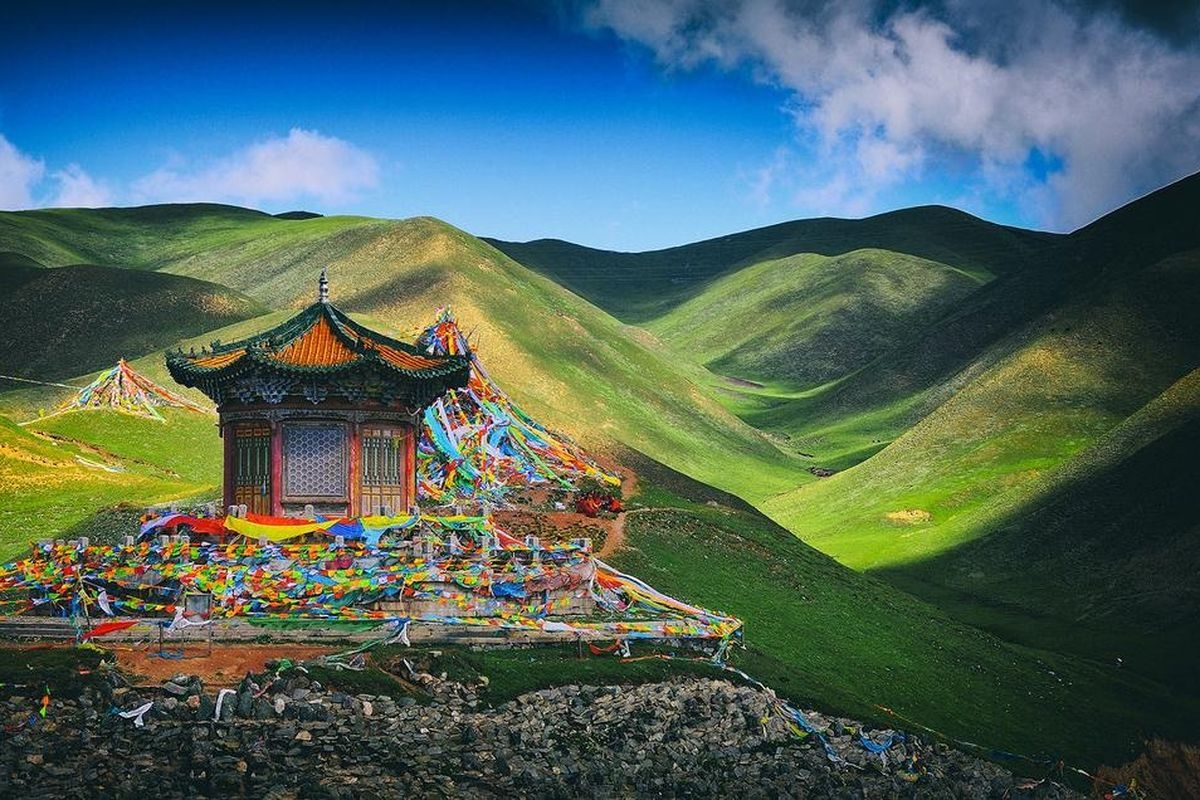
Riyue Mountain is the seam between the farming valley you left and the grazing plateau you're entering, and the wind at the top is the first honest thing the day tells you. There are prayer flags, a small pavilion, a couple of stalls selling dried yak and thermos tea, and a viewing platform that fills with people in fifteen minutes because every tour stops here at roughly the same time.
Twenty minutes is enough. Walk past the stalls to the far side of the platform, where the valley opens and you can see the road you're about to take. If your head starts to thump here, it isn't imagination — you've just climbed 1,250 m above your breakfast. Drink water, don't run up the steps for the photo.
Stop two: Erlangjian, the lake that looks edited
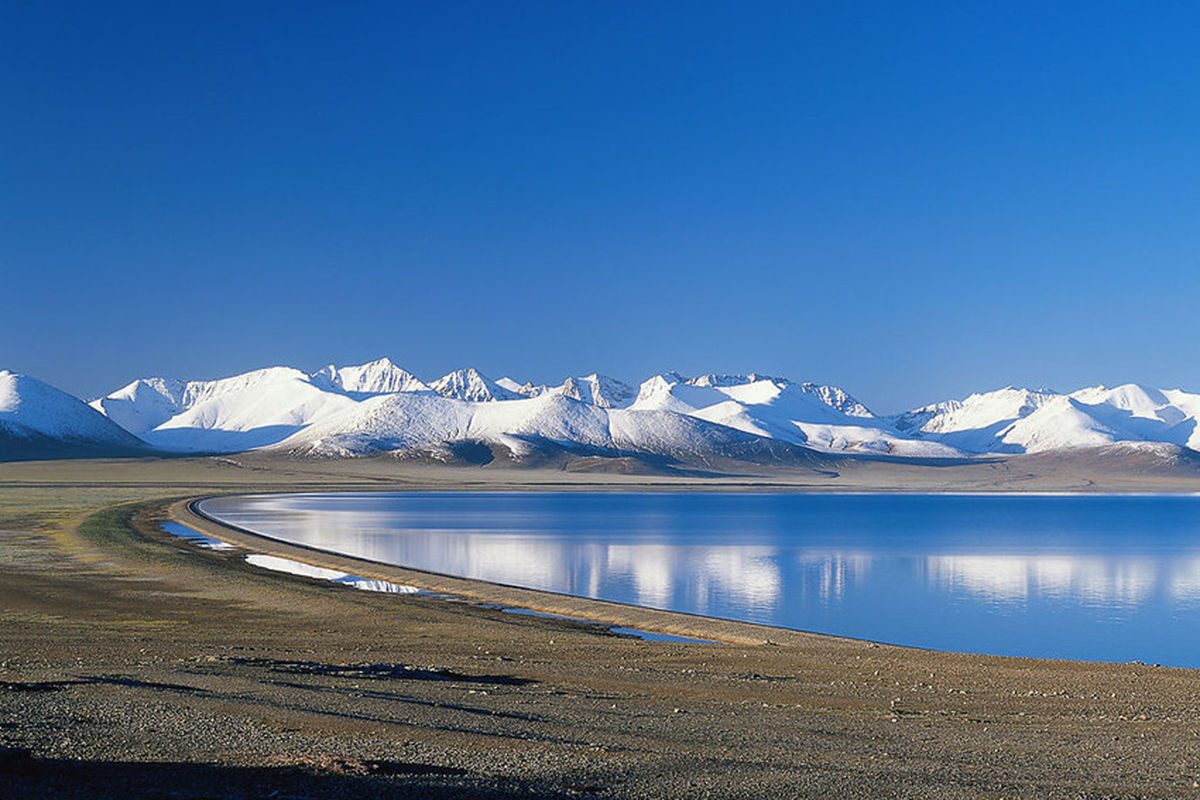
Qinghai Lake is China's largest inland lake, roughly 4,400 square kilometres of salt water at 3,200 m, and Erlangjian is the developed gate on its southern shore: a wide boardwalk, a jetty, a few folk-art pavilions, and a shoreline that goes from turquoise to deep blue as the clouds move. It is the least wild part of the lake and the easiest place to actually stand at the water's edge without trespassing on a grazing pasture.
The trick here is timing, not location. Midday light flattens the colour; the lake looks best when the sun is at 30 degrees and the sky still has structure. If the tour arrives at noon, spend your hour walking away from the jetty in either direction — a hundred metres buys you an empty boardwalk and a much better photograph than the queue at the sign.
Stop three: Chaka, the mirror that isn't a beach
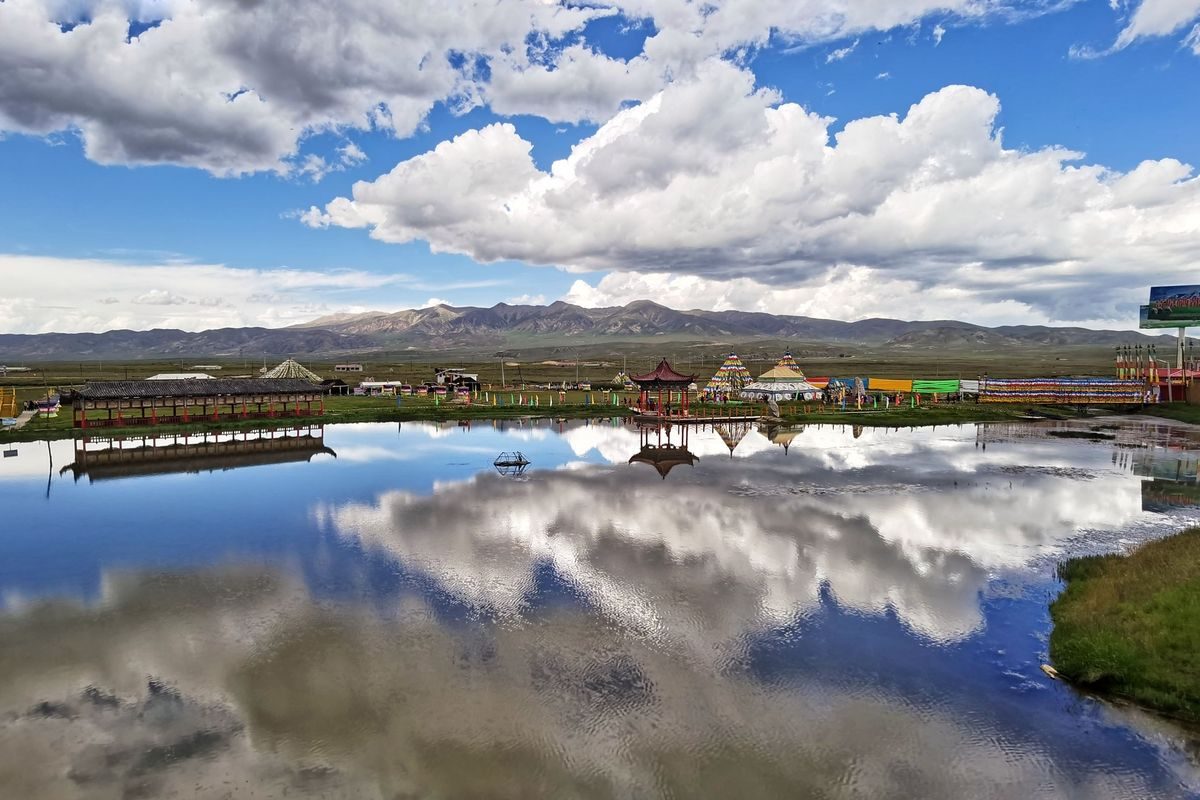
Chaka Salt Lake sits around 3,100 m, a shallow brine pan where a crust of salt sits a few centimetres above the water table. When the wind drops, the water becomes a floor-to-ceiling mirror: you, the clouds, the ridge behind you, upside down and perfectly doubled. When the wind doesn't drop, it's a bright white flat with grit blowing into your teeth and everyone's photos look like a badly lit car park.
Boots, wind and the shuttle
Two practical things decide your hour here. First, boots: the salt crust cuts, the brine is cold, and renting the rubber boots at the entrance is the difference between walking out to the clean water and hobbling back. Second, the internal shuttle: the scenic area is big and the walking route to the mirror section is longer than it looks on the map, so most people pay for the little train and save their legs.
And the wind. Chaka is a high, open pan; on a gusty afternoon the mirror never forms, and no guide can fix that. If the water is choppy when you arrive, shoot low and close, use the crust texture instead of the reflection, and stop waiting for the postcard. The product page can tell you what's included; it can't tell you which way the wind will blow.
The altitude paragraph nobody reads
You start at 2,270 m, spend the day between 3,100 and 3,520 m, and go back down in the dark. That is a real profile, and the people who get hurt on this route are almost never the fittest — they're the ones who jog up the steps at the pass for a photo, skip lunch, and drink nothing because the toilet situation is inconvenient.
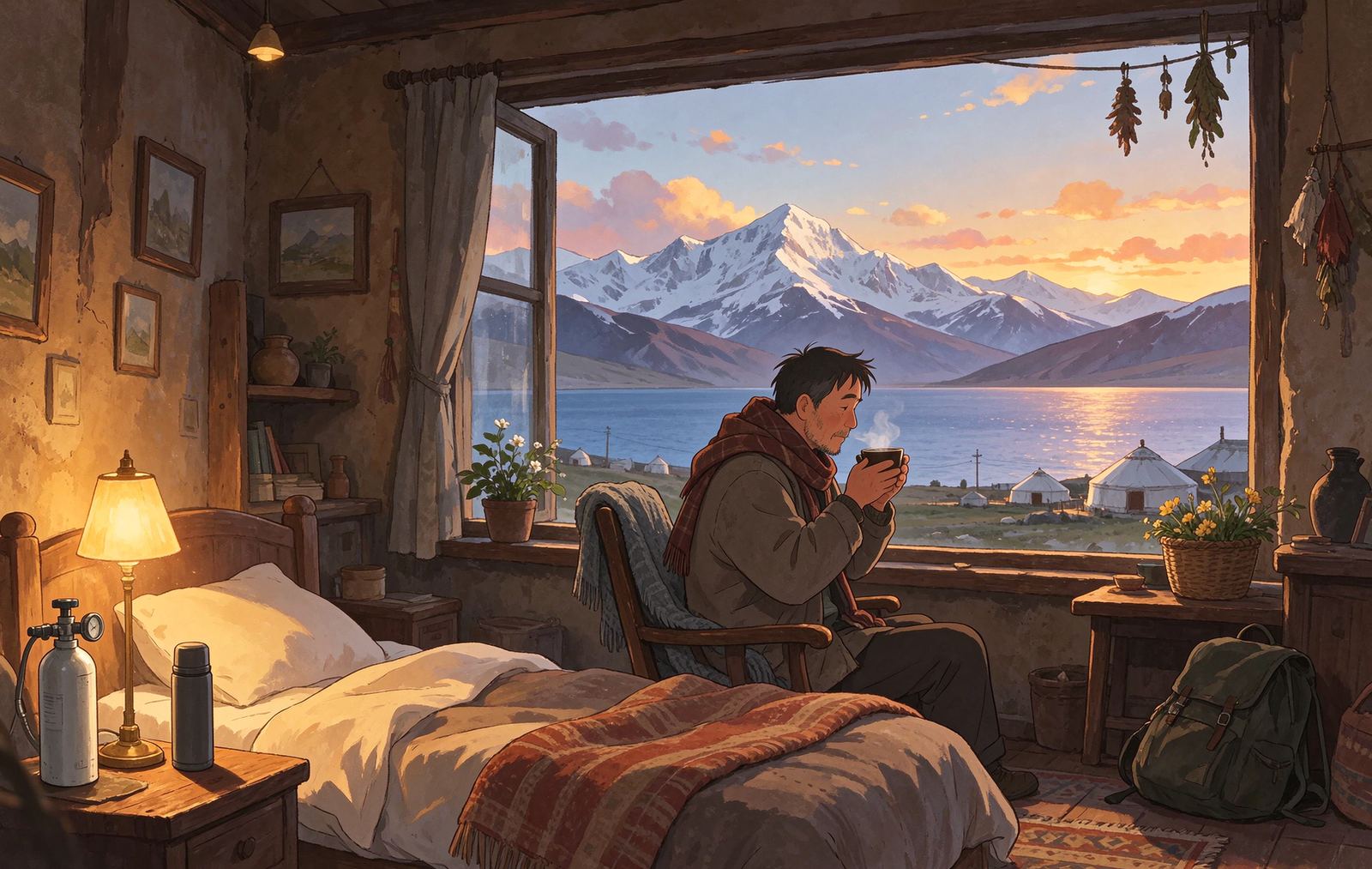
What actually works: water constantly, no alcohol the night before, a proper breakfast, and a slow first hour at altitude. Headache and mild breathlessness at the pass are normal and pass. Vomiting, a headache that gets worse when you bend forward, or confusion are not normal, and the honest move is to tell the guide and sit in the vehicle. Oxygen cans are sold everywhere along this road for a few yuan; they're a comfort, not a treatment.
Food, tents and the butter-tea stop
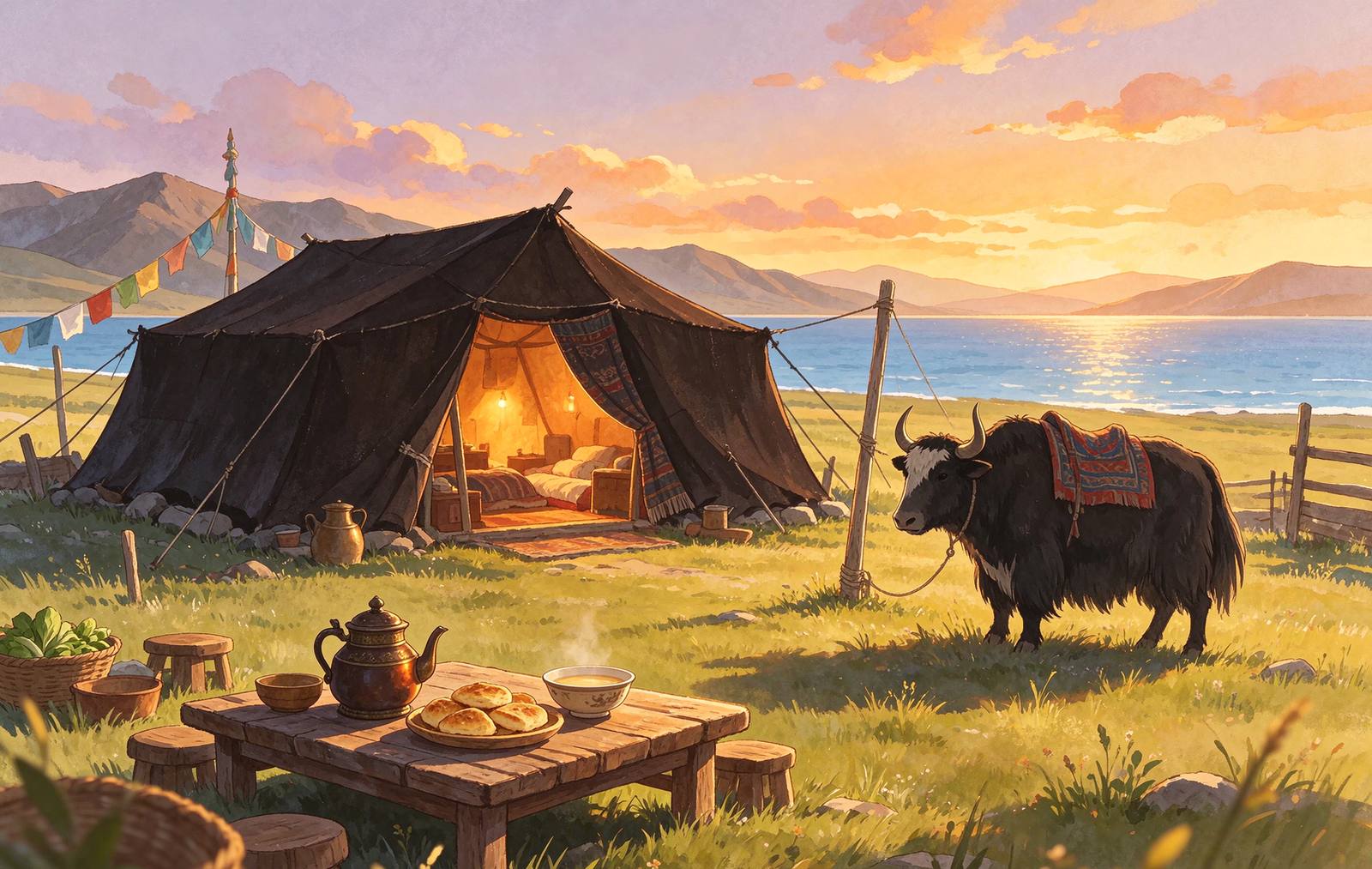
The eating on this route is plateau food, and it's better than the reviews suggest: hand-pulled noodles in Xining before departure, then along the lake a lunch of yak meat, potatoes, and a thermos of butter tea that tastes like salted cream the first time and like comfort the second. Vegetarians should say so in advance — the default assumption on this road is meat.
If your operator stops at a nomad tent camp, go in. The tents on the lake's southern shore run tea, yoghurt and a photo-with-a-yak business that is entirely honest about being a business. Buy the tea, skip the costume if you don't want it, and ask before photographing anyone's animals — a five-yuan note solves most of it, and a smile solves the rest.
Four ways to do this day, honestly compared
| Route | Time on the road | Tickets and gates | What it costs you |
|---|---|---|---|
| This join-in day tour | 600+ km loop, all of it driven for you | Handled at the gate, group booking | A 06:00 start and a coach-sized group |
| Private car with driver | Same loop, your own pace | Yours to buy; driver usually helps | Priced per vehicle — fine for three or four |
| Self-drive | Same loop, you at the wheel | Yours, plus parking | Chinese licence, altitude, and night driving |
| Public buses, two days | Half a day of waiting, per leg | Yours at every window | The cheapest cash, the most expensive daylight |
My rule: if you have exactly one spare day in Qinghai, take the tour and let someone else hold the wheel for fourteen hours. If you have three days, do the lake slowly with a driver and add a night at Chaka so you get the mirror at sunrise, when the wind hasn't woken up.
Four things that go wrong, in the order they usually do
1. The booking was made too late. Cut-off is 16:59 the day before, and the gate allocations are real-name. If your date is full, the honest outcome is a different date — not a miracle at the meeting point.
2. Somebody packed for a beach. Chaka is 3,100 m and windy; a swimsuit is a joke, a windproof shell is not. Add a hat with a chin strap and sunglasses with real UV protection — the salt flat is a giant reflector.
3. The return time was never checked. This is a fourteen-hour day, not a half day. Don't book a train out of Xining for the same evening without a wide margin, and don't promise anyone dinner.
4. The group size was ignored. Fifty-five people means two toilet stops become forty minutes and one late couple delays every departure. If that would ruin your day, book the private version instead of complaining about it afterwards.
Who this isn't for
Photographers who want the lake at 06:00 with nobody in frame: this is not that. Families with very small children: the altitude and the drive are a bad combination at this pace. Anyone with heart or lung conditions: get a doctor's view first, because 3,500 m is not a trivial number. And people who hate sitting in a vehicle: the day is 60% road, and no itinerary changes that.
Everyone else — and this is the point — gets two landscapes that don't resemble anything else in China, in the single day most people actually have.
By the time the minibus drops you back in Xining your shoes are white with salt and your phone has ninety photographs of the same cloud. That's the day. It is long, it is badly lit for half of it, and the mirror at Chaka is a gamble on the wind — but there is no other way to see a lake the size of a small country and a salt pan that copies the sky, in the one day you gave Qinghai.
Check availability, inclusions and the price for your date →Xining departure · Qinghai Lake + Chaka + Riyue Pass · book by 16:59 the day beforeSinoTrip Guide · product facts read from the Trip.com listing on 2026-11-17 · prices are whatever the product page shows on your travel date · commentary and route advice are ours.