
Three days is the right size for Xi'an — one for the Terracotta Army out of town, one for the wall and the food streets inside the old city, and one for temples, museums or a night-show. Xi'an is cheaper and more walkable than Beijing or Shanghai, and almost everything worth seeing clusters either inside the ancient wall or a short trip out to Lintong. Expect to spend about ¥500–800 per person per day (roughly $70–110 USD) for a comfortable mid-range stay, including hotels, transport, tickets and food. The single most important move is to do the warriors on your first full morning, before the tour buses arrive.
【中文】三天正好够玩西安:一天给城外的兵马俑,一天给老城的城墙和美食街,一天给寺庙、博物馆或夜景演出。西安比北京上海便宜、也好走,值得看的要么在古城墙里、要么去临潼一小段车程。中档舒适游约每人每天¥500–800(约$70–110美元),含住宿、交通、门票、餐饮。最关键的一招:第一个完整上午就去兵马俑,赶在旅游大巴之前。One 2026 heads-up: Pit 2 of the Terracotta Army reopened on 1 October 2026 after a half-year exhibition upgrade, so all three pits are now fully on show — but expect a one-way "west-in, east-out" flow while the finishing touches settle. Book your tickets through the official museum channel; the museum explicitly states it has not authorised any third-party platform to sell them.
【中文】一个2026年提示:兵马俑二号坑经过半年改陈,已于2026年10月1日重新开放,现在三个坑全开放——但收尾期间可能是"西门进、东门出"的单向通行。门票走博物馆官方渠道约;馆方明确声明从未授权任何第三方平台售票。Getting in is easy. Most people arrive by high-speed rail: Xi'an North station connects to Beijing in about 4.5 hours, Chengdu in about 3, and Shanghai in roughly 6.5. The station is on metro Line 2, which runs straight down to the Bell Tower in about 30 minutes — so you can go from train to hotel without a taxi. If you fly in, Xi'an Xianyang airport is about 45 minutes by metro or an hour by taxi into the centre. Either way, set up your eSIM and Alipay foreign-card link before you leave home, and the whole arrival is frictionless.
【中文】怎么到西安很方便。多数人坐高铁:西安北站到北京约4.5小时、到成都约3小时、到上海约6.5小时。北站在地铁2号线上,约30分钟直达钟楼——下了火车不用打车就能到酒店。飞过来的话,西安咸阳机场坐地铁约45分钟、打车约1小时进市区。无论哪种,出发前把eSIM和支付宝绑外国卡弄好,落地一路顺畅。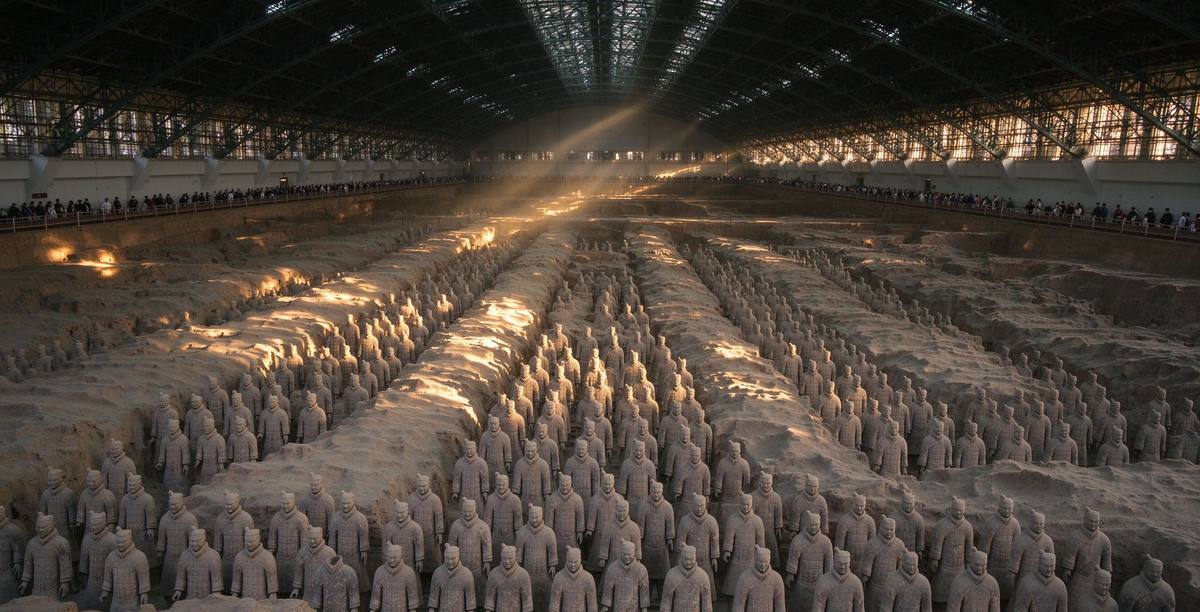
1. Day 1 — The Terracotta Army
The museum sits about 40 minutes east of the city in Lintong. Ticket is ¥120 in peak season (16 March–15 November) and ¥65 off-season, and it covers all three pits plus the chariot halls. Go as early as you can — the first entry after 8:30 is quiet, and by 11 a.m. the boardwalk above Pit 1 is shoulder-to-shoulder. Order the visit Pit 1 → Pit 2 → Pit 3: Pit 1 is the vast, jaw-dropping hall of thousands of warriors that everyone photographs; Pit 2 is the newer, smaller formation with the famous generals and archers; Pit 3 is the command post. Allow three hours in total.
【中文】博物馆在城东约40分钟车程的临潼。门票旺季(3月16日–11月15日)¥120、淡季¥65,三个坑加铜车马展厅都含。尽量早——8:30后第一批进去很空,到11点一号坑上面的观光道就人贴人了。参观顺序按一号坑→二号坑→三号坑:一号坑是几千尊兵马俑的大厅,最震撼、最出片;二号坑较小、较新,有著名的将军俑和跪射俑;三号坑是指挥中枢。总共留三小时。Should you pay for a guide? Yes — the warriors are anonymous rows of statues until someone tells you each one's face is different, how they were painted and burnt, and why the emperor built them. Renting the official audio guide is fine; joining a small group guide at the entrance (around ¥50–100 split a few ways) is better value if you're two or more. Skip the unlicensed "guides" who approach you in the car park — they'll give you a rushed, wrong narration and then try to sell you something.
【中文】要不要请讲解?要——没人讲,它们就是一排排沉默的陶俑;有人讲你才知道每张脸都不同、原本有彩绘又被烧毁、皇帝为什么造它们。租官方语音导览也行;两三个人拼一个门口的小型讲解团(约¥50–100分摊)更划算。停车场里主动凑上来的"讲解"别理——讲得又快又错,最后还想卖你东西。2. Day 2 — City Wall bike ride, then the food streets
Xi'an's Ming-dynasty City Wall is one of the best-preserved in China, and the top of it is a wide, flat road you can cycle on. Entry is ¥54; renting a bike costs about ¥45 for a single for 100 minutes (tandem ~¥90). The full loop is 13.7 km — do at least half of it, from the South Gate (Yongningmen) east or west, for the view over the old tiled rooftops. Go in the late afternoon so you catch sunset over the wall. It's far more memorable than just walking a stretch of it.
【中文】西安的明城墙是中国保存最好的城墙之一,顶上是一条又宽又平、能骑车的路。门票¥54;租自行车单人约¥45/100分钟(双人车约¥90)。整圈13.7公里——从南门(永宁门)往东或往西至少骑半圈,俯瞰老城灰瓦屋顶。傍晚去,正好赶上城墙上的日落。这比只走一段有意思多了。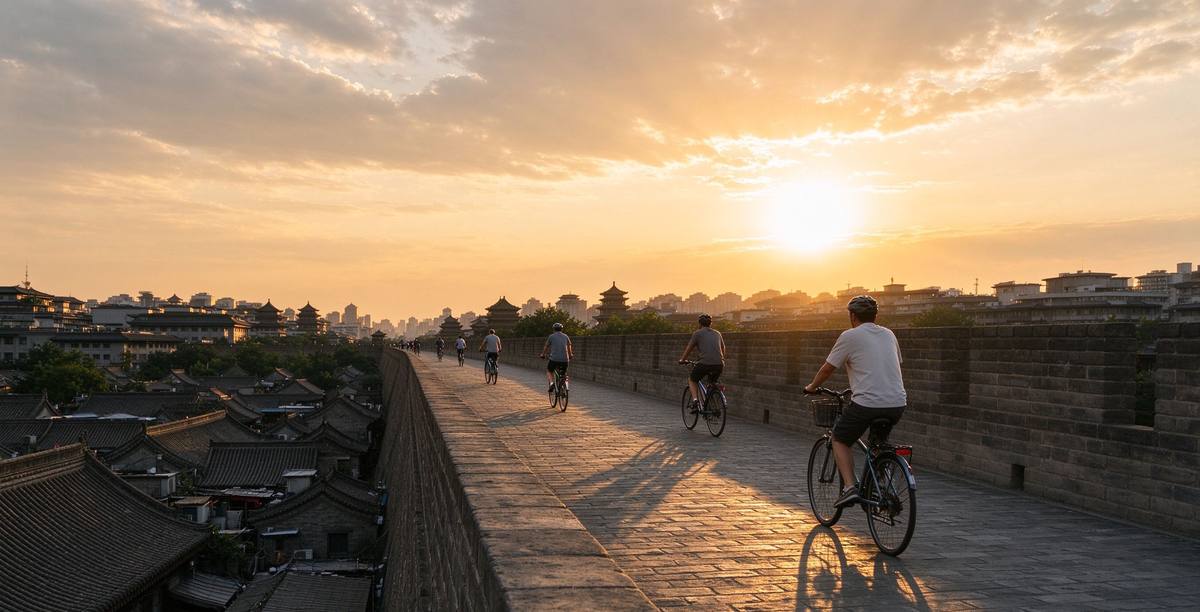
Come down from the wall hungry. The Muslim Quarter (Huimin Jie) is the famous food-and-mosque warren near the Bell Tower — great atmosphere, but the main drag is tourist-priced. For better, cheaper local food, walk a few blocks to Shajing Qiao or the back alleys around it, where Xi'an locals actually eat. Order roujiamo (the Chinese burger, ¥10–15), biangbiang noodles, and lamb paomo (bread soaked in mutton soup) — a full, proper meal runs ¥30–60. Don't expect English menus; point at pictures or at what the table next to you is having.
【中文】从城墙上下来时正好饿。回民街是钟楼旁有名的美食+清真寺片区——氛围好,但主街偏游客价。想吃更好更便宜的本地味,多走几个路口到洒金桥那一带的巷子,那才是西安人真去吃的地方。点肉夹馍(¥10–15)、biangbiang面、羊肉泡馍——一顿正经饭¥30–60。别指望有英文菜单,看图片点,或照邻桌吃什么点。3. Day 3 — Pagoda, night street, or the History Museum
You have two good options, pick one. Option A is the Big Wild Goose Pagoda (entry ¥30, climbing ¥50) in the afternoon, then the free Datang Everbright City pedestrian street at night — a dazzling Tang-dynasty themed boulevard with light shows and street performers, and the single best evening in Xi'an. Option B is the Shaanxi History Museum, one of China's best — but it's free and famously hard to book, releasing timed slots days ahead via the official mini program; your passport works. If you can't get a free slot, the ¥30 special-exhibition ticket usually still gets you in.
【中文】第三天两个好选项,挑一个。选项A:下午去大雁塔(门票¥30、登塔¥50),晚上逛免费的大唐不夜城——一条灯火辉煌的唐代主题步行街,有灯光秀和街头表演,是西安最好的夜晚。选项B:陕西历史博物馆,全国顶尖——但免费且极难约,提前几天在官方小程序放时段,护照能约。约不到免费票,¥30的特展票通常还能进。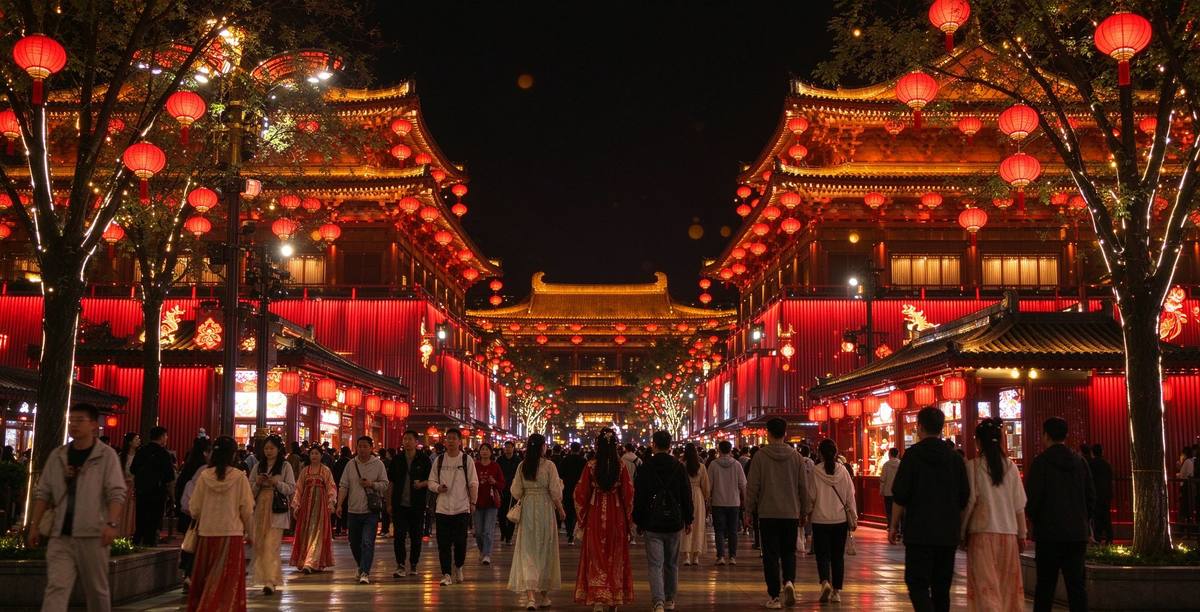
A note if you want more from Lintong. The Terracotta Army and Huaqing Chi (the Tang imperial hot-spring baths at the foot of Mount Li) are close to each other, so some visitors combine them into one long day instead of using our relaxed split. Huaqing Chi itself is pleasant but not essential; what people really travel for is the evening Ever-lasting Sorrow (长恨歌) open-air show on the same site, which is spectacular but runs mainly in peak season and needs a separate ticket booked ahead. If a warriors-only morning leaves you with energy, add Huaqing Chi; if you'd rather eat well and take it slow in the city, skip it — don't force a packed day on your first visit.
【中文】想在临潼多玩点的话。兵马俑和华清池(骊山脚下的唐代皇家温泉)离得近,所以有人把它们并成长长的一天,而不是像我们这样轻松拆两天。华清池本身不错但非必需;大家真正冲的是同址上演的实景演出《长恨歌》,很震撼但主要在旺季、要另买票提前订。如果上午看完兵马俑还不累,就加华清池;如果更想在城里吃好、慢慢来,就别加——第一次来别把自己塞太满。When to come. Xi'an is best in April–early June and September–October, when cycling the wall and queuing at the pits are actually comfortable. July and August are scorching and humid — fine for the warriors (mostly indoor pits) but brutal on the wall. Winter is cold and quiet and a good budget option. As everywhere in China, avoid the national Golden Week in early October and the Lunar New Year week, when the warriors host more visitors in a day than they see in a quiet week.
【中文】什么时候来最好。西安4–6月初和9–10月最舒服,骑车逛城墙、在坑里排队都好受。7–8月闷热——看兵马俑还行(坑内多半有顶),骑城墙就受罪。冬天冷、人少、便宜。和全中国一样,避开10月初黄金周和春节那一周,那几天兵马俑一天的客流顶冷清时候一周。4. What three days really cost (2026)
Per person in yuan, roughly ¥7.2 = $1. Peak season is 16 March–15 November. Confirm exact figures on the official museum channels when you book.
【中文】每人人民币,约¥7.2=$1。旺季为3月16日–11月15日。订票时以官方渠道为准。| Item 【中文】项目 | 2026 typical 【中文】典型价格 | Notes 【中文】备注 |
|---|---|---|
| Terracotta Army 【兵马俑】 | ¥120 peak / ¥65 off | All pits included 【含所有坑】 |
| Sightseeing cart 【园区电瓶车】 | ¥15 | Optional, within the site 【园内可选】 |
| Bus 游5/306 【游5/306路】 | ~¥7 one way | From Xi'an (East) Station 【西安火车站东】 |
| Taxi / Didi to Lintong 【打车去临潼】 | ¥100–150 one way | Per car 【每车】 |
| City Wall 【西安城墙】 | ¥54 | Bike ¥45 single / 100 min 【单车¥45/100分】 |
| Big Wild Goose Pagoda 【大雁塔】 | ¥30 (+¥50 climb) | Datang Everbright City free 【不夜城免费】 |
| Shaanxi History Museum 【陕博】 | Free / ¥30 exh. | Book ahead, hard to get 【难约】 |
| Meals 【餐饮】 | ¥40–80 / day | Street food to noodles 【小吃到面】 |
| Mid-range hotel 【中档酒店】 | ¥300–600 / night | Near Bell Tower 【钟楼附近】 |
Ad slot — Media.net / Google AdSense
【中文】广告位:海外广告位(Media.net/AdSense),与正文明显区分
5. Where to stay, and what to avoid
Stay near the Bell Tower / Drum Tower. It's the geographic and food centre, a short walk to the Muslim Quarter and the City Wall South Gate, and the metro intersects here. You'll walk home after dinner most nights, which is the best part of Xi'an. Avoid staying out by the terracotta site — it's 40 minutes from everything and dead at night.
【中文】住在钟楼/鼓楼附近。这里是地理和美食中心,步行到回民街和城墙南门,地铁也在这交汇。多数晚上你能吃完走回酒店——这正是西安最舒服的地方。别住到兵马俑那边——离哪都40分钟,晚上还冷清。The pitfalls. Around the railway station, unlicensed drivers will grab your sleeve and offer a "direct" bus to the warriors for ¥5 — it's actually a slow van that stops at a souvenir factory. Take the real 游5 (306) bus from the official stop, or a Didi. At the site, the army of "Terracotta copies" and fake jade stalls wants your money — real warriors stay in Lintong, and no shop by the street is an official outlet. And eat where locals queue, not where the menu has four languages: that's the difference between a ¥12 roujiamo that's great and one that's ¥35 and tourist-only.
【中文】要避的坑。火车站周边,无资质司机拽你袖子、说¥5"直达"兵马俑的车——其实是慢面包,中途拉去纪念品厂。坐正规的游5(306)路,或打滴滴。景区里,一堆卖"兵马俑复制品"和假玉的摊想赚你的钱——真兵马俑留在临潼,街边没有一家是官方店。去哪吃?本地人排队的地方吃,别去菜单有四国语言的——那就是¥12好吃的肉夹馍和¥35游客专供的区别。Bottom line
Xi'an rewards a relaxed three-day pace: the warriors first thing on day one, a wall-top bike ride and street food on day two, and a pagoda-lit night or a top museum on day three. It's one of the cheapest, most flavourful cities in China, and the only real mistakes are booking the warriors through the wrong channel and eating on the main tourist street. Get those two right and you'll eat, cycle and stand before an army 2,200 years old — all on a very modest budget.
【中文】西安适合放慢节奏玩三天:第一天一早就去兵马俑,第二天城墙骑车加街头小吃,第三天看古塔夜景或顶级博物馆。它是中国最便宜、最有味道的城市之一,真正的错误只有两个:兵马俑订错渠道、在游客主街上吃饭。这两点做对,你就能花不多的钱,吃好、骑车、站在一支2200年的军阵前。