
I was in a squat pit outside the Xi'an city wall, one leg cramping, when I realised the truth about Chinese toilets. The door didn't lock — it had a latch that stopped at your knees. There was no toilet paper, no hook for my bag, and the flush button was a mystery of three pedals. A woman outside knocked and said something cheerful that I later learned was "are you alive in there?" That was week one. By week six, I had used maybe 200 public toilets across ten cities, and I can tell you the whole honest picture — it's a lot less scary than the internet says, and a little more surprising than you'd think.
【中文】我蹲在西安城墙外的一个蹲坑里,一条腿抽着筋,那一刻我终于看明白了中国厕所的真相。门锁不上——只有一条锁到膝盖高的插销。没有卫生纸、没有挂包的钩子,冲水按钮是三个神秘踏板。门外一位女士敲敲门,说了句我当时觉得挺开心的话,后来才知道是"里面还有人活着吗"。那是第一周。到第六周,我在十座城市用过大约200个公共厕所,现在可以告诉你完整的真实情况——比网上说的吓人得多?并没有;比你想的意外?确实有。Let me set the baseline first, because most of what you've read is about 2012. China ran a nationwide "toilet revolution" (厕所革命) from 2015 onwards, pouring real money into public facilities, especially in tourist areas, along highways and at transport hubs. The result: in 2026, a tourist-area toilet is usually genuinely clean — tiled, lit, with a flushing squat pan and running water. The problems you'll actually meet are different and simpler: no paper, squat pans you've never used, and finding one at all when you need it most. This guide is the field manual for exactly those three problems.
【中文】先把基准线讲清楚,因为你读过的多数说法都是2012年的。2015年起中国搞了全国"厕所革命",真金白银投进公共设施,尤其是景区、高速路和交通枢纽。结果是:2026年的景区厕所通常真挺干净——贴瓷砖、有灯、带冲水的蹲坑和自来水。你真正会遇到的问题是另外三个、也更简单:没纸、没用过的蹲坑、以及最需要时找不到厕所。这篇指南就是针对这三个问题的实战手册。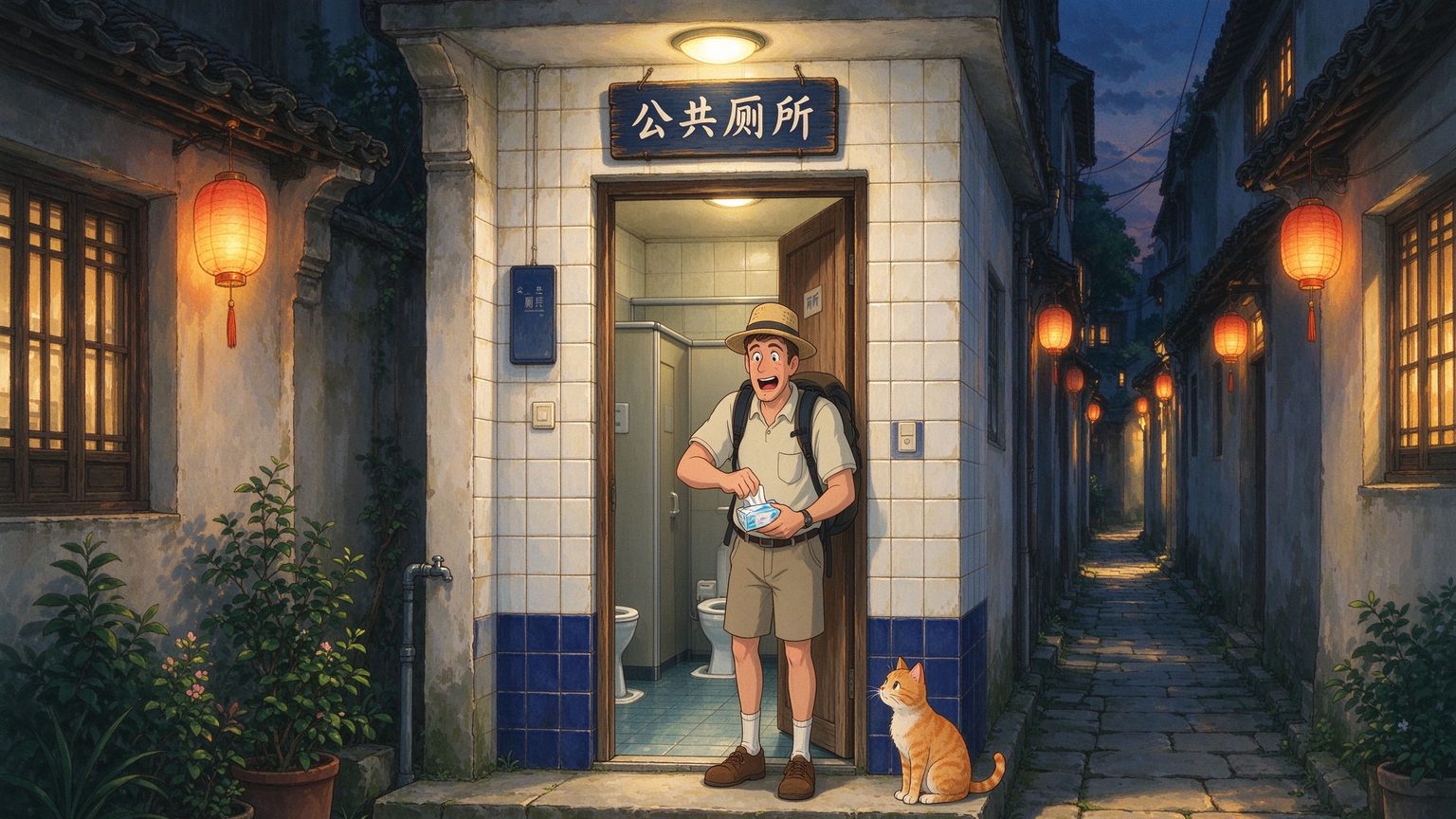
1. Lesson one: carry your own paper. Always.
Here's the number that matters: roughly 90% of China's public toilets do not provide toilet paper. Not "sometimes they forget to restock" — they simply don't stock it, on purpose. In tourist areas and new shopping malls you'll occasionally find a dispenser, but the ratio is maybe one in ten. A local sees this as normal; they carry a pocket pack every single day of their lives. You should too.
【中文】这是最重要的一组数字:中国大约90%的公共厕所不提供卫生纸。不是"偶尔忘了补货"——是干脆就不备,故意的。景区和新商场偶尔有纸巾盒,比例大概十分之一。本地人觉得这很正常;他们一辈子每天口袋里都装着小包纸巾。你也要。The carry kit, from my field testing: one pocket pack of tissues (¥1–3 at any convenience store, ask for zhǐ jīn), a small hand sanitiser or wet wipes, and — the tip nobody mentions — a plastic bag. Public toilets in older neighbourhoods still run on old pipes, and there will be no bin in the stall for your used paper in some cases. The bag keeps the awkward moment from becoming a logistical crisis. And yes, that brings us to rule two.
【中文】随身三件套(我实测过的):一包纸巾(便利店¥1–3,说"纸巾"就行)、一小瓶免洗洗手液或湿巾、还有——没人提过的一招——一个塑料袋。老城区公厕管道旧,有些隔间连垃圾桶都没有。塑料袋能把尴尬时刻变成一件小事。是的,这就说到第二条规矩了。2. The squat pan: a two-minute masterclass
Most public toilets in China — stations, temples, old neighbourhoods, small restaurants — have squat pans (蹲便器): a ceramic trough built into the floor, not a seat. The internet calls this a nightmare; the reality is that it's simply a skill, and locals think nothing of it. Here's what took me a week to learn and you can learn in two minutes:
【中文】中国多数公厕——车站、寺庙、老城区、小饭馆——都是蹲便器:嵌在地上的陶瓷槽,不是马桶。网上管这叫噩梦;实际上只是个技能,本地人根本不觉得是事。以下是我花一周才学会、你两分钟就能学会的:Face the low end. The pan is a slope: the flat, shallow end is at the front, and it drops to the drain at the back. Face the flat end — the drain goes behind you. Most people who "tried a squat pan and nearly fell in" faced the wrong way. Plant your feet on the two raised pads either side of the pan — they're marked, non-slip, and exactly where your shoes should go. Keep your trousers down at your knees, not around your ankles, and hold your bag in your lap or on the hook if there is one (bring a carabiner; it's the best toilet gadget in China). When you're done, stand up, step back, and flush.
【中文】面朝低的那头。蹲坑是斜坡:平缓浅的那头在前,冲水口在后方。脸朝平缓端——下水道在你身后。多数"试过蹲坑差点摔进去"的人都是站反了。两只脚踩在便池两侧的凸起脚位上——那是标记好的防滑位,鞋就该放那里。裤子褪到膝盖就行,别褪到脚踝;包抱在腿上,或者挂到钩子上(有钩子的话)——带个登山扣,这是全中国最好用的厕所装备。完事站起来、退一步、冲水。The flush will surprise you. Squat pans flush differently: sometimes a foot pedal on the floor, sometimes a button on the wall behind you, sometimes a sensor that fires when you stand up (wave at it if nothing happens — the motion sensor is real). In older places there's a small bucket and a scoop of water, which is exactly as manual as it sounds and completely normal. And the paper rule: used paper goes in the bin, never in the pan. Old pipes clog easily, and every bin in every toilet in China exists for this one reason. Even in new toilets with "flushable" claims, follow the locals and use the bin — it's the single most common way foreigners make a bad impression without meaning to.
【中文】冲水方式会让你意外。蹲坑冲水各不相同:有的是地上的脚踏、有的是身后墙上的按钮、有的是你一站起来就自动感应(没反应就挥挥手——感应器是真的)。老地方是一桶水加一个水瓢,就像听上去那么原始,而且完全正常。用过的纸丢垃圾桶,千万别丢坑里。老管道容易堵,中国每个厕所里的每个垃圾桶都是为这一件事存在的。哪怕新厕所写着"可冲散",也跟本地人一样用垃圾桶——这是外国人最容易无意间留下坏印象的一件事。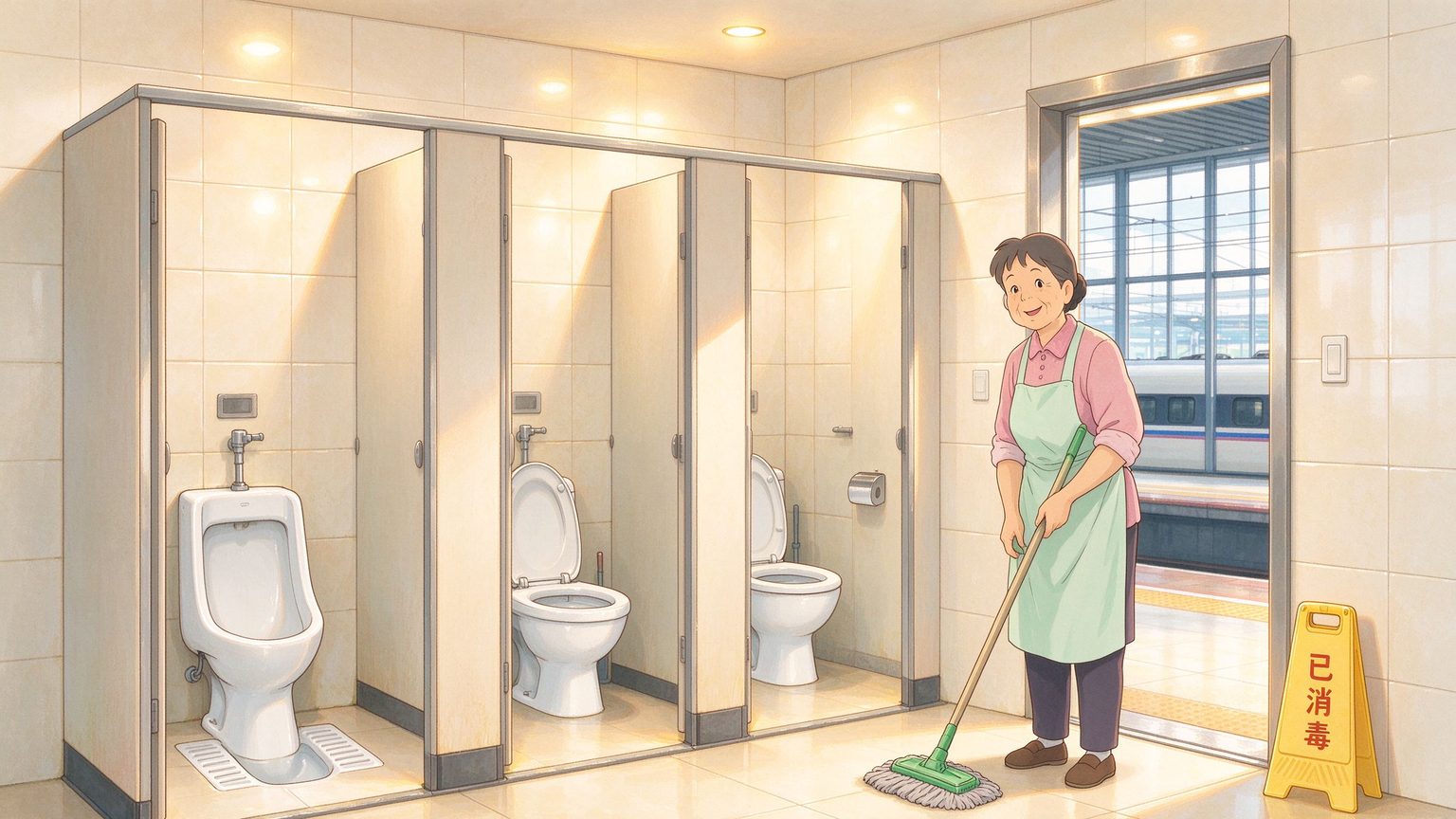
3. Where you can relax: trains, airports, malls
Here's the genuinely good news. High-speed rail stations, airports, and newer shopping malls have toilets that are clean, western, and — mostly — stocked with paper. The seat toilets (坐便器) in these places are the norm, there's a hook on the door, soap and a dryer, and a cleaner in the corridor. The Beijing–Shanghai high-speed train toilets are genuinely better than most European airport loos I've used, and the free station toilets at HSR hubs are cleaned hourly. If you've been dreading the whole trip, start by relaxing here: these are the toilets you'll use most, and they're fine.
【中文】下面是真正的好消息。高铁站、机场和新商场里的厕所干净、西式、而且大多备纸。这些地方的坐便器是标配,门后有挂钩、有洗手液和烘干机、走廊里还有保洁员。京沪高铁上的厕所比我用过的多数欧洲机场厕所都好,高铁站里的免费厕所每小时有人打扫。如果你一路上都在担心这件事,先从这儿放松:这些是你用得最多的厕所,它们没问题。The catch in these modern places is a small one: the toilet seat may be occupied — by someone's feet. Squatting on a seat toilet is a genuine habit here, and you'll see it. Nobody will think less of you for hovering or sitting normally; just be aware it happens, and wipe the seat first if you care about that sort of thing. This is the one cultural moment that still catches foreigners off guard, and it costs nothing to know it in advance.
【中文】现代场所里唯一的小意外是:马桶圈上可能站着脚。踩着坐便器蹲着用,在这里是真实存在的习惯,你会见到的。你正常坐也好、悬空也好,没人会多想;介意的话先擦一下圈。这是唯一仍会让老外措手不及的文化时刻,提前知道,分文不花。4. The ¥1 toll: paid toilets are a thing
In some tourist spots, markets and old districts you'll meet a paid public toilet (收费厕所) — a booth or a chair at the entrance, a card with prices (usually ¥0.5–2, occasionally ¥3 at the most touristy spots), and a tin or a QR code. Pay it; it's cheap, and it usually gets you the cleanest and best-maintained toilet in the area, often with paper on the counter. Nobody needs a reason to charge; they're independent operators and this is their small business. The QR code works with Alipay or WeChat if your payment apps are set up (see our Alipay & WeChat guide), and cash works too — keep a few ¥1 coins.
【中文】在部分景区、市场和老城区,你会遇到收费公厕——门口一个摊位或一把椅子、一张价目牌(通常¥0.5–2,最热门的景区偶尔¥3)、一个铁罐或二维码。付就是了;很便宜,而且通常换来的是当地最干净、维护最好的厕所,柜台上往往还有纸。收费没那么多理由——他们是独立经营者,这就是他们的小生意。二维码用支付宝/微信都能付(见我们的支付宝/微信指南),现金也行——备几个一块硬币。
【中文】省钱提示:高铁站、机场、大商场、连锁快餐店的厕所都免费且干净。赶路时认准这些,能把"花钱上厕所"的机会降到最低。
5. Finding one when you need it: the map trick
When you need a toilet in China, do not wander and hope. Open your map app — Amap (高德地图) or Baidu Maps — and search "公共厕所" (gōnggòng cèsuǒ, public toilet) or simply "厕所" (cèsuǒ). Both apps are in English mode and index public toilets with surprising accuracy, including the paid ones and their hours. In cities, you're almost never more than 300 metres from one. This single habit ended 80% of my pre-revolution anxiety.
【中文】在中国需要厕所时,别瞎走碰运气。打开地图App——高德或百度——搜"公共厕所"或直接搜"厕所"。两个App都有英文模式,公共厕所的收录准确得惊人,连收费的带营业时间的都有。城市里你几乎从不在300米之外找不到厕所。这一个习惯解决了我的革命前焦虑的80%。The emergency fallbacks, in order: 1) any shopping mall — every mall in China has a clean free toilet, usually on the second floor or above (ground floors are retail); 2) hotel lobbies — walking into a mid-range hotel lobby and using the restroom is accepted, nobody has ever stopped me, just look purposeful; 3) fast food — McDonald's, KFC and Starbucks in China all have clean, stocked, western toilets and don't require a purchase in most locations. I've built my entire daily route around these three categories and it has never failed.
【中文】紧急预案,按顺序:1) 任何商场——中国每家商场都有干净的免费厕所,通常在二楼以上(一楼是零售);2) 酒店大堂——走进中档酒店大堂用洗手间是被接受的,从没人拦过我,走路带点目的性就行;3) 快餐店——中国的麦当劳、肯德基、星巴克都有干净、备纸、西式的厕所,多数门店不强制消费。我全程路线都按这三类规划,从没失手过。6. The toilet type chart: what to expect where
Print this in your head and you'll never be surprised again:
【中文】把这张表记在脑子里,你永远不会再意外:| Where(在哪) | Type(类型) | Paper?(有纸吗) |
|---|---|---|
| HSR station / airport 高铁站/机场 | Western + squat, cleaned hourly | Usually yes — but carry your own anyway |
| New shopping mall 新商场 | Western, spotless | Often yes |
| Fast food 连锁快餐 | Western, reliable | Yes |
| Scenic area 景区 | Squat mostly, clean since 2015 | Rarely — the pay booth often has it |
| Old neighbourhood 老城区 | Squat, basic, manual flush | No. Bring everything. |
| Small restaurant 小饭馆 | Squat, shared | Sometimes at the counter |
| Temple / ancient site 寺庙/古迹 | Squat, basic | No |
| Long-distance train 普速火车 | Squat or western, cramped | No — pack wipes |
7. Toilet etiquette: five rules locals follow
None of this is enforced, all of it is noticed:
【中文】没人强制,但人人都看在眼里:1. Paper in the bin, never the pan — even if it says flushable. This is rule zero in China. 2. Queue outside the door. If a cubicle door is shut, wait in line; knocking on a locked Chinese toilet door mid-use is common and considered helpful (the "are you alive" moment). 3. Know the door signs: 男 (nán) is men, 女 (nǚ) is women — they're often just one character, and sometimes on small plates with figures. If you can read nothing else, learn those two. 4. Don't be surprised by the missing lock — many older doors have a latch you hold with one hand. Lean on the door; it's what everyone does. 5. Leave it as you found it — flush, close the lid if there is one, and say nothing. The cleaner is paid a real wage to keep it spotless, and the toilets that get destroyed by tourists get locked up for everyone else.
【中文】1. 纸进垃圾桶,绝不进坑——哪怕写着"可冲散"。这是中国的零号规则。2. 门外排队。隔间门关着就排队等;在中国,上到一半有人敲门是常事、还被当作好意(就是"还活着吗"那一下)。3. 认门牌:男是 nán、女是 nǚ——往往就一个字,有时是带小人图案的小牌子。别的可以不认,这两个必须认。4. 别惊讶没锁。很多老门是条插销,得用手扶着。用背靠门,大家都这样。5. 用完恢复原样——冲水、有盖就合上、不多说。保洁员靠真工资维持一尘不染,被游客糟蹋掉的厕所,最后会被锁起来,谁都别用了。8. The four sentences that save you
Write these in your phone's notes app before you land:
【中文】落地前把这几句存进手机备忘录:| English(英文) | Chinese(中文) | Say it like(拼音) |
|---|---|---|
| Where is the toilet? | 厕所在哪里? | cè suǒ zài nǎ lǐ |
| Where is the men's / women's room? | 男厕所/女厕所 | nán cè suǒ / nǚ cè suǒ |
| Do you have toilet paper? | 有卫生纸吗? | yǒu wèi shēng zhǐ ma |
| I need tissues / a convenience store | 我要买纸巾/便利店 | wǒ yào mǎi zhǐ jīn / biàn lì diàn |
Show the characters, not the pinyin, when you're stuck — every Chinese person reads the characters instantly, and pointing at "厕所在哪里" on your phone works in any city, including when the person you ask doesn't speak English. This one screen has solved more problems for me than a translator app ever did.
【中文】卡壳时给对方看汉字而不是拼音——任何中国人都能秒读汉字,手机屏幕上指"厕所在哪里"在哪个城市都管用,哪怕对方不会英语。这个屏幕帮我解决的问题,比翻译App多得多。9. The honest bottom line
China's public toilets are not the ordeal the forums make them out to be. The 2026 reality: carry paper, learn the squat, search the map, and know your three safe havens (malls, hotel lobbies, fast food) — that's the entire system. Two hundred toilets in, I've never once been in a genuinely unsafe or unhygienic situation; the worst I met was a missing lock and a bare bulb, and I survived both standing up. Pack the tissues, keep the coins, and you'll be fine. And when the woman knocks and asks if you're alive in there — answer. It's the politest thing you'll do all day.
【中文】中国的公共厕所没有论坛上说的那么可怕。2026年的真相是:带纸、学会蹲、用地图搜、认准三个安全港湾(商场、酒店大堂、快餐)——整套系统就这些。用了200个厕所,我从没遇到过真正危险或不卫生的情况;最糟也就是没锁加一个灯泡,我都站着挺过来了。装上纸巾、备好硬币,你没事的。至于那位女士敲门问你还活着吗——答应一声。那会是你一天里最有礼貌的时刻。Next up: our Alipay & WeChat setup guide (paying at that ¥1 toll booth) or all China guides.