
It was 9:40 pm in Chengdu and I was staring at a queue I did not understand. Twenty locals, mostly in their twenties, standing in front of a hole-in-the-wall with one bare bulb. No menu. No prices. Just a giant pot bubbling with something that smelled like heaven and looked like a dare. I pointed at the pot, the man shrugged, and fifteen minutes later I was holding a bowl of malatang that cost ¥19 and rearranged my entire idea of what a cheap meal could be.
【中文】晚上9点40,我在成都对着一支看不懂的队伍发愣。二十来个本地年轻人站在一家只有一个灯泡的小店前。没有菜单、没有价目表,只有一口咕嘟咕嘟的大锅,闻起来像天堂、看起来像挑战。我指了指锅,老板耸耸肩,十五分钟后我端着一碗麻辣烫,花了¥19,从此重新理解了"便宜的一顿饭"。That bowl started a three-day experiment: I decided to eat nothing but street food, in four cities, with a strict budget of ¥150 (about $21) per day. This guide is what I learned — the real prices in 2026, the dishes worth crossing the street for, how to order with zero Chinese, and the three safety rules that kept me healthy the whole trip.
【中文】那碗麻辣烫开启了一个三天实验:我只吃街头小吃,走四个城市,每天严格限额¥150(约21美元)。这份指南就是我学到的东西——2026年的真实价格、值得过街去吃的菜、一句中文不会怎么点单、以及让我全程没闹肚子的三条安全规则。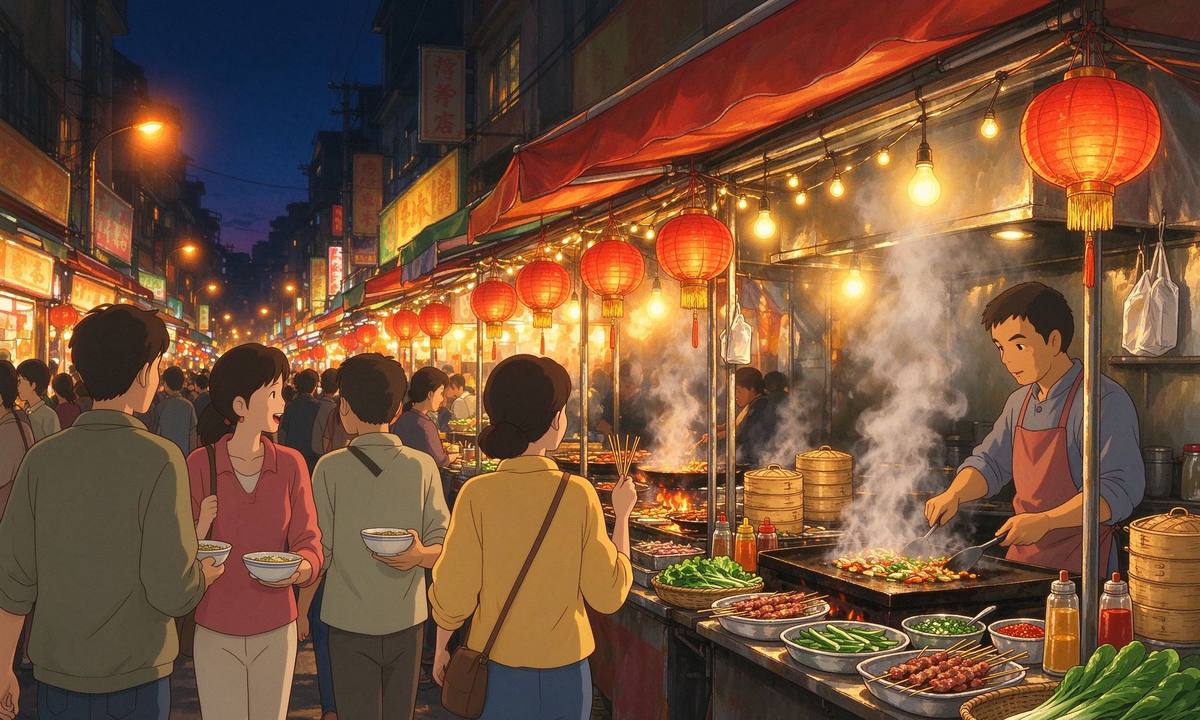
1. What street food actually costs (2026)
Forget the "everything is a dollar" idea — but don't worry either. The honest 2026 range is roughly ¥5 to ¥30 per snack, and a full night of grazing across five stalls lands around ¥80–150 per person. That's a proper dinner with two drinks and a dessert at the end. Here's the price list I kept, city by city, and it stayed remarkably consistent everywhere:
【中文】忘掉"什么都只要一块钱"的说法——但也不用担心。2026年诚实的价格区间是每样小吃¥5–30,晚上逛五个摊吃饱喝足大约人均¥80–150。那可是一顿像样的晚饭加两杯饮料加收尾甜点。下面是我一路记的价格表,各地惊人地一致:| Dish(小吃) | Typical price(常见价格) | What it is(是什么) |
|---|---|---|
| Jianbing 煎饼果子 | ¥8–15 | Breakfast crepe: egg, scallion, crispy wafer, sauce, folded while you watch |
| Roujiamo 肉夹馍 | ¥8–15 | "Chinese hamburger": braised pork in a griddled flatbread |
| Lamb skewers 羊肉串 | ¥3–10 per stick | Cumin-and-chili lamb on charcoal, the night-market king |
| Xiaolongbao 小笼包 | ¥12–25 (basket of 6–8) | Soup dumplings; bite a hole first, the broth is scalding |
| Malatang 麻辣烫 | ¥15–25 | Pick your raw ingredients by weight, they boil them in spicy broth |
| Jiaozi 饺子 | ¥1–2 per piece | Fresh dumplings, pork-and-chive is the classic filling |
| Hand-pulled noodles 拉面 | ¥8–15 | Biángbiáng in Xi'an, dandan in Chengdu — a bowl is a full meal |
| Youtiao + soy milk 油条豆浆 | ¥5–8 | The morning combo; the fried stick is longer than your forearm |
The one thing that surprised me: tourist-heavy streets in Beijing and Xi'an charge 1.5–2x for the same bowl you'd get three blocks away. A roujiamo was ¥12 on the tourist strip and ¥8 at the local joint. The rule is simple — walk one more block, follow the office workers.
【中文】最让我意外的一点:北京和西安的游客街,同一碗面能贵1.5–2倍。游客街上肉夹馍¥12,三条街外的本地小店¥8。规则很简单——多走一条街,跟着上班族走。2. Ordering without a word of Chinese
You do not need to learn a single phrase, and here's the honest toolkit I used:
【中文】你一个中文词都不用学。以下是我实际用过的工具包:Point at what other people are eating. This is the single most powerful move in Chinese street food. See a bowl that looks good? Point at it, hold up fingers for quantity. If you want to know what it is afterwards, open Google Lens on the photo. Google Translate's camera reads a full Chinese menu in seconds — the writing is usually vertical or a row of characters you can't sound out, and the camera mode handles it perfectly. Most stalls these days have picture menus, because half their customers are tourists and students who order the same three things.
【中文】指别人正在吃的东西。这是中国街头小吃里最厉害的一招。看到一碗不错的,指它,伸出手指数数量。想知道是什么,事后用谷歌镜头拍个照。谷歌翻译的拍照模式几秒读完一整张中文菜单——菜单通常是竖排或一行你看不懂的字,拍照模式完美解决。多数摊位现在都有带图的菜单,因为一半客人是游客和学生,点的永远是那三样。The numbers trick: hold up one finger for "one". For quantity bigger than one, hold up fingers and watch the vendor confirm — they'll often hold up fingers back at you. For "no spice" there's a universal gesture: shake your hand like it's hot and say bú là (no-la). They'll understand the gesture even if the pronunciation is off.
【中文】数字手势:伸一根手指就是"一份"。数量多就伸几根,摊主通常会回伸手指跟你确认。要说"不要辣",有个通用动作:像被烫到一样甩手,再说一句 bú là(不辣)。就算发音不对,手势他们也懂。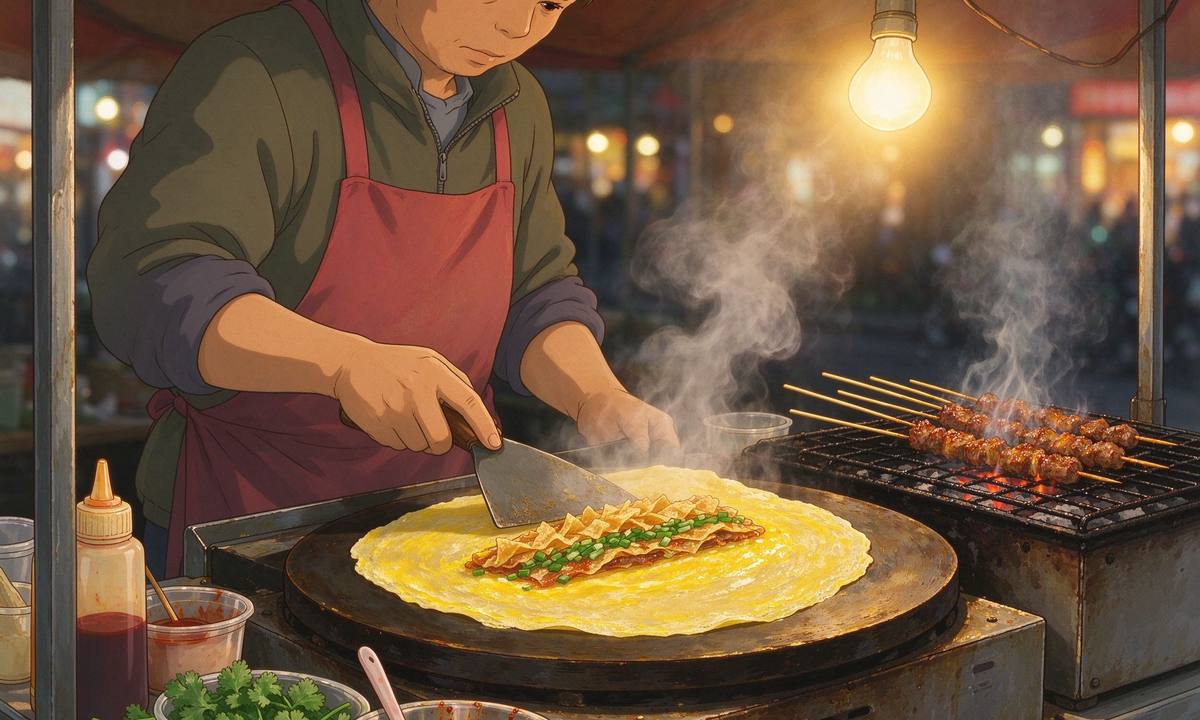
3. The three rules that keep you healthy
Chinese street food is not a gamble. After weeks of eating it, the locals' own logic is simple and it works:
【中文】中国街头小吃不是赌博。吃了好几周之后我发现,本地人自己的逻辑很简单、而且管用:Rule one: eat where the locals queue. A line of Chinese customers is the best health certificate on earth. It means the food moves fast, the ingredients are fresh, and the stall has a reputation to protect. Empty stalls are the ones to skip, not the ones that save you time. Rule two: eat it cooked, hot, in front of you. Grilled skewers, bubbling broth, steaming baskets — fire is your friend. The risky stuff is food that has been sitting out at room temperature: pre-cut fruit, cold noodle salads, unrefrigerated dairy. Rule three: when in doubt, skip the raw. Raw vegetables and ice are the usual suspects if you have a sensitive stomach. Cooked everything else is genuinely fine — I ate at roughly 40 stalls and never got sick.
【中文】规则一:吃本地人排队的摊。一群中国顾客排队,就是世界上最靠谱的健康证。意味着食物周转快、食材新鲜、摊位要维护名声。空荡荡的摊位才该跳过,而不是省时间的。规则二:吃现做、滚烫、在你眼前出锅的。烤串、咕嘟的汤、冒气的蒸笼——火是你的朋友。危险的是在室温下敞开放着的:切好的水果、凉拌面、没冷藏的乳制品。规则三:拿不准就别吃生的。肠胃敏感的话,生菜和冰块是常见嫌疑犯。其他煮熟的东西真没问题——我吃了大约40个摊位,从没闹过肚子。【中文】肠胃特别敏感?最保险是吃刚出锅的烤串、煮面和蒸点;避开生切水果与冷饮里的冰块。
4. The shortlist: what's actually worth your money
Six dishes to actively hunt for, and why they're worth a queue:
【中文】六个值得主动去找、值得排队的小吃,以及为什么:Jianbing (煎饼果子) — the breakfast of champions
Grain crepe, egg, scallion, coriander, a cracker-thin wafer, and a sweet-savoury sauce, all folded into a hand-sized parcel. Find a stall with a queue at 7:30 am and you're eating what a million commuters eat. ¥8–15, gone in four minutes.
【中文】杂粮煎饼、鸡蛋、葱花、香菜、一片薄脆、甜咸酱,卷成手掌大的小包。早上7点半找一支队伍,你吃的就是百万通勤族吃的东西。¥8–15,四分钟吃完。Roujiamo (肉夹馍) — Xi'an's answer to the burger
Slow-braised pork, chopped with coriander and chili, stuffed into a griddled flatbread that shatters when you bite it. The Muslim Quarter in Xi'an does the best version; a tourist-strip one costs ¥12, the locals' stall three streets over costs ¥8 and is better. This is the single most underrated street food in China.
【中文】慢炖猪肉加香菜辣椒剁碎,塞进烤到一咬就碎的馍里。西安回民街做的最地道;游客街上¥12,三条街外本地人的摊¥8而且更好吃。这是全中国最被低估的街头小吃。Lamb skewers (羊肉串) — the night-market king
Charcoal-grilled lamb, dusted with cumin and chili, the fat sizzling down onto the coals. Order ten, eat them standing up. It's the safest category in any night market because the heat is ferocious — a skewer straight off the fire is as safe as food gets.
【中文】炭火烤羊肉串,撒孜然辣椒,肥油滋滋滴到炭上。点十串,站着吃。这是夜市里最安全的一类,因为火够猛——刚下火的串是你能吃到的最安全的食物。Xiaolongbao (小笼包) — soup in a wrapper
The famous Shanghai soup dumpling. The trick everyone needs to be told: bite a small hole first, sip the broth, then eat it. Biting one whole is a tongue-burning mistake exactly one person in your group will make. ¥12–25 for a basket of six to eight.
【中文】上海名点汤包。每个人都需要被告知的技巧:先咬个小口、吸掉汤汁、再整个吃。整口咬下去,你们一行人里注定有一个人会被烫到舌头。一笼六到八个,¥12–25。Malatang (麻辣烫) — build-your-own spicy bowl
You grab a basket, fill it with vegetables, tofu, noodles, fish balls, meat, then they weigh it and boil it in a spicy broth. My Chengdu bowl was ¥19 by weight. The beauty: you pay for exactly what you want, and you can keep it as mild or as wild as you like.
【中文】拿个篮子,装上蔬菜、豆腐、面条、鱼丸、肉,称重后下辣汤煮。我在成都那碗按重量算¥19。妙处:吃多少付多少,辣度全由你定。Youtiao & soy milk (油条豆浆) — the 6 am ritual
A deep-fried dough stick longer than your forearm, dipped into warm soy milk. The stick costs ¥2–3 alone; the combo ¥5–8. Order by pointing at the fryer and the bowl. It's the most comforting breakfast in Asia and nobody outside China knows about it.
【中文】比小臂还长的炸油条,泡进温热的豆浆。单买油条¥2–3,组合¥5–8。指指油锅再指指碗就点好了。这是全亚洲最治愈的早餐,出了中国没人知道。5. Night-market logistics: when to go, where to stand
Street food runs on a clock. Breakfast stalls pack up by 10 am. Lunch counters open around 11:30 and close by 2 pm. Night markets start filling up around 6–7 pm and peak at 9–10 pm — that's when the stalls are firing on all burners and the food is at its freshest.
【中文】街头小吃有时钟。早餐摊上午10点收摊。午市档口11点半开、下午2点收。夜市傍晚6–7点开始上人,9–10点最热闹——那时候摊位火力全开、食物最新鲜。Best first-time night markets: Xi'an's Muslim Quarter is the most foreigner-friendly in China — English menus are common, vendors are used to tourists, and a full meal with drinks runs about ¥70–110. Chengdu's Jinli and the Kuanzhai lanes are atmospheric and forgiving. In Shanghai, skip the glitzy tourist spots and follow university students to Wujiang Road or the food street outside almost any campus. In every city, the reliable move is the same: find the street where the young locals are, not the one with the English sign.
【中文】第一次逛夜市首选:西安回民街是全中国对外国人最友好的——英文菜单常见、摊主习惯游客、一顿带饮料约¥70–110。成都锦里和宽窄巷子有氛围又不难。上海别去花哨的游客点,跟着大学生去吴江路或随便哪个大学城外的美食街。每个城市都一样:找年轻本地人扎堆的街,而不是挂着英文招牌的那条。
6. Paying: your phone is the wallet
Almost every stall — even the one-bulb malatang cart — has a QR code taped to the counter for Alipay or WeChat Pay. If you've got either app set up with a foreign card (see our Alipay & WeChat setup guide), you just scan and pay. No cash handling, no math, no change. Cash still works everywhere if your card won't bind, but you'll get awkward looks at the smallest stalls; keep small notes (¥5/10/20) so you're never waiting on change. Round numbers like ¥19 make the math instant for both sides.
【中文】几乎所有摊位——哪怕只有一个灯泡的麻辣烫车——都贴着二维码,支付宝或微信。用任意一个绑了外国卡的App(见我们的支付宝/微信支付设置指南),扫码就付。不用现金、不用找零。现金也到处都能用,只是最小摊位会有点尴尬;备好小额纸币(¥5/10/20),别等着人家找零。整数价格(比如¥19)双方都省事。7. The honest bottom line
Street food in China is cheap, fast and genuinely safe if you follow the queue and the heat. My three days of eating out cost ¥412 total — that's 26 snacks, 4 cities, 0 stomach problems, and some of the best meals I've had anywhere. The one thing I'd tell my past self: don't be shy about pointing. The vendors have served a million confused tourists before you. They'll take care of you, especially if you smile, say xièxie (thank you) and eat standing up like everyone else.
【中文】中国的街头小吃便宜、快、而且真的安全——只要跟着队伍和火走。我三天在外面吃一共花了¥412:26样小吃、4座城市、0个肠胃问题,还吃到了我这辈子最好的一批饭。想对过去的自己说一句:别不好意思指。摊主接待过千千万万懵懂的游客。他们会照顾好你的——尤其是你笑着、说句 xièxie(谢谢)、像所有人一样站着吃的时候。Hungry yet? Start with our hotpot guide or head straight to all China guides.